The Fed Power Shift That Could Reshape Rates, Debt and Your Money
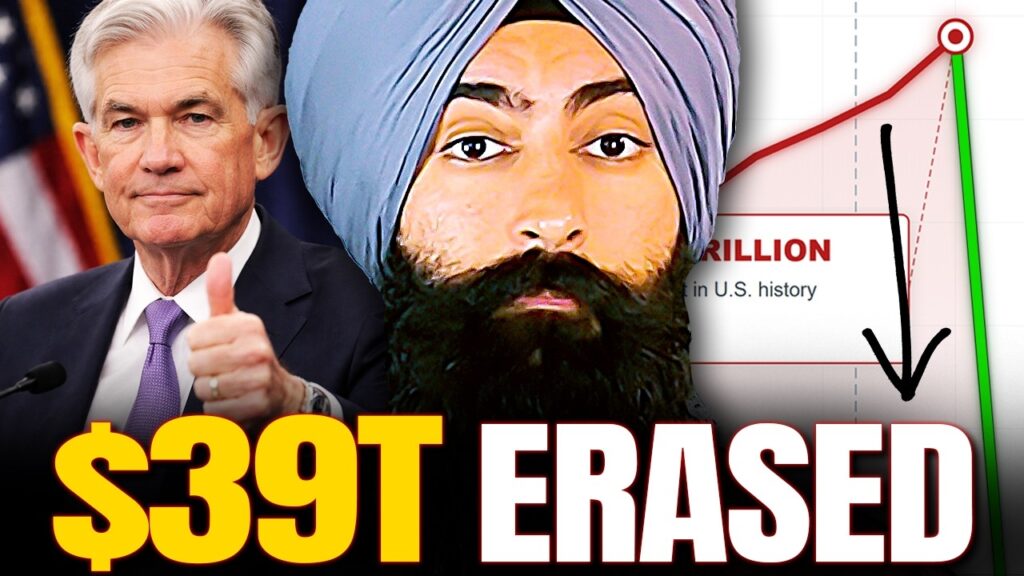
The Federal Reserve is approaching a leadership handoff at a moment when the stakes for the U.S. economy are unusually high. Jerome Powell’s term as Fed chair ends on May 15, 2026, and President Trump nominated Kevin Warsh in January to succeed him, though Warsh’s confirmation was still pending as of late April.
That timing matters because the next Fed chair will inherit an economy with stubborn inflation pressure, a policy rate still in the 3.50% to 3.75% range, and a federal debt load that has climbed to roughly $39 trillion in gross terms. Treasury data and related fiscal trackers show gross federal debt crossed that threshold in March, while Treasury’s own debt-to-GDP guide showed the ratio at about 124% for fiscal 2025.
The outline’s core argument is that the debt problem is no longer abstract. Interest costs are now one of Washington’s biggest financial burdens, and future Fed policy will heavily influence how painful that burden becomes. That broad concern is well grounded. CBO and other fiscal analysts have been warning that deficits and interest costs are consuming a larger share of federal resources and are projected to worsen over time.
Where the conversation gets more controversial is in the idea of financial repression. The term refers to a policy mix in which governments hold interest rates below inflation, lean on regulation or market structure to channel money into government debt, and gradually reduce the real burden of debt by letting inflation do part of the work. Economically, that is not a fringe concept; it is a recognized historical framework. But whether the U.S. is about to deliberately pursue it again is still an inference, not an official policy announcement.
Historically, the United States did use a version of that playbook after World War II. Rates were kept relatively low while inflation and growth helped reduce the debt burden relative to GDP. The current situation is different in one important way: a far larger share of Treasury borrowing is shorter-term, which makes the government more exposed to refinancing risk if rates stay high. That makes the next Fed chair’s stance on rates and inflation especially important.
Warsh is widely seen as more open than Powell to a policy shift, but the real picture is more nuanced than a simple “rate cuts are coming” narrative. Recent reporting shows markets still expect the Fed to stay cautious through much of 2026, and Warsh himself emphasized Fed independence at his hearing even as he argued for broader policy changes and balance-sheet reduction. Reuters polling and market coverage suggest economists still see inflation and geopolitics as major constraints on near-term easing.
That matters for households because the Fed’s choices do not move through the economy evenly. Lower rates can ease pressure on government borrowing and help borrowers broadly, but they can also punish savers if inflation stays above what cash and short-duration assets earn. That is the heart of the repression argument in the outline: if rates are pushed too low relative to inflation, the government benefits while cash holders quietly lose purchasing power.
This is why the article’s investment implications are more practical than ideological. If the next phase of policy does tilt toward easier money while inflation remains sticky, then cash becomes a weaker long-term holding. That does not mean investors should abandon liquidity entirely. It means excess cash can become a silent loser when rates and inflation drift apart. Over long stretches, productive assets such as stocks, real estate, and other inflation-sensitive holdings have typically held up better than idle cash in that kind of environment.
The outline also points to AI as a possible disinflationary force. That is plausible as a thesis, but still uncertain as near-term policy support. Some analysts and Warsh allies argue AI-driven productivity could help hold inflation down even if rates are lower. Others remain skeptical that those gains will arrive fast enough to offset energy costs, wage pressures, and fiscal strain. That debate is very much alive rather than settled.
For investors, savers and retirees, the real takeaway is not that one date in May will instantly reset the economy. It is that the Fed leadership change is arriving at a fragile moment: debt is enormous, inflation is not fully conquered, and policy credibility matters more than ever. If the next chair leans harder toward lower rates while the fiscal backdrop remains this stretched, the winners and losers will likely separate along familiar lines. Borrowers and asset owners may benefit first. Cash-heavy households may not.
That is why the bigger question is not simply whether Kevin Warsh replaces Jerome Powell. It is what kind of monetary regime follows. A Fed that tolerates somewhat higher inflation while easing financial conditions would help manage debt stress, but it would also reinforce a lesson many Americans have already learned the hard way: in an economy built on debt, savers often need more than cash to keep up.
Jaspreet Singh is not a licensed financial advisor. He is a licensed attorney, but he is not providing you with legal advice in this article. This article, the topics discussed, and ideas presented are Jaspreet’s opinions and presented for entertainment purposes only. The information presented should not be construed as financial or legal advice. Always do your own due diligence.