The 7 Retirement Risks That Can Drain Your Savings Faster Than You Think
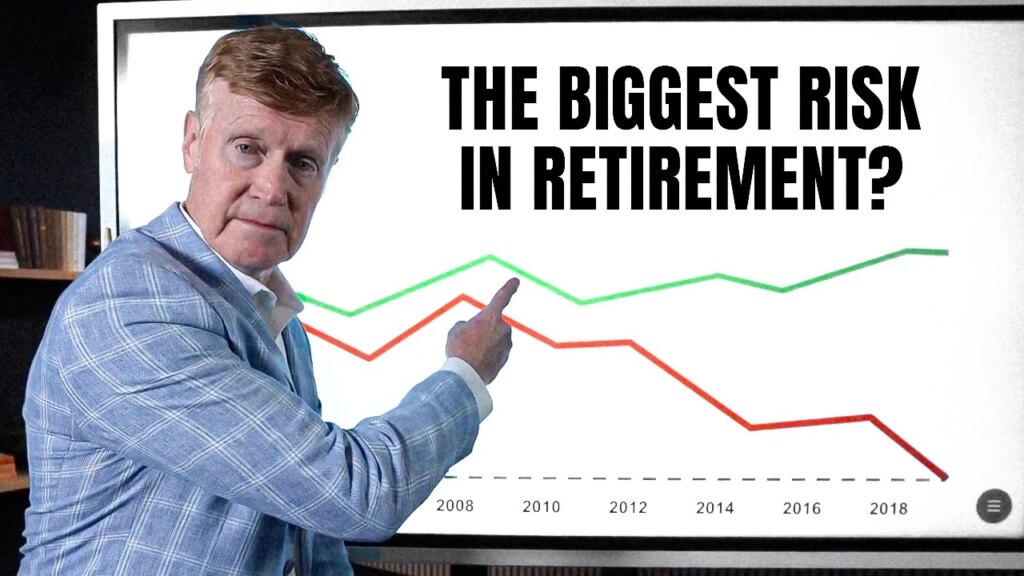
Retirement planning is often reduced to a single question: Do you have enough money?
It is an important question, but it is not the only one, and for many retirees it is not even the hardest one. The more difficult challenge begins after the savings target is reached. Retirement is not simply a matter of having assets. It is a matter of protecting those assets from a series of risks that can quietly erode them over time or rapidly damage them at exactly the wrong moment.
This is why two retirees with similar balances, similar market returns and similar life spans can end up in very different financial positions. One runs out of money. The other does not. The difference is often less about how much they started with and more about how well they managed the risks that followed.
1. Withdrawal Rate Risk
The first risk is the most obvious: withdrawing too much, too soon. Withdrawal rate risk can do more damage than many retirees realize because even small differences in annual spending have large long-term consequences. A portfolio can survive moderate market turbulence if withdrawals are manageable. But once distributions rise too high relative to the size of the portfolio, the margin for error disappears. A retiree may not notice the danger immediately, but over time the math becomes harder to overcome.
2. Inflation Risk
Inflation is one of retirement’s most persistent and underestimated threats. It does not need to be dramatic to be destructive. Even a 3% annual increase in costs can cut purchasing power in half over time. That matters because retirement is not a short event. It often lasts decades. A household that feels comfortable today may be facing a much more expensive version of the same lifestyle ten or twenty years from now. Healthcare, housing, transportation and everyday essentials rarely stand still long enough for retirees to ignore the cumulative effect.
3. Healthcare and Long-Term Care Risk
Healthcare is the third major risk, and it often arrives in forms that go beyond routine medical bills. Many retirees plan for premiums, co-pays and prescriptions. Far fewer are emotionally or financially prepared for the scale of long-term care costs. Yet the odds are substantial. A large share of people over 65 will need some form of care, and a meaningful number will need it for years. Once those costs become institutional, whether through assisted living, memory care or nursing facilities, they can rapidly overwhelm even a solid retirement plan.
4. Longevity Risk
Living longer is a gift, but financially it creates pressure. A retirement that lasts twenty-five or thirty years places very different demands on a portfolio than one lasting fifteen. The longer a person lives, the more likely they are to encounter healthcare needs, inflation shocks, cognitive decline or periods of market weakness that require careful spending decisions. Longevity is not a problem in itself. The problem is underestimating how many other risks become more likely simply because retirement lasts longer than expected.
5. Tax Risk
Tax exposure can be easy to overlook because it tends to build quietly. Tax brackets change. Withdrawal rules change. Required distributions can increase taxable income later in life. A retiree may have a healthy gross income stream and still discover that rising taxes leave less actual spending power than expected. For households with large tax-deferred balances, the difference between what appears available and what is actually spendable can become especially important.
6. Behavioral Risk
Behavioral risk may be more damaging than the markets themselves. People tend to assume their biggest danger is a bear market. In reality, the greater threat is often what they do during one. Panic selling, abandoning a sound plan after losses, becoming too conservative too early, or making impulsive decisions out of fear can inflict damage that the portfolio never fully repairs. A downturn is temporary. Locking in losses and missing the recovery can be permanent.
7. Sequence of Returns Risk
This may be the most dangerous risk of all. Sequence of returns risk arises when poor market performance hits early in retirement, just as withdrawals begin. A retiree taking income from a declining portfolio is not just losing money to market losses. They are shrinking the capital base that would otherwise participate in the recovery. That makes timing extraordinarily important. Two retirees with the same long-term average return can have radically different outcomes depending on whether the losses arrive at the beginning or later in retirement.
This is one reason the early years of retirement matter so much. A bad stretch at the beginning can leave a portfolio permanently weakened, especially if inflation is also elevated and withdrawals remain rigid. A bad stretch later in retirement is still unpleasant, but it usually has less time to compound the damage. In that sense, retirement is not just about average returns. It is about when the bad years happen and how exposed the household is when they do.
The good news is that these risks can be managed, even if they cannot be fully eliminated. The most effective retirement plans are not built around optimism alone. They are built around layers of protection.
One important layer is identifying the actual income gap. If a household needs $5,000 a month and guaranteed income sources such as Social Security and pensions cover $3,000, then the real problem is not funding the full $5,000 entirely from investments. It is finding a reliable way to cover the remaining $2,000. Once that gap is isolated, the planning becomes much more precise.
Another layer is bucket management. Instead of viewing retirement assets as one large pool, retirees can separate money based on purpose and time horizon. A liquid bucket can cover near-term expenses and emergencies. An income bucket can support the spending gap through safer or guaranteed sources. A growth bucket can remain invested for later years, when volatility matters less in the short run. This structure does not eliminate market risk, but it can keep market declines from immediately disrupting household cash flow.
Guaranteed income can also play a larger role than many people initially assume. Social Security, pensions and, in some cases, annuity income can provide a stable floor that reduces reliance on the portfolio during downturns. That does not make these tools perfect or right for every household, but it does make them useful in defending against sequence risk and emotional overreaction. A retiree who knows the core expenses are covered is less likely to panic when markets fall.
The broader lesson is that retirement is not won by maximizing return in every environment. It is won by building a plan durable enough to survive the environments that are hardest. A household can save diligently for decades and still struggle if it ignores withdrawal discipline, inflation, healthcare shocks, tax planning or the emotional pressure of volatility. Conversely, a household with a well-structured plan can often withstand more than people assume because it has already prepared for the most likely threats.
In the end, retirement security is not just about the number on the statement. It is about what that number can withstand. The retirees who fare best are not always the ones who saved the most. Often, they are the ones who understood the risks early enough to manage them before those risks had a chance to manage them instead.