Why Celebrity Brands Can Be Worth Billions and Still Be Bad Businesses
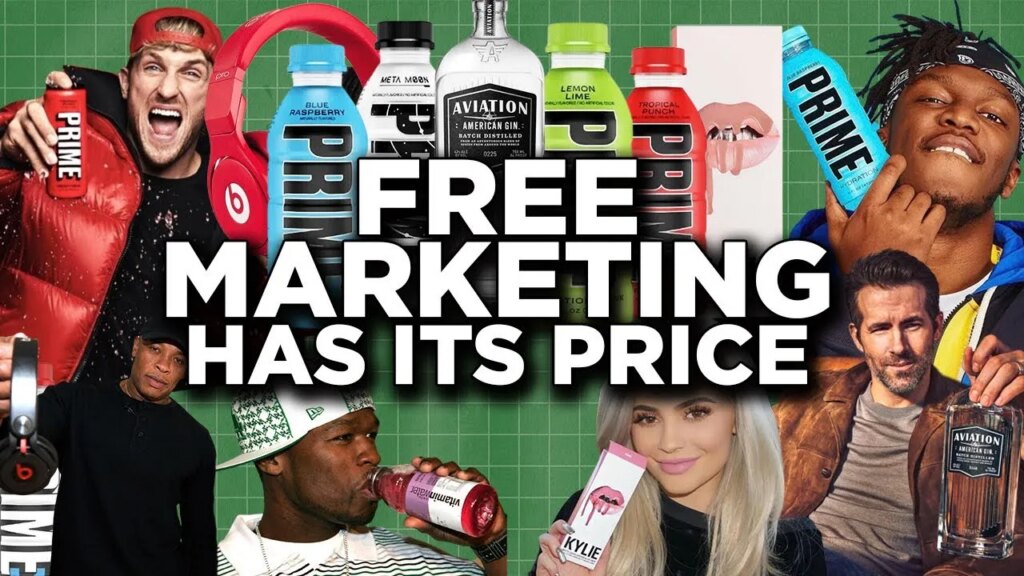
Celebrity entrepreneurship has become one of the most efficient wealth machines in modern consumer business.
A recognizable face, a loyal audience and a product in a high-margin category can now produce valuations that would once have seemed absurd. Liquor, beauty, fashion, energy drinks, headphones and telecom have all become part of the same playbook: attach a powerful personality to a product, compress customer-acquisition costs through fame, and sell the story of cultural relevance as aggressively as the product itself. In the best cases, the financial results are staggering.
The logic is easy to understand. Traditional consumer brands spend heavily to capture attention. Celebrities and influencers begin with attention already built in. They do not need to create demand from scratch in the same way, because they already command the audience. That makes certain categories especially attractive. High-margin, repeat-purchase products with broad lifestyle appeal are ideal vehicles for turning fame into enterprise value.
That is why celebrity exits can be so lucrative. A well-positioned brand can be sold for hundreds of millions or even billions of dollars, not necessarily because the product is revolutionary, but because the brand sits at the intersection of distribution, narrative and consumer aspiration. The buyer is often not just purchasing a drink, a device or a cosmetic line. It is buying cultural momentum.
But the economics that make these brands so exciting on the way up are often the same economics that make them fragile over time.
The first weakness is dependence. A celebrity brand is usually only as strong as the person attached to it. That may sound obvious, but it is the central business risk. Remove the celebrity, damage the reputation, or allow the audience relationship to cool, and much of the brand’s value can fade with surprising speed. Traditional brands at least aspire to outgrow any one spokesperson. Celebrity brands often depend on the opposite. Their biggest strength is also their least stable asset.
That dependency becomes more problematic when ownership is examined closely. Consumers often assume the celebrity is the business. In reality, many of these ventures are minority stakes wrapped in majority-control operating companies. The star provides attention, story and social proof, while experienced operators handle product development, distribution, retail relationships and day-to-day management. In some cases, the influencer’s share is meaningful. In others, the audience is helping enrich a business structure they do not really see.
This does not make the model illegitimate. It does make it less romantic. The mythology of the celebrity founder often obscures the far more ordinary reality that real execution still depends on supply chains, margins, logistics, partnerships and management teams that the public barely notices. Fame may launch the product, but operational competence is what determines whether it becomes a business or remains a stunt.
The second weakness is saturation. Once one celebrity demonstrates that fame can be monetized through tequila, beauty, apparel or a canned drink, others quickly follow. Categories fill up. Social feeds become crowded with founder-origin stories. Consumers begin to sense the formula. What once felt aspirational starts to feel interchangeable. As more influencers launch nearly identical products, the scarcity of attention that made the early brands so powerful begins to disappear.
This is where the model starts to look more like arbitrage than innovation. The celebrity is not necessarily building a better mousetrap. More often, the celebrity is borrowing trust from one domain and spending it in another. That can work for a while, especially when the audience is loyal and the product category is forgiving. But repeated often enough, it invites consumer fatigue. The market begins to fill with products that are marketed brilliantly and differentiated weakly.
The third weakness is quality. Many celebrity and influencer products do not need to be best-in-class to succeed initially. They need to be good enough to avoid embarrassment and exciting enough to feel culturally current. Marketing can carry mediocre products surprisingly far, especially when fandom and novelty do part of the selling. But over time, quality tends to reassert itself. Consumers may buy once because a celebrity endorsed something. They are less likely to remain loyal if the product fails to compete with established alternatives on performance or price.
That is why some of the most celebrated brand exits can still leave behind businesses whose cultural heat fades after acquisition. Hype is monetizable, but it is not always durable. In categories with strong incumbents and technically better products, celebrity branding may win the first sale without winning the category. The result is often a business that was brilliant at extracting value from a moment but less impressive at building enduring consumer trust.
The fourth weakness is reputational spillover. A celebrity-led brand is not only exposed to product risk and competition. It is exposed to the volatility of personal behavior in the digital age. Scandal, controversy, shifting public sentiment or simple audience fatigue can damage the brand because the brand was built on identification with the person in the first place. What looks like strong emotional connection in good times can become concentrated downside in bad times.
This is especially relevant in the influencer era, where monetization cycles are faster and audiences are more sensitive to perceived inauthenticity. Fans may reward creators for building something of their own, but they can also punish them when a business feels cynical, opportunistic or at odds with the identity that attracted the audience in the first place. The same intimacy that makes influencer marketing so powerful can make disappointment travel faster too.
All of this helps explain a broader truth about business that gets lost in the glamor of celebrity exits: the best businesses are often much less interesting than the ones people talk about most. They are steady rather than viral. Operational rather than performative. Built on repeatable competence instead of borrowed charisma. The consumer economy periodically falls in love with founder mythology, but value over time still tends to depend on product quality, distribution strength, margin discipline and brand trust that can survive the original excitement.
That does not mean celebrity brands are doomed. Some are exceptionally well timed, well managed and financially successful. The point is that they are often better at creating valuation events than at building resilient enterprises. Those are not the same thing. A spectacular sale can prove that the model works for founders and early investors. It does not necessarily prove that the business underneath is strong in the old-fashioned sense.
The real lesson may be less glamorous than the culture surrounding these deals suggests. Fame can accelerate commerce, but it does not repeal the rules of business. Distribution still matters. Ownership still matters. Product quality still matters. And eventually, even in the attention economy, the boring virtues of reliability, competence and substance have a way of reappearing.
That is why celebrity brands can be worth billions and still be bad businesses. They are often brilliant financial vehicles. They are not always built to last.
All writings are for educational and entertainment purposes only and does not provide investment or financial advice of any kind.