The Fed’s Quiet Money Shift Could Matter More Than the Headlines
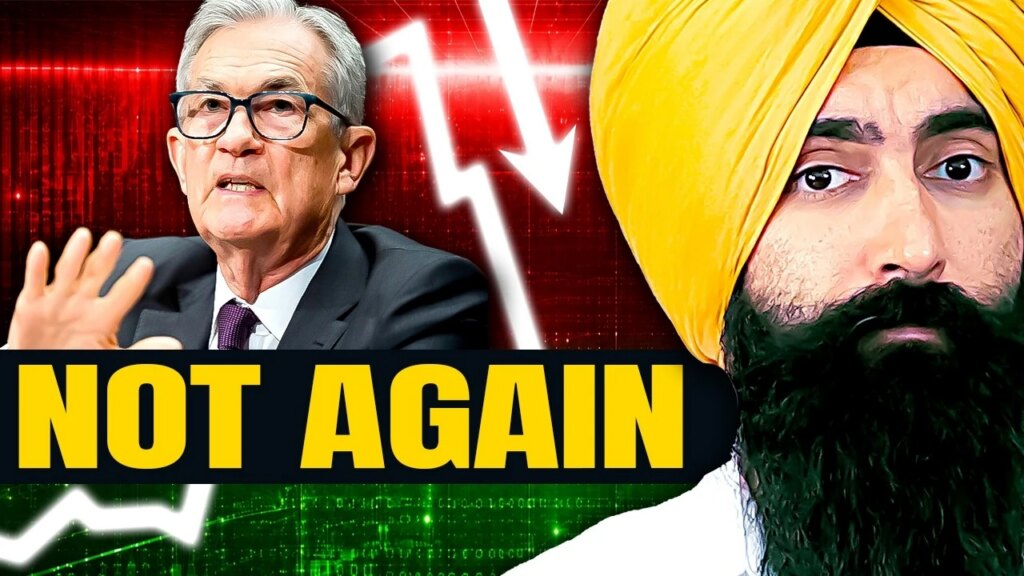
The Federal Reserve has a way of changing the financial landscape without sounding dramatic when it does it.
That is part of what makes the current moment so easy to misread. Stocks have continued to push higher, even as inflation remains sticky, oil prices have been volatile, and the federal government’s borrowing needs keep expanding. Underneath that uneasy surface sits a quieter but more consequential shift: the Fed returned to buying Treasury bills in late 2025 through what it called reserve management purchases, expanding its balance sheet again after ending balance-sheet reduction.
Officials have been careful to distinguish those purchases from the quantitative easing programs of 2008 and 2020. The difference, in the Fed’s telling, is purpose. QE was designed to ease financial conditions and stimulate the economy directly. Reserve management purchases are described as technical operations meant to maintain ample reserves and preserve control over the policy rate. That distinction matters operationally. But it does not erase the more basic economic reality: when the Fed buys Treasury bills, it expands its balance sheet and injects reserves into the system.
This is where monetary plumbing starts to overlap with ordinary economic life. The U.S. government is still running deficits large enough to require heavy Treasury issuance, even as gross federal debt has climbed to about $39 trillion. Treasury’s own debt data and fiscal watchdog estimates now place debt at that level, with interest costs consuming a growing share of federal outlays. The more debt the government must refinance and the higher rates remain, the more expensive that burden becomes.
That borrowing problem helps explain why the Treasury market now matters so much beyond Wall Street. If there is strong demand for Treasuries from private investors, foreign governments and institutions, yields can remain more contained. If demand softens, the government may have to offer higher yields to attract buyers. Those higher yields do not stay confined to Washington. They feed into mortgage rates, auto loans, business borrowing costs and, eventually, asset valuations.
The foreign-demand question is not hypothetical. China and Japan have reduced their Treasury holdings over the past decade, a trend that has fueled repeated questions about who will absorb future U.S. borrowing if traditional large buyers become less reliable. That does not mean a Treasury funding crisis is imminent, but it does mean the system is more sensitive to shifts in demand than it was when foreign official buying felt almost automatic.
This is why the Fed’s next move on the balance sheet matters so much. Kevin Warsh is set to succeed Jerome Powell as chair, though Powell was named chair pro tempore until Warsh is sworn in. Reuters reports suggest Warsh is expected to favor balance-sheet reduction over renewed expansion, even as inflation and bond-market pressure complicate that path.
That leaves the Fed facing a difficult three-way choice. It can keep buying Treasuries in technical form, which supports liquidity and eases funding pressure but risks reinforcing the perception that monetary policy is still helping finance federal deficits. It can stop buying and hope private demand fills the gap. Or it can actively shrink the balance sheet, which would tighten conditions further and potentially push yields higher if private buyers do not step in forcefully enough.
That is why the outline’s broader point resonates even if some of its language is more dramatic than the official framing. The issue is not simply whether the Fed is “printing money” in the colloquial sense. It is whether the U.S. economic system has become so dependent on large-scale debt issuance and supportive liquidity conditions that even modest attempts to step back create visible strain. In that sense, the balance sheet is not a side story. It is one of the central fault lines in the current macro environment.
Inflation complicates the problem further. The Fed cannot ease too aggressively when inflation is still elevated without risking a further loss of purchasing power. Yet it also cannot ignore the Treasury market, the banking system and the interest-rate sensitivity of the broader economy. Recent Reuters and market reporting suggest this tension is now one of the defining challenges of the Warsh transition: inflation pressures remain real, but bond-market fragility and federal borrowing needs are real too.
For households, the implications are not abstract. Treasury yields help form the base from which mortgage rates are priced. If long-term yields rise because Treasury supply remains heavy and buyer demand weakens, home financing becomes more expensive. The same dynamic flows through consumer lending and business credit. A world in which the government must pay more to borrow is usually a world in which everyone else pays more to borrow too.
For investors, the lesson is more subtle than simply “buy stocks because inflation exists.” The more important point is that policy now sits at an unstable intersection of debt, liquidity and inflation. Cash can lose purchasing power if inflation stays above what safe yields deliver after tax. But risk assets are not guaranteed winners either, especially if tighter Treasury conditions push real yields higher or compress valuations. What matters is understanding that balance-sheet policy is not just technical central-bank language. It is one of the mechanisms through which liquidity, asset prices and borrowing costs are being shaped in real time.
The quiet shift, then, is this: the Fed is no longer simply fighting inflation with rates while reducing its footprint mechanically. It is managing a more delicate problem in which the money market, the Treasury market, the federal deficit and the credibility of anti-inflation policy are all entangled. That makes the next chapter of balance-sheet policy more important than the labels attached to it.
Because whether the Fed calls it QE or reserve management, the underlying question is the same: how long can the system rely on ever-larger debt issuance without forcing either more inflation, higher yields, or slower growth to do the adjustment?
Jaspreet Singh is not a licensed financial advisor. He is a licensed attorney, but he is not providing you with legal advice in this article. This article, the topics discussed, and ideas presented are Jaspreet’s opinions and presented for entertainment purposes only. The information presented should not be construed as financial or legal advice. Always do your own due diligence.