What Oil Crises Usually Do to Markets And Why the Real Damage Often Comes Later
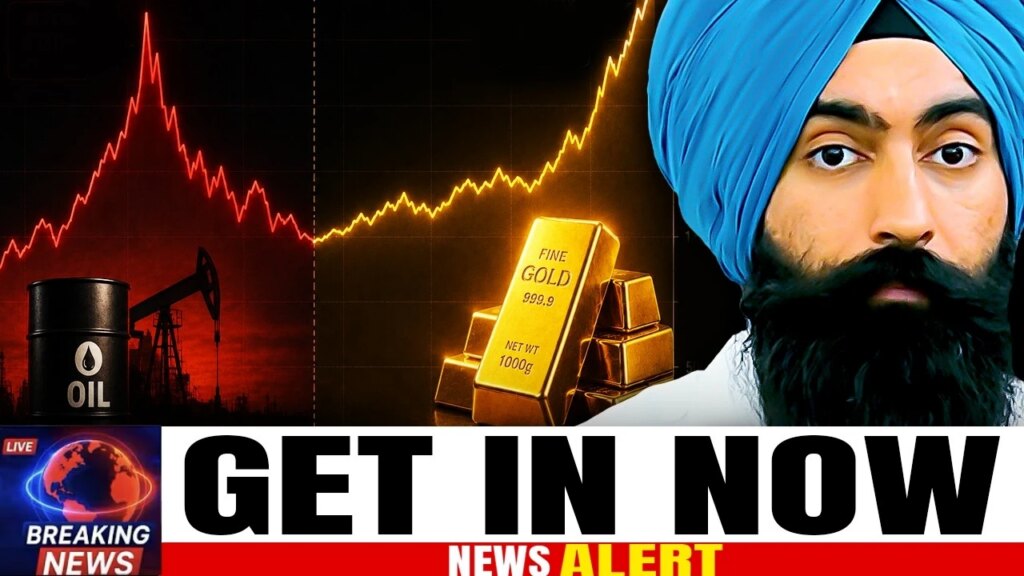
Oil crises rarely look worst at the beginning.
That is one of the most important lessons investors keep relearning. The initial shock gets the headlines. Prices jump, markets wobble, pundits warn of recession, and policymakers scramble for language strong enough to sound reassuring. But the deeper damage tends to arrive later, once higher energy costs have had time to work their way through shipping, food, manufacturing, household budgets and business investment. By then, the crisis may already feel old in the news cycle. In the economy, it is only beginning.
That lag is what made the 1970s oil crisis so destructive. The market did not collapse all at once. It weakened in stages. Stocks held up better than many people might expect at first, then deteriorated as inflation stayed high, growth slowed and confidence broke down. The eventual damage was far greater than the early reaction suggested. That history matters because investors often expect markets to price everything immediately. Oil shocks tend to be messier than that.
The pattern described here is familiar: the first few months bring fear, but not necessarily the full repricing. Six to twelve months later, the second-order effects become harder to ignore. Businesses face higher input costs. Consumers cut discretionary spending. Central banks are forced to choose between fighting inflation and supporting growth. Profit margins come under pressure. And what began as an energy problem starts looking more like a broader economic one.
This is why oil crises are so dangerous. They do not just raise gasoline prices. They change the cost structure of the economy.
Energy runs through almost everything. Transportation costs rise. Shipping gets more expensive. Food prices follow. Manufacturers pay more. Airlines pay more. Chemical production becomes costlier. Construction and logistics feel it. The pressure spreads outward and then upward, showing up in prices long after the first move in crude itself. Inflation often lags the event, which is one reason markets can appear too calm early in the cycle.
That is also why hard assets often perform differently from financial assets during these periods. When inflation accelerates and paper returns come under pressure, investors tend to look for assets that can either hold value better or benefit directly from the inflationary environment. Gold has historically played that role well during acute inflation shocks. Real estate has often done better than many expect, particularly over longer stretches when rents and replacement costs adjust upward. Stocks can struggle badly in the early phase, even if they recover over much longer periods.
The distinction between short-term pain and long-term outcome is crucial.
During inflationary crises, stocks can be hit hard because the valuation of future earnings becomes less attractive when rates, uncertainty and recession fears rise. But over a full multi-decade period, equities have still often reasserted themselves as the strongest compounding vehicle. That does not make them the best asset for every phase of the cycle. It simply means that the winners change depending on the horizon. Gold may protect best in the first wave of inflation fear. Real estate may hold up better through the repricing of physical assets. Stocks may reclaim leadership once inflation cools and the economy stabilizes.
That shifting leadership is one reason crises create both losses and opportunities. Investors who understand the sequence are less likely to react emotionally to the wrong phase. They know that the first move in oil is not necessarily the final move in markets. They also know that assets do not respond in a single uniform way. A portfolio built only for one regime can get caught badly offside when the cycle changes.
The current environment, as described here, has unsettling echoes of earlier oil shocks. The energy move so far may be smaller than the 1970s in raw percentage terms, but the structural concern is similar: a supply-driven inflationary pressure hitting an economy already carrying debt, fiscal strain and valuation risk. If history rhymes, the deeper damage may not show up all at once. It may arrive in the quarters ahead as higher energy costs filter through everything else.
That matters because investors often confuse a flat or resilient market in the early months with proof that the danger was overstated. Sometimes the opposite is true. The slower the transmission, the easier it is to underestimate. Inflation itself works that way. It does not fully arrive on the day oil spikes. It accumulates. The same is true of recession risk and margin compression.
The lesson is not that every oil shock produces a repeat of the 1970s. History does not repeat neatly, and this outline is right to caution against pretending otherwise. But history does offer a more useful framework than guesswork. It shows that oil crises tend to unfold in phases, that inflation often outlives the initial event, and that the biggest market damage can come after investors thought the worst was already known.
It also highlights a less comfortable truth about wealth. Inflation does not hit everyone equally. Households relying on wages and cash tend to lose purchasing power faster than owners of appreciating assets. That is why these periods often widen inequality. Asset holders have more ways to adapt. Everyone else feels the squeeze more directly. In that sense, oil crises are not just macro events. They are redistributive events.
For investors, the most practical takeaway is not to chase panic trades or assume a single asset class will solve everything. It is to understand regime change. High inflation environments tend to favor hard assets more than low inflation environments do. Long stretches of stability tend to favor financial assets more strongly. The mistake is not failing to predict the exact path. It is remaining blind to how different the rules become once an energy shock starts feeding the broader economy.
That is why oil crises deserve more respect than the first three months usually give them. The real damage is often delayed, which makes it easier to dismiss, and harder to escape once it arrives.
In markets, as in the economy, the most dangerous part of the shock is often the part that has not shown up yet.
Jaspreet Singh is not a licensed financial advisor. He is a licensed attorney, but he is not providing you with legal advice in this article. This article, the topics discussed, and ideas presented are Jaspreet’s opinions and presented for entertainment purposes only. The information presented should not be construed as financial or legal advice. Always do your own due diligence.