America Runs on Spending. What Happens When Consumers Can’t Keep Up?
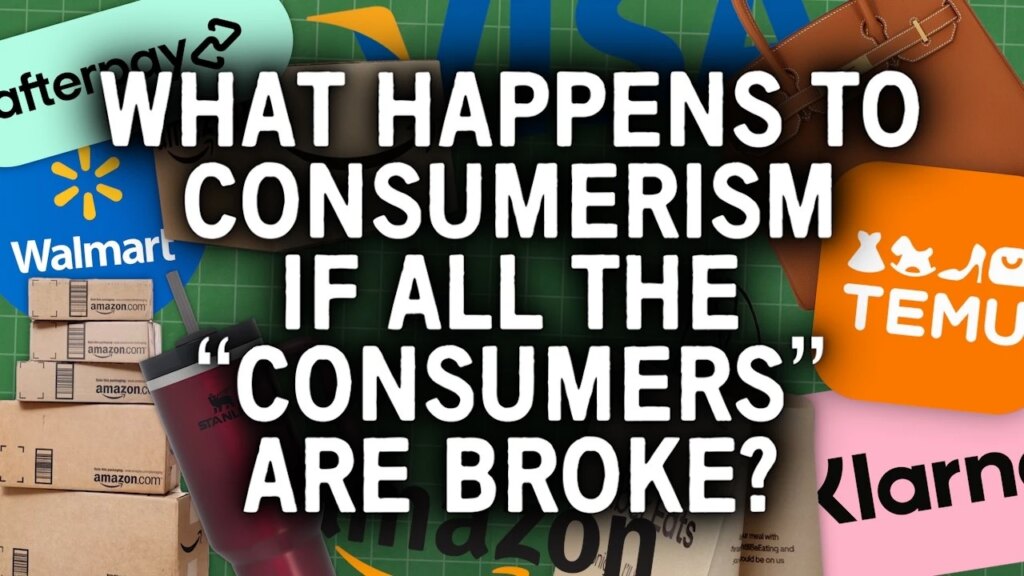
The United States has built one of the most consumption-driven economies in the world. Household spending accounts for roughly two-thirds of U.S. economic activity, which means restaurants, retailers, car dealers, airlines, technology companies, healthcare providers, and countless other businesses depend on Americans continuing to spend. When consumers feel confident, that spending can keep the economy growing even when other areas weaken.
The problem is that the American consumer is increasingly being asked to support that growth while housing costs remain high, debt continues rising, and savings rates stay relatively low. Total household debt reached $19.1 trillion in the third quarter of 2026, including $1.29 trillion in credit-card balances, while the personal saving rate was just 3.8% in September. That does not mean households are collectively on the verge of collapse, but it does make an economy heavily dependent on consumer spending more sensitive to changes in confidence, employment, asset prices, and borrowing conditions.
America Did Not Always Consume Like This
The modern American consumer economy developed gradually, especially after World War II. The United States emerged from the war with enormous industrial capacity, rising household incomes, a growing suburban population, and millions of families eager to buy homes, cars, appliances, furniture, and other goods that had been difficult to obtain during the war years. Mass production was increasingly matched by mass consumption.
Businesses also became much more sophisticated at creating and shaping demand. Advertising expanded through television, radio, print, and eventually digital media, while consumer credit made it possible to purchase goods before the cash had been saved. Rather than simply replacing products when they wore out, households were increasingly encouraged to upgrade, replace, and consume continuously.
This system produced enormous benefits. Mass production pushed down the cost of many goods, consumers gained access to products previous generations could barely imagine, and expanding demand supported millions of jobs. But it also created an economy in which continued spending became increasingly important to continued growth.
The American Economy Now Depends Heavily on the Consumer
Consumer spending is unusually important in the United States because households purchase such a large share of the goods and services produced across the economy. A slowdown in spending can therefore quickly affect corporate revenue, hiring, investment, and ultimately economic growth. This is one reason economists monitor retail sales, credit-card use, consumer sentiment, and personal spending so closely.
The dependence works in both directions. Strong employment and rising incomes support spending, while strong spending encourages businesses to hire and invest. But if households begin cutting back because they are worried about jobs, interest rates, debt, or the stock market, weaker spending can eventually reinforce the very slowdown consumers feared.
That makes household financial health a macroeconomic issue rather than merely a personal-finance concern. Millions of individual decisions to postpone a car purchase, eat out less, or cancel a vacation can collectively become a meaningful economic event.
Debt Has Become Part of the Consumption Machine
Borrowing is not inherently a sign of financial distress. Mortgages allow families to buy homes, auto loans make transportation accessible, and student loans can help finance education. Credit becomes dangerous when households increasingly rely on it to maintain ordinary consumption because income is not keeping pace with expenses.
The latest numbers show just how large the borrowing system has become. U.S. household debt reached $19.1 trillion in the third quarter of 2026, with mortgages accounting for about $13.4 trillion, auto loans $1.73 trillion, student loans $1.66 trillion, and credit cards $1.29 trillion. Aggregate delinquency also ticked higher, with 5% of outstanding debt in some stage of delinquency.
Those figures should not be interpreted as evidence that every household is overleveraged. Much of the debt belongs to households with substantial incomes and assets, and mortgage credit quality remains strong by historical standards. The concern is that high debt reduces flexibility when something goes wrong.
Low Savings Make the System More Sensitive to Shocks
A household with substantial savings can absorb a temporary job loss, unexpected medical bill, or expensive repair without immediately changing its lifestyle. A household with little financial cushion has fewer options and may need to borrow, reduce spending, or both. When that happens across millions of households at the same time, the economic effects become much larger.
The U.S. personal saving rate stood at 3.8% in September 2026, down from 4.5% in July. Saving rates can fluctuate significantly from month to month, and a national average cannot describe every family’s finances, but the current level leaves less room for error than periods when households were saving a much larger portion of disposable income.
Low savings can also reinforce dependence on credit. If income is already being consumed by housing, transportation, food, healthcare, and debt payments, unexpected expenses are more likely to end up on a credit card or home-equity line. The economy can continue functioning that way for a long time, but the system becomes more vulnerable to rising interest rates or falling incomes.
Housing Is the Expense That Changes Everything
Many consumer goods have become dramatically more affordable over time relative to their capabilities. Televisions, computers, clothing, household electronics, and countless manufactured products provide more functionality than previous generations received for comparable spending. Housing has moved in the opposite direction in many parts of the country.
Housing represented 33.4% of average consumer expenditures in 2024, making it the largest major spending category, while transportation accounted for another 17%. When half of household spending is already being absorbed by housing and transportation, families have much less ability to adjust the budget without making significant lifestyle changes.
The affordability problem is also widespread, though not as extreme as claims that nearly 80% of all Americans are housing-burdened. Harvard’s Joint Center for Housing Studies found that 43.5 million households, about one-third of U.S. households, spent more than 30% of their income on housing in 2024. Among renters, the burden was much worse: 49% were cost-burdened, while 26% spent more than half their income on housing.
Low-Income Households Have Almost No Margin Left
Housing pressure becomes especially severe at the lower end of the income distribution. Harvard found that 83% of renters earning less than $30,000 were housing-cost burdened, and 66% were severely burdened. After paying housing costs, the median renter household in that income group had just $210 per month left for all other necessities.
That helps explain why lower-income households can appear to spend more than their reported income. A family still has to buy food, transportation, utilities, and healthcare even when income is insufficient. The difference may be financed through savings, family support, government benefits, borrowing, or by falling behind on other obligations.
This is an important distinction when talking about consumer behavior. Not all consumption is discretionary. For many households, the problem is not excessive spending on luxuries but the rising cost of necessities that are difficult to reduce.
Americans Are Buying Cheaper Goods but Paying More for Scarce Essentials
One of the paradoxes of the modern economy is that many manufactured consumer goods are cheap while the resources people cannot easily avoid are expensive. A household can buy an enormous television for far less in inflation-adjusted terms than a similar technology would have cost decades ago. That does little to help someone struggling with a rent increase or a mortgage payment.
Housing is especially difficult because land in desirable areas is inherently scarce. Supply restrictions, construction costs, interest rates, property taxes, insurance, and local demand all contribute to the price. Unlike electronics, housing cannot simply be manufactured overseas and shipped into an expensive neighborhood.
The same tension can appear in healthcare, education, and childcare. Technology can drive down the price of many manufactured items, but labor-intensive and location-dependent services often remain expensive. That is one reason households can own more consumer products than previous generations while simultaneously feeling less financially secure.
Consumer Spending Is Much More Unequal Than It Looks
Americans do not contribute equally to consumer spending. BLS data show that households in the highest income quintile spent an average of about $150,342 in 2024, compared with $35,046 for the lowest quintile, more than four times as much. Income differences were even larger, which means lower-income households must devote a far greater share of what they have to basic consumption.
New Federal Reserve research also shows that spending is increasingly concentrated near the top. Families in the highest income decile accounted for roughly 28% of total spending in the 2025 Survey of Consumer Finances, while the top 1% of spenders accounted for 9%.
That matters because higher-income households tend to be less constrained by rising prices and interest costs. They are more likely to own stocks and other assets that benefited from market gains, while lower- and middle-income households have a larger share of their budgets tied to necessities. Federal Reserve Governor Christopher Waller noted in early 2026 that the highest-earning 20% of households accounted for roughly 35% of spending, while retailers were already seeing weaker behavior among lower- and middle-income customers.
A Strong Consumer Can Hide a Weak Consumer
This uneven spending pattern can make the economy look healthier than many households feel. If affluent consumers continue buying cars, traveling, eating at restaurants, and spending on entertainment, aggregate consumption can remain strong even while a large portion of the country becomes more cautious. The top of the income distribution can effectively support headline spending numbers for a significant period.
That creates what economists sometimes describe as a K-shaped economy. Higher-income households benefit from rising financial assets and continue spending, while households with fewer assets face higher borrowing costs and pressure from basic living expenses. The overall statistics can remain resilient even as economic experiences diverge sharply.
The danger is that spending at the top can also be sensitive to asset prices. If stock markets fall sharply, bonuses weaken, or higher-income households lose confidence, the part of the economy that had been masking weakness elsewhere can begin slowing too.
High Debt Can Reduce Worker Flexibility
Debt affects more than consumption. It can also influence decisions about work. A household with a large mortgage, car payment, student loans, credit-card balances, and other fixed obligations may have less ability to leave an unsatisfying job, move to a different city, start a business, or temporarily accept lower income.
That does not mean employers deliberately use household debt to suppress wages. The mechanism is more indirect: financial obligations make income continuity more valuable. A worker with six months of expenses saved has more bargaining flexibility than someone who cannot afford to miss one paycheck.
This is another way heavy consumption can shape the labor market. The more of future income that has already been committed to debt payments and fixed expenses, the harder it becomes for households to take risks that could improve their long-term economic position.
Subscriptions Have Changed the Meaning of Ownership
The modern consumer economy is also shifting away from outright ownership toward recurring payments. Entertainment, software, cloud storage, home security, fitness programs, delivery services, and even some vehicle features can now arrive through subscriptions. Each monthly charge may appear small, but collectively they convert discretionary spending into another layer of recurring obligations.
Subscriptions are attractive to businesses because recurring revenue is predictable. They can also be useful to consumers when they replace expensive upfront purchases or provide services that are genuinely used. The problem appears when households accumulate dozens of recurring charges that become difficult to track or cancel.
This creates another subtle form of financial rigidity. A household can enter each subscription voluntarily, yet the total budget becomes increasingly filled with commitments before a new month even begins. The consumer still has choices, but more effort is required to reclaim flexibility.
Consumerism Has Real Benefits
It would be too simplistic to portray American consumer culture as purely destructive. Mass consumption helped create enormous economies of scale that lowered the cost of clothing, appliances, transportation, communication, entertainment, and many other products. Competition for consumer dollars has also driven technological innovation and improved quality.
Higher consumption can improve living standards when it provides better housing, safer vehicles, access to information, healthcare, recreation, and time-saving technology. Households today enjoy goods and services that even wealthy families could not purchase a century ago. Consumption is one of the main ways economic progress becomes visible in everyday life.
The issue is not consumption itself. The problem arises when the pursuit of more goods becomes disconnected from financial capacity or when the broader economy requires households to continually increase spending simply to maintain growth.
The Environmental Cost Also Matters
Higher consumption requires resources. Products must be manufactured, packaged, shipped, used, and ultimately discarded. Even as companies become more efficient, rising volumes of consumption can create more waste and greater demand for energy and raw materials.
Technology can mitigate some of those effects through recycling, cleaner energy, lighter materials, and more efficient production. But efficiency gains do not automatically offset an economy built around continuously replacing products. A cheaper and more efficient product can actually encourage people to buy more of it.
This is another tension built into consumer capitalism. Businesses benefit from products being purchased repeatedly, while households and the environment may benefit when products last longer. Those incentives do not always align.
The Real Risk Is Not That Americans Stop Buying Everything
A consumer-led recession does not require households to suddenly stop spending. A relatively small slowdown across millions of families can be enough to weaken growth. Consumers might keep paying rent, buying groceries, and filling their cars while delaying vacations, furniture, electronics, vehicles, and restaurant visits.
Those discretionary reductions eventually reach businesses. Companies respond by slowing hiring, reducing hours, cutting investment, or discounting inventory. If the labor market weakens as a result, households become even more cautious, creating a negative feedback loop.
This is why consumer confidence can matter even before household finances actually deteriorate. People who believe conditions are about to worsen often change their behavior in advance. An economy dependent on spending is therefore also dependent on consumers believing they can safely continue spending.
Wealthy Consumers Have Become Increasingly Important
A consumption economy becomes more fragile when a disproportionate share of discretionary demand depends on a relatively small group. Wealthier households can support spending during periods when others are struggling because they possess larger savings balances, higher incomes, and more financial assets. That can help stabilize the economy in the short term.
The long-term vulnerability is concentration. Federal Reserve research found that the top 10% of families by income account for about 28% of aggregate spending, with particularly large shares of vacation, entertainment, and new-car spending. If those households pull back simultaneously, many discretionary industries can feel the effect quickly.
This does not mean a recession is inevitable or that affluent households are about to stop spending. It means the health of aggregate consumer spending increasingly depends on people whose behavior can be heavily influenced by financial markets and asset values.
The American Consumer Is Still Spending, but the Cushion Is Thinner
There are reasons not to be overly pessimistic. Employment income still supports most household spending, mortgage credit quality remains relatively strong, and consumers have continued increasing expenditures. In September 2026 alone, personal consumption expenditures rose 0.5% from the previous month.
But the cushion underneath that spending has become thinner in several areas. The saving rate is below 4%, household debt is at a record nominal level, housing burdens remain historically high, and some retailers are already describing more cautious behavior among lower- and middle-income shoppers. Those conditions do not automatically produce a recession, but they reduce households’ capacity to absorb another major shock.
The next shock could come from unemployment, interest rates, asset prices, housing, or something entirely unexpected. Consumer economies often look resilient until enough households decide at roughly the same time that they need to protect their balance sheets instead of continuing to spend.
The Question Is How Long Consumption Can Outrun Household Finances
America’s consumer economy has been remarkably successful at generating growth, innovation, and rising material living standards. Mass production lowered prices, credit expanded access, and enormous consumer demand helped create some of the world’s largest companies. The system has delivered real benefits.
It has also created a dependence on households continuously spending a large share of their income. When housing consumes a third of the typical budget, savings remain low, and consumer debt keeps climbing, there is less room to absorb mistakes or economic shocks. The vulnerability is not that Americans suddenly become unwilling to consume; it is that more households eventually become unable or unwilling to increase spending at the pace the economy has come to expect.
That may be the central contradiction of the American consumer economy. Economic growth depends heavily on people buying more, while household financial stability often depends on saving more and borrowing less. As long as incomes, employment, and asset values remain strong, those goals can coexist. When they stop moving together, America’s greatest economic strength can quickly become one of its biggest vulnerabilities.