Crypto Just Lost Trillions. Is This the Beginning of the End or Another Setup?
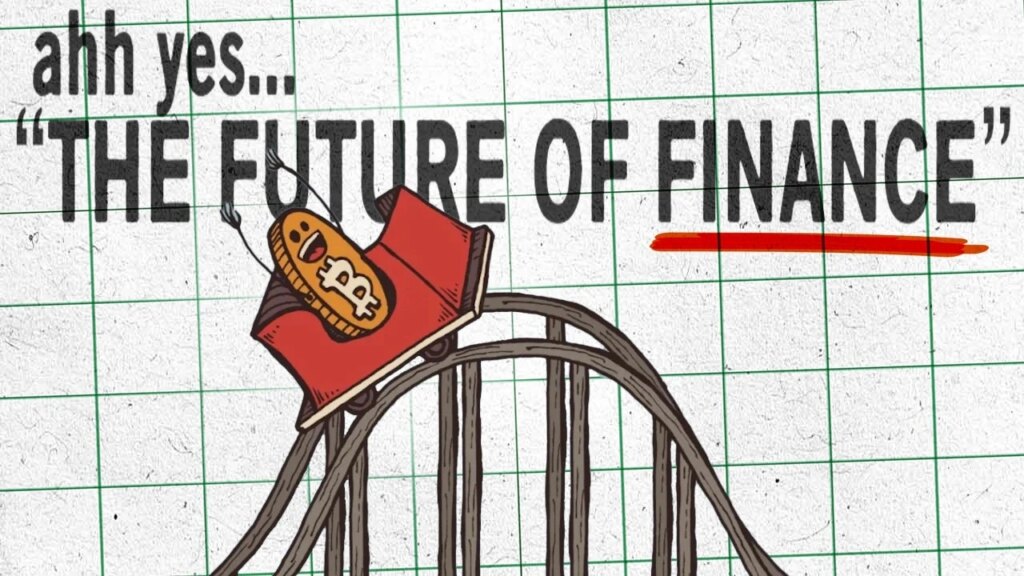
The cryptocurrency market is once again under pressure, and this time the scale is hard to ignore.
After reaching a peak market capitalization of roughly $4.4 trillion, the crypto market has now fallen to just under $2.2 trillion. That’s a loss of more than half its value, wiping out trillions in a relatively short period.
For investors, the question isn’t just what happened. It’s what this means next.
A Market Built on Volatility Is Showing It Again
Sharp declines are nothing new in crypto. The industry has seen major crashes before, from early exchange failures to regulatory crackdowns and high-profile collapses like FTX.
What’s different now is the scale.
Major cryptocurrencies have dropped nearly 50% in a matter of weeks. While that may not be the largest percentage drop in crypto history, it is one of the biggest in absolute dollar terms.
And unlike previous crashes, there isn’t a single clear trigger.
Instead, the decline appears to be the result of multiple pressures building at once economic conditions, shifting investor behavior, and growing skepticism about crypto’s long-term role.
The Store of Value Argument Is Being Tested
For years, Bitcoin has been marketed as “digital gold.”
But recent performance is challenging that narrative.
At one point, Bitcoin’s value equated to roughly 32 ounces of gold. Today, that figure has dropped to less than 12 ounces. For an asset positioned as a hedge against uncertainty, that kind of decline raises serious questions.
If crypto is viewed as a currency, the situation looks even more concerning. A 50% drop in value over a short period means a similar loss in purchasing power. That’s not stability it’s volatility.
The Original Promise Is Fading
Crypto’s early appeal was rooted in decentralization. It was positioned as an alternative to traditional finance independent, transparent, and outside government control.
That narrative has shifted.
Today, most crypto trading happens on centralized exchanges. Institutional investors have entered the space through ETFs and other financial products. Governments are increasingly involved, and in some cases, discussions around intervention or bailouts are emerging.
Instead of disrupting the financial system, crypto is becoming part of it.
At the same time, real-world use cases remain limited. Outside of trading and speculation, crypto has struggled to establish widespread practical utility.
A Shift From Belief to Speculation
The investor base has also changed.
Early adopters were often driven by ideology belief in decentralization and financial independence. Today, many participants are driven by the expectation of quick profits.
That shift matters.
When markets are fueled by speculation rather than long-term conviction, they tend to be more volatile. As prices rise, new investors enter hoping for gains. When prices fall, those same investors often exit quickly, accelerating the decline.
The rise of alternative forms of speculation, including online trading platforms and digital gambling, has only intensified this behavior.
Competition for Capital Is Growing
Crypto is no longer the only game attracting attention and investment.
Artificial intelligence has become a major focus for capital, drawing billions in funding and resources. That shift has an indirect impact on crypto, as money that might have flowed into digital assets is now being redirected elsewhere.
There are also practical costs to consider. Crypto mining consumes significant energy, comparable to some large-scale technological sectors, while generating electronic waste from rapidly outdated hardware.
These factors add another layer of scrutiny to an industry already facing questions about its long-term value.
What This Means for Investors
The broader takeaway is not necessarily that crypto is finished. It’s that the narrative is changing.
The idea of crypto as a revolutionary financial system is being replaced by a more measured view. For many investors, it is now treated like any other speculative asset something that can rise and fall sharply, rather than a guaranteed path to future wealth.
Traditional markets continue to reach new highs, while crypto struggles to regain momentum. That divergence highlights an important reality: crypto is no longer operating in its own isolated world. It is being judged alongside other investment options.
So, Is This the End?
Probably not.
But it may be the end of the story many people believed.
For crypto to regain its footing, it will need to demonstrate real utility beyond speculation. It will need to prove that it can function as more than a volatile asset class.
Until then, the market is likely to remain exactly what it has always been unpredictable, high-risk, and driven as much by sentiment as by fundamentals.
And for investors, that means one thing above all else.
Caution matters more than ever.
All writings are for educational and entertainment purposes only and does not provide investment or financial advice of any kind.