How Your Retirement Strategy Should Change at 40, 60, and 80
Retirement planning isn’t something you set and forget your strategy should evolve as your life, finances, and goals change. Yet nearly half of Americans never adjust their investment approach, even as they move through major life stages. For some, staying the course works. For many others, failing to adapt leads to unnecessary risk, lower income, and uncertainty about retirement readiness. Understanding what should shift at 40, 60, and 80 can dramatically improve long-term outcomes.
As inflation continues to erode purchasing power, setting clear savings goals becomes essential. A dollar today won’t go nearly as far ten years from now. For example, with just 3% inflation, $100 becomes the equivalent of $74 in a decade. Estimating how much you’ll need in retirement and what mix of growth and safety supports that target is the backbone of sustainable financial planning.
In your 30s and early 40s, a more aggressive strategy is often appropriate. Many individuals at this stage still have decades of investing ahead, making 70% to 100% stock allocations reasonable. A useful benchmark: by age 40, aim to have saved roughly two times your annual income. By your 50s, that target grows to six times. As retirement nears, reducing exposure to market volatility becomes more important, gradually shifting toward a more balanced portfolio.
Social Security timing plays a major role in long-term income planning. Although benefits are available as early as 62, claiming early results in permanently reduced monthly income. A benefit of about $1,400 at 62 could grow to $2,480 if delayed until age 70. For married couples, delaying the higher earner’s benefit becomes even more meaningful, since that amount typically becomes the survivor benefit as well.
As retirement approaches, reviewing budgets, lifestyle expectations, and savings goals becomes essential. Understanding your spending patterns before leaving the workforce helps prevent surprises later. Adjusting portfolio risk ensures your investments are positioned to generate income rather than relying solely on growth. This is also the time to evaluate Social Security claiming strategies and begin understanding Medicare options.
Deciding when to claim Social Security shouldn’t be a guessing game. While early claiming provides immediate income, it can dramatically reduce lifetime payouts. Delaying benefits creates a larger guaranteed income stream, which can be especially valuable for longevity and for couples planning survivor benefits. Health, cash flow needs, and personal financial goals all play critical roles in choosing the right timing.
Medicare becomes another part of the equation at age 65. Understanding the components Part A, Part B, Part C (Advantage), and Part D is crucial to avoid coverage gaps and penalties. Supplemental insurance often becomes necessary, since Medicare alone doesn’t cover all medical expenses. Missing enrollment deadlines can lead to lifelong penalties, making timely action especially important.
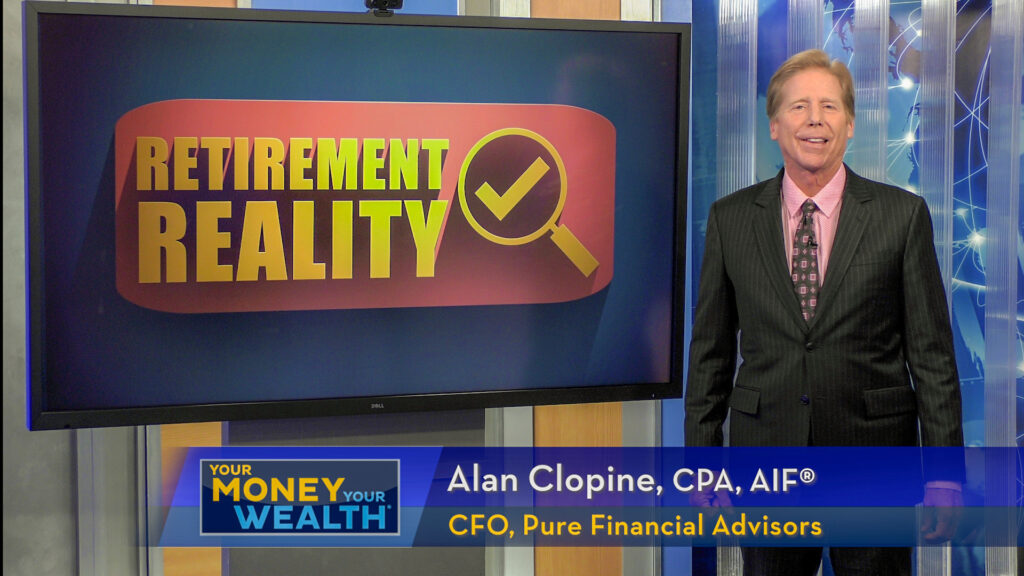
A retirement reality checklist can help you assess whether you’re on track. Reviewing savings goals, evaluating income needs, and reassessing withdrawal strategies ensures your plan supports long-term sustainability. Fixed income sources such as Social Security, pensions, and annuities should be considered alongside projected portfolio withdrawals.
As you transition into retirement, investment strategies should shift again. A more conservative approach, typically holding between 30% and 60% equities depending on risk tolerance and income needs, helps protect against volatility. The purpose of your investments changes—from accumulating wealth to generating stable income. This shift requires intentional allocation rather than relying on the same strategy used decades earlier.
Determining how much to withdraw from retirement accounts is a core part of income sustainability. A conservative portfolio may support a withdrawal rate of around 4.1% with a high level of certainty. Balanced portfolios typically support around 3.5%, while growth-oriented portfolios may allow only about 3% due to higher volatility. Withdrawing too much too early increases the risk of running out of money, especially during market downturns.
Tax planning becomes more important with age as well. Required Minimum Distributions (RMDs) can push retirees into higher tax brackets if not managed proactively. Roth conversions may help reduce future RMDs, though they’re not always appropriate. Individuals can also donate up to $100,000 directly from an IRA to charity through Qualified Charitable Distributions (QCDs), avoiding taxes on those withdrawals. Missing an RMD triggers a painful 50% penalty, making awareness and planning essential.
Retirement is a multi-decade journey that requires regular adjustments, thoughtful planning, and strategic decision-making. Your needs at 40, 60, and 80 will be completely different your financial strategy should reflect that.
Intended for educational purposes only. Opinions expressed are not intended as investment advice or to predict future performance. Past performance does not guarantee future results. Neither the information presented, nor any opinion expressed constitutes a solicitation for the purchase or sale of any security. Consult your financial professional before making any investment decisions. Opinions expressed are subject to change without notice.
IMPORTANT DISCLOSURES:
• Investment Advisory and Financial Planning Services are offered through Pure Financial Advisors, LLC. A Registered Investment Advisor.
• Pure Financial Advisors, LLC. does not offer tax or legal advice. Consult with a tax advisor or attorney regarding specific situations.
• Opinions expressed are subject to change without notice and are not intended as investment advice or to predict future performance.
• Investing involves risk including the potential loss of principal. No investment strategy can guarantee a profit or protect against loss in periods of declining values.
• All information is believed to be from reliable sources; however, we make no representation as to its completeness or accuracy.
• Intended for educational purposes only and are not intended as individualized advice or a guarantee that you will achieve a desired result. Before implementing any strategies discussed you should consult your tax and financial advisors.