Is the Cheap Travel Era Over?
Cheap travel was never guaranteed. It just lasted long enough that many people started to treat it like a permanent feature of modern life.
For roughly three decades, a remarkable thing happened: airfare and accommodation costs often rose more slowly than many other parts of life, making travel feel unusually accessible even as housing, healthcare and education became more expensive. For younger consumers in particular, budget travel became one of the few areas where modern life still seemed to offer a bargain. That era now looks much less secure.
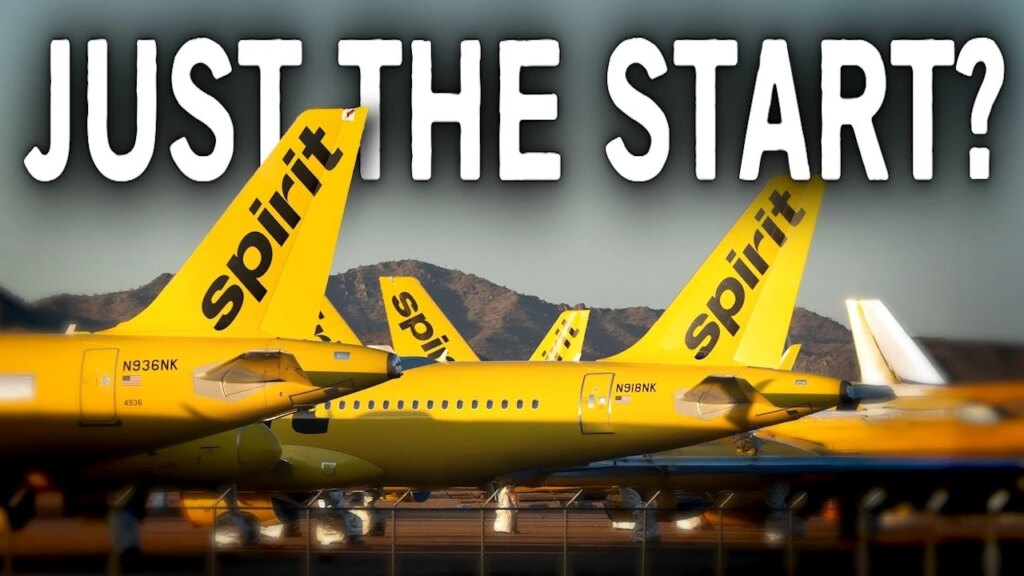
The collapse of Spirit Airlines is one of the clearest warnings.
Budget carriers have always operated on thin margins, but their role in the market mattered far beyond their own passengers. They forced larger airlines to compete on price. They made low-cost travel feel normal. And they helped anchor consumer expectations around what a flight should cost. When a major budget player disappears, the damage is not confined to one brand. It weakens price pressure across the entire system.
That matters because the travel industry is changing in a more structural way than many consumers realize. Airlines are increasingly learning that premium seats generate better economics than packing in as much standard economy capacity as possible. Premium economy, business class and other upsold experiences now produce much more revenue per square foot than traditional coach seating. When that becomes the business logic, airlines have less reason to preserve the old bargain model. They can make more money serving fewer travelers at higher price points.
This is not just an airline story. It is a broader travel-market story.
Airbnb, once seen as a cheaper alternative to hotels, has also moved upmarket. The platform’s removal of hundreds of thousands of low-quality listings may have improved standards, but it also reduced the stock of truly budget-friendly options. In cities with tighter short-term rental rules, the effect has been even more dramatic. Affordable inventory disappeared, hotel prices climbed, and the remaining tourism market tilted further toward higher-spending travelers.
What used to be a democratizing force in travel is becoming more selective. The traveler who once pieced together a low-cost trip through budget flights and cheap short-term rentals is increasingly being pushed out by a market that has found it can earn more by catering upward.
Fuel costs make that transition even harder to reverse.
Budget airlines are especially vulnerable to oil shocks because they do not have much pricing power or margin to absorb rising costs. When jet fuel jumps sharply, the low-cost model becomes fragile very quickly. Higher-end carriers can often spread the damage across premium cabins and wealthier customers. Budget carriers cannot. That means an energy shock does not just raise prices. It can remove the very companies most committed to keeping prices low.
And the fuel problem is arriving alongside supply constraints that already favor higher fares. Aircraft backlogs remain enormous. Engine shortages and delivery delays are limiting new capacity. Existing fleets are being reconfigured toward premium layouts. In other words, even if demand softens, the industry is not set up to flood the market with cheap seats the way it once did. The system is becoming structurally less friendly to bargain travel.
The dollar adds another layer to the problem.
For years, Americans benefited from a relatively strong currency that helped make overseas trips feel more affordable. That advantage made foreign hotels, meals and experiences look cheaper in dollar terms, even when local prices were rising. But if the dollar weakens, that tailwind fades. International travel becomes more expensive for Americans in real terms even without a dramatic local price increase. That is one reason a trip that felt like a bargain a few years ago can start to feel much more ordinary today.
This shift matters because cheap travel was doing more social work than people realized. For a generation squeezed by housing costs, student debt and economic instability, travel remained one of the few aspirational purchases that still seemed attainable. It was a release valve. It was an identity marker. And for many people, it was one of the clearest ways to feel upwardly mobile without actually becoming wealthier.
If that outlet narrows, the loss is more cultural than it first appears.
The travel industry, meanwhile, seems comfortable with the adjustment. Higher-spending customers are more attractive. Premium products are more profitable. Cities often prefer visitors who spend more and strain less of the lower-cost accommodation market. From the industry’s perspective, moving upscale is not a failure. It is rational optimization. From the consumer’s perspective, it feels like exclusion dressed up as market efficiency.
That is why the end of cheap travel is not just about one airline or one platform. It is the result of several forces reinforcing each other: fewer low-cost carriers, higher fuel costs, premium-seat economics, tighter short-term rental rules, weaker budget inventory and currency pressure. None of these trends alone would end the bargain era. Together, they may.
Travel will not disappear. It may still remain cheaper in real terms than it was decades ago. But the version of travel many consumers became used to, frequent, flexible and surprisingly affordable, is becoming harder to sustain in a market that has discovered there is more money in scarcity than in accessibility.
The danger, then, is not that travel becomes impossible. It is that it becomes normal again as a luxury.
All writings are for educational and entertainment purposes only and does not provide investment or financial advice of any kind