Lamborghini Cancels Electric Supercar, Saves the V12
By Nik J. Miles | November 1, 2026
Lamborghini has canceled its all-electric Lanzador, but the real surprise is what the Italian manufacturer intends to do with electricity instead. Rather than replace its famous combustion engines, Lamborghini is using electric motors to make those engines more powerful, responsive and, in some cases, even more outrageous.
After talking exclusively with Lamborghini CEO Stephan Winkelmann at Pebble Beach, I came away with a clearer understanding of the company’s priorities. Electric power is welcome. Silencing the engine is quite another matter.
There is a certain irony in Lamborghini using batteries to preserve the V12. For years, electrification was presented as the technology that would eventually bring the traditional supercar to an end. Lamborghini appears to have found a rather different use for it.
Why Lamborghini Canceled the Electric Lanzador
Back in 2023, Lamborghini introduced the Lanzador, an ambitious all-electric concept with an unusual combination of features. It was a grand tourer with four seats, a raised driving position and enough proposed power to embarrass almost anything sharing the road.
The concept promised more than one megawatt of output, equivalent to approximately 1,341 horsepower. It was supposed to represent Lamborghini’s first step into a future without gasoline engines.
That future has been postponed.
In February 2026, Lamborghini confirmed that the fully electric Lanzador would not enter production as originally intended. The company instead outlined a plug-in hybrid direction for a future fourth model line.
Winkelmann has explained that demand for completely electric vehicles among Lamborghini’s traditional customers is exceptionally limited. The company could engineer an electric supercar, but engineering capability is not the same thing as a viable business case.
And that distinction matters when you’re developing a car that requires enormous investment and may sell in relatively small numbers.
To understand the original plan, the U.S. Department of Energy explains how all-electric vehicles work, using energy stored in batteries rather than gasoline engines.
A battery-electric vehicle offers instant torque, quiet operation and no direct tailpipe emissions. Those advantages are attractive to many buyers. Lamborghini’s problem is that quiet operation is not necessarily what its customers want.
You may also enjoy: Ferrari Did It. AMG Did It. Lamborghini Didn’t.
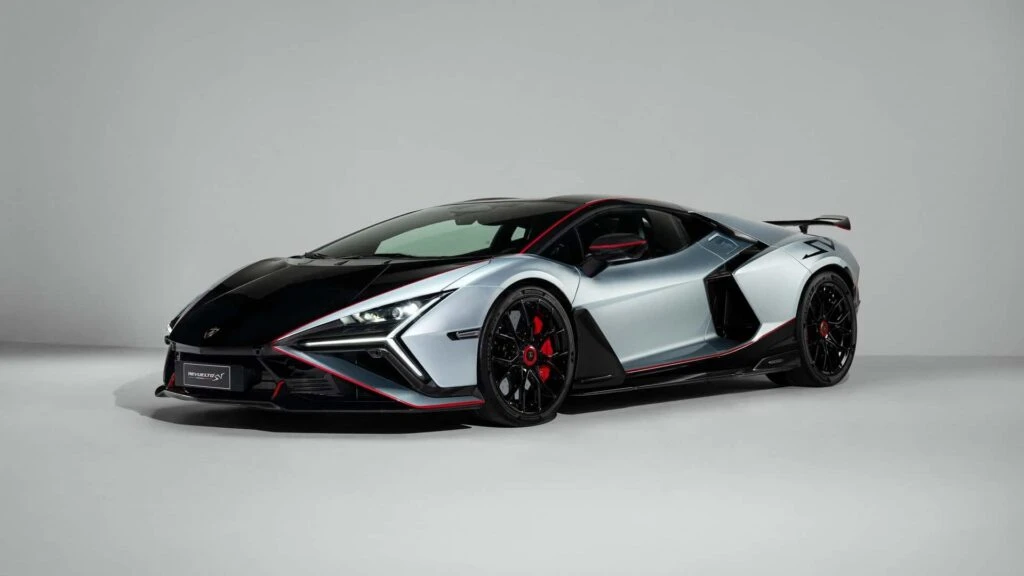
Revuelto SVThe most important photo collection for this article, covering the new hybrid V12 supercar.
What Lamborghini’s CEO Told Me at Pebble Beach
During our conversation at Pebble Beach, I asked Winkelmann about the brand’s identity and its future technology.
His explanation of hybrid power focused on combining the advantages of electricity and gasoline rather than choosing one over the other.
The electric battery provides additional performance, while the combustion engine continues to deliver the mechanical sensations customers expect when they buy a Lamborghini.
That includes the sound of an engine climbing toward its redline, the vibration that accompanies it and the response a driver feels when accelerating out of a corner.
There is considerable engineering behind those sensations. Electric motors develop torque quickly and can help deliver traction precisely. A high-revving gasoline engine provides a different power-delivery character and the sound that comes with combustion.
Both technologies have advantages, and Lamborghini sees value in using them together.
The U.S. Department of Energy has a useful explanation of how plug-in hybrid systems work, including the relationship between batteries, electric motors and gasoline engines.
Importantly, a plug-in hybrid is not automatically an economical vehicle. Its efficiency depends on the design, vehicle weight, engine, driving conditions and how frequently the battery is charged.
In Lamborghini’s case, the primary objective is performance. Fuel savings are not what brings customers into a showroom to purchase a V12 supercar.
Revuelto Miura 60° HomageOfficial photographs of the 99-car anniversary edition.
The Revuelto SV Shows Why Electricity Is Staying
The new Lamborghini Revuelto SV is probably the clearest expression of this strategy.
The latest Super Veloce combines a naturally aspirated 6.5-liter V12 engine with three electric motors. Total output is 1,065 metric horsepower, equivalent to approximately 1,050 U.S. horsepower.
Lamborghini claims acceleration from zero to 62 mph in 2.4 seconds and a maximum speed of approximately 216 mph.
That makes the Revuelto SV faster and more powerful than the standard Revuelto, which produces 1,015 metric horsepower, approximately 1,001 U.S. horsepower.
But the real engineering story involves much more than increasing horsepower.
Why handling matters as much as acceleration
During our interview, Winkelmann emphasized that acceleration and maximum speed are only part of what makes an extraordinary supercar.
Handling behavior, the vibrations a driver experiences and the sense of connection between the vehicle and the person behind the wheel are equally important.
That helps explain the SV’s extensive chassis, suspension, aerodynamic and braking development.
The car includes specialized carbon-ceramic braking technology, performance-oriented tires and revised aerodynamic systems intended to improve control at the speeds the vehicle can achieve.
Its upgraded 7.3-kWh high-voltage battery is also designed to support more consistent performance during repeated demanding use.
That is an important distinction. A car capable of producing enormous power once is impressive. A car that can repeat that performance while maintaining control, braking ability and predictable handling is considerably more useful.
Electric motors contribute to that process by allowing rapid changes in the power delivered through the drivetrain.
The result is a vehicle that uses electrification as part of its dynamic engineering rather than simply as a device for saving fuel.
You may also enjoy: Lamborghini Revuelto SV Makes Hybrid History
Pebble Beach, 43 Historic MiurasParticularly useful for the heritage section and the national news version.
What Does the Revuelto SV Actually Offer?
SpecificationLamborghini Revuelto SVEngine6.5-liter naturally aspirated V12ElectrificationThree electric motors, plug-in hybridCombined output1,065 CV, approximately 1,050 hp0–62 mph2.4 seconds, manufacturer claimTop speedApproximately 216 mphHigh-voltage battery7.3 kWhConfigurationTwo-seat supercarU.S. MSRPNot publicly verifiedEPA fuel economyNot yet established for this specification
These figures illustrate the difference between electrification as a performance tool and electrification as an efficiency strategy.
The Revuelto SV is not intended to replace an economical family hybrid. It is an exotic performance machine that uses battery technology to help deliver capabilities its V12 could not achieve in quite the same way on its own.
Anyone considering a plug-in hybrid should understand that electric driving range and fuel consumption can vary enormously between vehicles. The Department of Energy explains the ownership and charging characteristics of plug-in hybrids.
For a prospective Revuelto SV buyer, the more immediate questions involve allocation, personalization, service arrangements, tire replacement costs and whether the additional performance justifies the premium over a standard Revuelto.
Without a verified U.S. MSRP or a comparable purchase quotation, it would be misleading to claim precisely how much that premium will be.
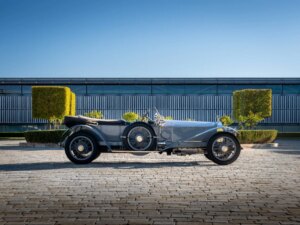
Original Lamborghini MiuraFor the 60-year heritage comparison.
The Miura Turns 60, and Lamborghini Knows Exactly What That Means
To understand why Lamborghini is reluctant to abandon the combustion engine, it helps to look back at one of the most important cars the company ever produced.
The Lamborghini Miura arrived in 1966 with a V12 mounted behind the occupants. Its remarkable proportions helped establish what the modern supercar should look like.
It was low, dramatic and unapologetically impractical. In other words, it understood the assignment.
Sixty years later, Lamborghini celebrated the Miura at Pebble Beach, where 43 historic examples gathered in one location.
The company also introduced the Revuelto Miura 60° Homage, a special series limited to just 99 cars.
The tribute combines historical colors and design details with the standard Revuelto’s modern plug-in hybrid V12 powertrain.
Its combined output of 1,015 CV is approximately 1,001 U.S. horsepower.
The special edition includes distinctive paint combinations inspired by the original Miura, special interior details and identification plaques marking its limited production.
It is important not to confuse the Miura 60° Homage with the more powerful Revuelto SV. They share a model family, but they are separate vehicles with different specifications and purposes.
The Miura tribute demonstrates something that modern supercar manufacturers understand very well: customers are not simply paying for transportation or acceleration.
They are paying for history, rarity, design and an experience that cannot easily be duplicated.
You may also enjoy: Lamborghini Miura Tribute: Only 99 Will Ever Exist
Lamborghini Lanzador electric conceptIllustrates the canceled fully electric production plan.
Lamborghini’s Other Hybrids Make the Strategy Clearer
The Revuelto is only one part of Lamborghini’s electrified lineup.
The Temerario uses a twin-turbocharged V8 combined with three electric motors. It replaces the naturally aspirated V10 formula associated with the Huracán while retaining an extraordinarily high-revving gasoline engine.
The Urus SE brings plug-in hybrid technology to Lamborghini’s performance SUV.
These vehicles approach electrification from different directions, but all maintain a combustion engine at the center of the driving experience.
That contrasts with a conventional hybrid, which may use electric assistance primarily to reduce gasoline consumption. The Department of Energy explains how conventional hybrid vehicles operate and why they do not require external charging.
For Lamborghini owners, the distinction matters. A plug-in hybrid adds charging equipment and another system that requires long-term maintenance. It can provide substantial performance benefits, but it is not automatically simpler or cheaper to own.
Nor does the hybrid badge mean the vehicle has suddenly become an environmental bargain. Fuel consumption, electricity generation and the conditions under which a vehicle is driven all matter.
You may also enjoy: Dubai Police Lamborghini Temerario Has 907 HP and a Mission
Lanzador Electric ConceptEssential for showing the electric vehicle at the center of the cancellation story.
Why Lamborghini’s Financial Results Matter
Lamborghini reported record first-half revenue of €1.74 billion in 2026, up 7.4 percent from the same period a year earlier.
But vehicle deliveries declined 4.6 percent to 5,422 cars, and profitability faced pressure from tariffs, currency movements and wider market conditions.
That presents an interesting business challenge.
Lamborghini can charge extraordinary prices because its vehicles offer something unusual. But exclusivity does not eliminate development costs, manufacturing expenses or economic uncertainty.
Creating an entirely new electric vehicle requires substantial engineering investment. Batteries, electrical architecture, crash engineering, manufacturing processes and software must all be developed or adapted.
That spending only makes sense if enough customers want the result.
During our Pebble Beach interview, Winkelmann emphasized the importance of discipline and concentrating on what the company does best.
There is something reassuringly unfashionable about an executive acknowledging that his company cannot do everything.
The difficult part, of course, is knowing which ideas to reject before they become extraordinarily expensive mistakes.
Revuelto SVThe most important photo collection for this article, covering the new hybrid V12 supercar.
Does Lamborghini’s Decision Mean Electric Supercars Are Finished?
No. It means Lamborghini has decided that the business case for its proposed electric grand tourer is not strong enough today.
Other manufacturers are pursuing fully electric high-performance vehicles, and the market for battery-powered cars extends far beyond Lamborghini’s wealthy customers.
Electric vehicles offer genuine advantages, including smooth acceleration, reduced mechanical complexity in their drivetrains and no direct tailpipe emissions. The Department of Energy provides an overview of the different electric-drive technologies available to consumers.
But there are also differences in charging convenience, weight, infrastructure needs and operating characteristics.
Lamborghini’s decision is particularly relevant because its customers often regard sound and mechanical sensation as essential parts of the vehicle’s character.
That makes an electric Lamborghini a different proposition from an electric commuter sedan or family SUV.
It also explains why competitors such as Ferrari and Mercedes-AMG may reach different conclusions about their own products.
You may also enjoy: Lamborghini Monterey Car Week: Miura Meets 801-HP Urus
Lamborghini Revuelto SV, cockpitFor the technology and driver-experience discussion.
What Buyers Should Know Before Ordering a Hybrid Lamborghini
If you’re considering one of Lamborghini’s current hybrid models, there are several practical differences worth understanding before discussing paint colors and carbon-fiber trim.
Charging: Plug-in hybrid capability can provide electric-only operation, but the electric range depends on the particular model and configuration.
Performance: Combined system horsepower is not the same as engine-only output. Electric motors contribute to the manufacturer’s overall figure.
Servicing: A hybrid supercar combines a complicated gasoline powertrain with high-voltage electrical equipment, requiring appropriately trained technicians.
Operating costs: Expensive tires, brakes, insurance and scheduled maintenance remain important, regardless of whether the vehicle has a battery.
Safety: Buyers should use the NHTSA recall lookup to check the status of an individual vehicle before purchase.
The Revuelto SV also needs to be considered against the standard Revuelto. Unless an owner plans to exploit the additional performance and more specialized handling, the standard vehicle already offers extraordinary capability.
The Miura 60° Homage is a different purchasing decision. Its appeal lies in scarcity and historical significance rather than maximum track performance.
For a prospective Lanzador buyer, the situation is much simpler: the original fully electric production model is canceled, and the future hybrid grand tourer does not yet have finalized specifications and pricing available for a meaningful buying comparison.
Frequently Asked Questions
Has Lamborghini canceled its first electric car?
Yes. Lamborghini canceled the planned battery-electric production version of the Lanzador. The company is pursuing a plug-in hybrid direction for a future grand tourer instead.
Is Lamborghini abandoning electric technology?
No. Lamborghini already uses electric motors and high-voltage batteries in its Revuelto, Temerario and Urus hybrid vehicles. The company has also indicated that it continues to study future battery-electric models.
How much horsepower does the Lamborghini Revuelto SV have?
Lamborghini quotes 1,065 metric horsepower, or approximately 1,050 U.S. mechanical horsepower, from its combined V12 plug-in hybrid system.
How many Revuelto Miura 60° Homage cars will be built?
Lamborghini has announced a limited series of 99 examples to celebrate the original Miura’s 60th anniversary.
Will the next Lamborghini grand tourer have a V12?
Lamborghini has not announced the final engine configuration of its future hybrid grand tourer. It would be premature to assume the vehicle will use a V12.
Does a Lamborghini plug-in hybrid need to be charged?
A plug-in hybrid can use its gasoline engine without relying exclusively on external charging, but plugging it in allows the owner to take fuller advantage of its battery and electric-driving capabilities. Requirements and benefits vary by model.
Test Miles Verdict: Lamborghini Has Chosen Character Over Fashion
I understand why Lamborghini changed direction.
The company exists to build vehicles that are memorable. Extraordinary acceleration is part of that experience, but sound, mechanical character, visual drama and driver involvement are equally important.
What impressed me most during my conversation with Winkelmann was the emphasis on the feeling of a car rather than simply its numerical achievements.
It’s easy to build a marketing campaign around a huge horsepower figure. Explaining why a driver might actually enjoy that horsepower is much more interesting.
The Revuelto SV is an excellent demonstration of what Lamborghini is trying to accomplish. Electric motors deliver more performance, while the V12 remains a central part of the car’s identity.
The trade-off is complexity, cost and continued fuel consumption. A buyer seeking the simplicity of a fully electric drivetrain will have to look elsewhere.
For Lamborghini’s traditional audience, though, a high-performance hybrid makes considerable sense.
It gives customers something new without asking them to abandon what attracted them to the brand in the first place.
And if electricity can help keep an extraordinary V12 engine alive, I suspect very few Lamborghini customers will complain.
Nik J. Miles | Test Miles