Retirement Account “Leakage” Is Quietly Stealing Your Future Income. Here’s How to Stop It
Retirement planning is supposed to be the part of life where things get simpler. Save consistently, invest wisely, and eventually trade the work schedule for a life schedule. But for millions of Americans, retirement accounts are quietly leaking money long before retirement ever begins. Not through a market crash. Not through one catastrophic decision. Through small “reasonable” choices that add up over time.
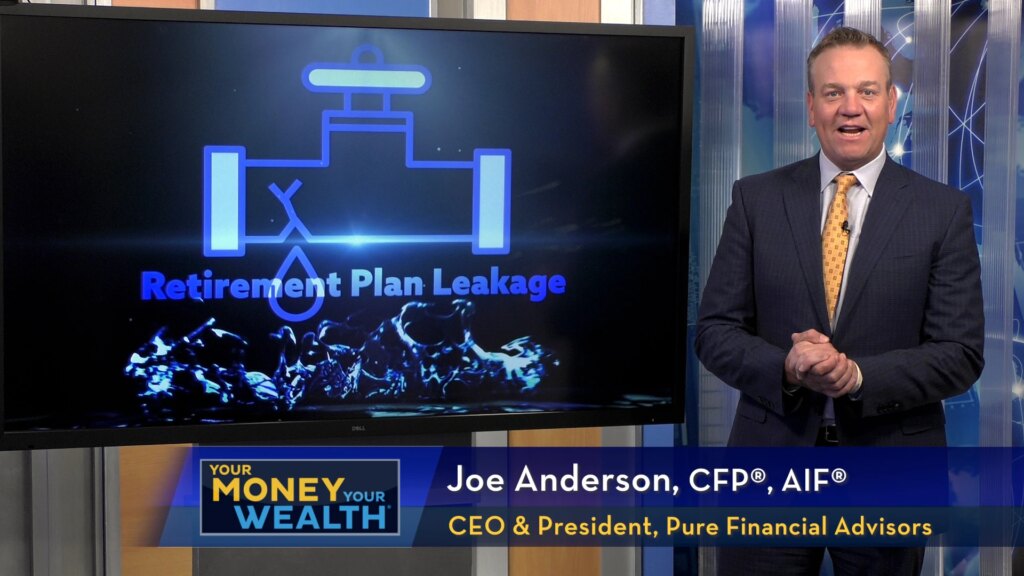
That slow drain has a name: retirement account leakage. And it can be the difference between a comfortable retirement and one that feels like constant financial pressure.
What retirement account leakage actually means
Leakage is any money that leaves a retirement account earlier than intended. The most common examples are 401(k) loans, early withdrawals, cashing out old plans when switching jobs, or tapping retirement savings for emergencies.
It rarely feels like a major mistake in the moment. It usually feels like a temporary fix. But the long-term impact can be massive. Some research suggests that retirement savers can end up with meaningfully less in their accounts over time due to leakage behavior, and that translates directly into less retirement income later.
Retirement accounts are designed to work best when they are boring. Money goes in, stays in, compounds, and grows quietly for decades. Leakage breaks that compounding engine.
The most common causes of leakage (and why they’re so expensive)
Retirement leakage usually happens in a few predictable ways.
1) 401(k) loans that never fully recover
401(k) loans get marketed as “borrowing from yourself,” which makes them sound harmless. But loans still have real costs.
When money leaves your investments, it stops compounding in the market. Even if the loan is repaid, the missed growth can’t be replaced. And if someone changes jobs or gets laid off, many plans require repayment on a short timeline or the loan becomes taxable.
That’s where a loan turns into a double hit: lost growth plus taxes.
2) Early withdrawals that trigger penalties and taxes
The IRS generally charges a 10% early withdrawal penalty if retirement money is taken out before age 59½, on top of ordinary income taxes.
So someone who withdraws $20,000 may not actually “receive” $20,000. Between taxes and penalties, the net amount can shrink fast, especially if the withdrawal bumps them into a higher bracket for the year.
This is one of the most painful forms of leakage because it’s permanent. That money doesn’t just lose future growth. It leaves the retirement system entirely.
3) Small distributions and cash-outs after job changes
One of the most overlooked leaks happens when people leave a job and cash out a small 401(k) balance.
It’s easy to justify. The balance doesn’t feel “big enough to matter.” But small accounts are often the beginning of long-term wealth. Cashing out repeatedly over a career can erase years of progress.
The best move is usually a rollover into an IRA or into the next employer plan (if the plan allows it), keeping the money invested and intact.
4) Supporting adult children at the expense of retirement
A major modern leak isn’t financial illiteracy. It’s financial loyalty.
Many parents are still financially supporting adult children helping with rent, groceries, car payments, student loans, or lifestyle gaps. The intention is good. The math is dangerous.
When money goes to adult children instead of retirement savings, the tradeoff is usually invisible today but brutal later. Retirement doesn’t offer payment flexibility. You can’t “finance” retirement the way people finance everything else.
Supporting family is not wrong. But it needs boundaries. Otherwise, parents risk becoming financially dependent later—sometimes on the same children they were trying to help.
The emergency fund problem: the #1 cause of panic withdrawals
Retirement accounts become the emergency fund when someone doesn’t have a real emergency fund.
That’s why cash savings matter so much. Without it, every unexpected expense becomes a retirement threat: car repairs, medical bills, home maintenance, job loss, travel emergencies, family crises.
A true emergency fund acts like a financial shock absorber. It prevents retirement withdrawals. It prevents credit card debt spirals. It keeps long-term plans from being destroyed by short-term chaos.
Many financial planners recommend building several months of expenses in cash reserves, but the right number depends on job stability, health, and household responsibilities.
The goal isn’t perfection. The goal is separation: emergencies should hit the emergency fund, not the retirement account.
Retirement withdrawal rules that surprise people (and create accidental leakage)
Retirement rules are not intuitive, and confusion leads to expensive mistakes.
The Rule of 55 (a major exception people miss)
Many people assume retirement money is locked until 59½. But for 401(k)s, there is an important exception commonly known as the Rule of 55.
If someone leaves their job in the year they turn 55 or later, they may be able to access that employer’s 401(k) without the 10% early withdrawal penalty (income taxes still apply).
This rule doesn’t apply to every account, and it doesn’t automatically apply to IRAs. But it can be a huge planning tool for early retirees who separate from service at the right time.
Required Minimum Distributions (RMDs) are a different kind of leakage
RMDs are not “leakage” in the traditional sense, because they’re mandatory. But they can still feel like forced withdrawals that disrupt tax planning.
Under current rules, RMDs generally begin at age 73 for many retirees. And missing an RMD comes with a penalty that can be severe. The IRS penalty for failing to take an RMD used to be 50%, and while penalties have been reduced under newer rules for many situations, the consequence is still expensive and avoidable.
The point is simple: RMDs require planning. If withdrawals aren’t managed earlier, retirees can get pushed into higher tax brackets later right when they want their income to be stable.
The leak nobody sees: retirement fees
Fees are the slowest leak, and often the most damaging over decades.
Many people assume their retirement accounts are “free.” In reality, fees can come from multiple layers:
- Fund expense ratios
- Plan administrative fees
- Advisor or management fees
- Trading costs inside the account
Even a 1% difference in annual fees can translate into a massive difference in outcomes over 20–30 years. The reason is simple: fees don’t just reduce your balance once. They reduce your balance every year, and they reduce the growth you would have earned on that money.
The fix is not always complicated. It starts with visibility: know what you’re paying, what you’re getting, and whether lower-cost options exist.
How to stop retirement leakage: a practical action plan
Stopping leakage doesn’t require extreme discipline. It requires a system that prevents bad decisions when life gets stressful.
Here are the moves that matter most:
1) Build a real emergency fund first
Retirement accounts should not be the first line of defense for life’s surprises. Cash reserves protect your long-term plan.
2) Avoid 401(k) loans unless the alternative is worse
If the choice is between a 401(k) loan and high-interest debt, the loan may still be the lesser evil. But it should be treated as a last resort, not a normal financial tool.
3) Automate retirement contributions
Automation reduces decision fatigue. It makes saving the default, not the debate.
4) Don’t cash out old plans
When leaving a job, roll the money. Keep the compounding engine alive.
5) Know your withdrawal rules before you need them
Most retirement mistakes happen under pressure. Understanding age rules, penalty exceptions, and tax impact in advance prevents costly “panic math.”
6) Track fees like they’re real bills (because they are)
If fees are unclear, ask for clarity. If costs are high, shop for better options. Retirement investing isn’t about finding the hottest fund. It’s about keeping more of what you earn.
The real takeaway: retirement success is often about preventing small mistakes
Retirement planning is usually framed as chasing big goals: a million dollars, the perfect portfolio, the ideal withdrawal rate. But for most households, the bigger win comes from plugging the leaks.
Leakage doesn’t happen because people are irresponsible. It happens because life is expensive, emergencies are real, and the retirement system is complicated.
The good news is that most leakage can be reduced with simple guardrails: emergency savings, smart account rules, automated investing, and fee awareness.
And when retirement money stays where it belongs, the compounding does what it’s supposed to do: quietly turn consistency into freedom.
Intended for educational purposes only. Opinions expressed are not intended as investment advice or to predict future performance. Past performance does not guarantee future results. Neither the information presented, nor any opinion expressed constitutes a solicitation for the purchase or sale of any security. Consult your financial professional before making any investment decisions. Opinions expressed are subject to change without notice.
IMPORTANT DISCLOSURES:
• Investment Advisory and Financial Planning Services are offered through Pure Financial Advisors, LLC. A Registered Investment Advisor.
• Pure Financial Advisors, LLC. does not offer tax or legal advice. Consult with a tax advisor or attorney regarding specific situations.
• Opinions expressed are subject to change without notice and are not intended as investment advice or to predict future performance.
• Investing involves risk including the potential loss of principal. No investment strategy can guarantee a profit or protect against loss in periods of declining values.
• All information is believed to be from reliable sources; however, we make no representation as to its completeness or accuracy.
• Intended for educational purposes only and are not intended as individualized advice or a guarantee that you will achieve a desired result. Before implementing any strategies discussed you should consult your tax and financial advisors.