The 2026 Mazda CX-50 Delivers Luxury Features for Family-Car Money
Most families I talk to are not asking for more horsepower. They are asking for something quieter.
They want comfort without a luxury badge surcharge. They want features that feel indulgent, but not financially reckless. They want a car that feels expensive without costing like one.
That is why the 2026 Mazda CX-50 is interesting right now.
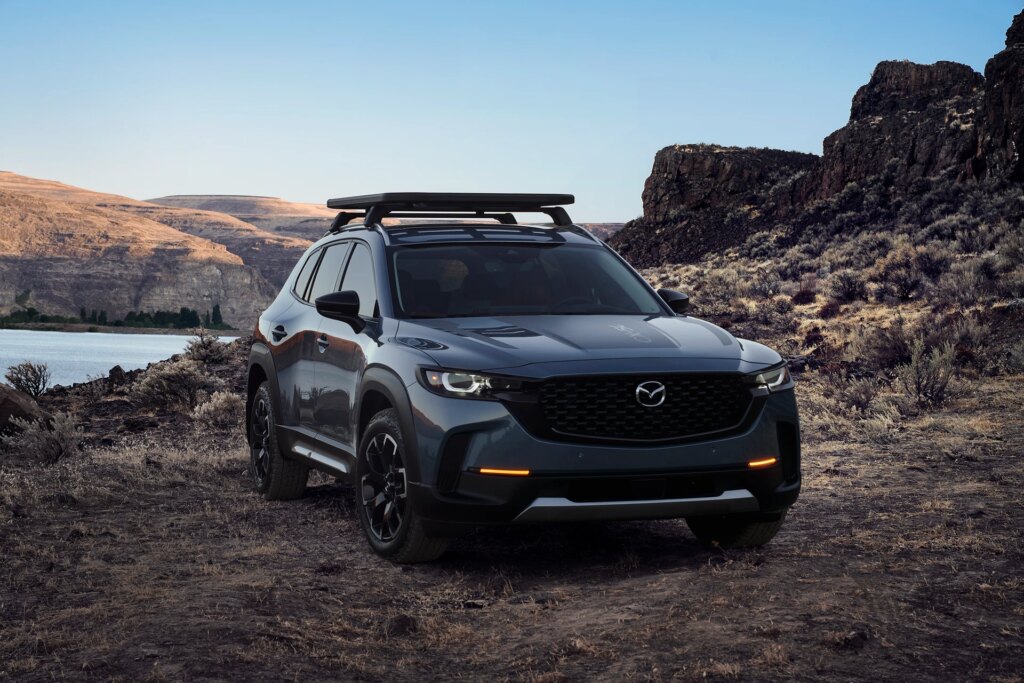
Because beneath its outdoorsy stance and sensible sizing, this compact SUV quietly delivers luxury-grade features at family-car pricing. And it does so without turning the monthly payment into a horror story.
Let’s start with the basics. Pricing begins at $29,900 before destination. In 2026, that number feels refreshingly grounded. Standard all-wheel drive comes with it. No upgrade path. No forced bundle.
Even at the entry level, you get a 10.25-inch screen, wireless Apple CarPlay and Android Auto, Alexa Built-In, and four USB-C ports. Blind spot monitoring, automatic emergency braking, and lane keep assist are standard. That is not luxury anymore. That is baseline competence.
But as you move up the trim walk, something more interesting happens.
The Preferred trim adds heated seats, a power liftgate, parking sensors, and a panoramic moonroof. These are the things that make daily life better. Heated seats on cold mornings. A liftgate that opens when your hands are full of groceries or sports bags. A moonroof that makes the interior feel airy rather than boxed in.
Mazda even offers a white interior option for $200. In many luxury brands, white upholstery arrives as part of a multi-thousand-dollar package. Here, it is the price of a dinner out.
Step into the Premium trim, and the conversation shifts further. Ventilated seats. Memory functions. Bose audio. A head-up display projecting speed and navigation directly onto the windshield. Twenty-inch wheels. These are features that used to signal a move into a luxury showroom.
The hybrid versions push this even further.
The CX-50 Hybrid produces 219 horsepower and delivers 38 miles per gallon combined, with a total driving range of 551 miles. That kind of range changes road trips. It means fewer stops, less planning, and less fuel anxiety. Hybrid pricing begins at $34,750, undercutting several less efficient rivals.
Hybrid Premium trims add leather upholstery and an exclusive red interior. Hybrid Premium Plus stacks heated rear seats, a heated steering wheel, adaptive headlights, and a windshield-projected head-up display.
Heated rear seats in a compact SUV priced in the mid-thirties. That used to require a German badge.
Even the turbocharged versions, which deliver up to 256 horsepower and 320 pound-feet of torque on premium fuel, remain grounded in pricing. The Turbo Premium Plus tops out at $42,900 before destination. That is still well below most luxury-brand equivalents offering similar equipment.
Beyond feature lists, the feel matters.
Mazda keeps physical controls front and center. Climate adjustments do not require diving through submenus. The infotainment system favors clarity over spectacle. Wireless charging works without overheating your phone. Interior lighting remains tasteful rather than nightclub-inspired.
Cargo space is generous and usable. A wide opening. A low load floor. Durable materials for dog owners. Rear vents and USB-C ports for children who believe battery percentage is a personal emergency.
On the road, the steering feels tight and communicative. Wind and road noise are managed carefully without isolating the driver entirely. Suspension tuning favors control over float. Brake feel is predictable and confidence-inspiring.
Paint colors like Soul Red Crystal and Zircon Sand remind you design has not been forgotten. Gloss-black badges on the Meridian Edition add subtle modernity rather than theatrical aggression.
Why does this matter right now?
Because the price gap between mainstream and luxury vehicles has widened dramatically. Many buyers find themselves caught in the middle. They want the experience of a premium car, but not the monthly payment, insurance cost, or long-term maintenance anxiety.
The CX-50 bridges that space.
For under $30,000, families get standard all-wheel drive and modern safety tech. For mid-thirty-thousand dollars, they get hybrid efficiency and 551 miles of range. For low-forties money, they get ventilated seats, head-up display, adaptive headlights, Bose audio, and advanced driver-assist features.
That is a value proposition built on substance rather than spectacle.
How does it compare to rivals or alternatives?
Against the Toyota RAV4, the CX-50 offers a more premium-feeling interior in higher trims and more engaging steering. Compared to the Honda CR-V, it leans more stylish and deliberate in its driving character.
The Subaru Outback carries more overt rugged branding, but the Mazda feels more refined on pavement and more cohesive inside.
Compared with entry-level luxury crossovers, the CX-50 delivers most of the experience ventilated seats, head-up display, adaptive lighting, high-quality materials for thousands less. What you lose in badge prestige, you keep in your savings account.
Who is this for and who should skip it?
This is for families who want a touch of luxury without announcing it. For commuters who appreciate ventilated seats in summer and heated steering wheels in winter. For drivers who want proper steering feel, not just a tall driving position.
The hybrid suits high-mileage households who value long range and lower fuel stops. The turbo suits those who tow, merge confidently, or simply prefer stronger low-end torque.
If you want oversized screens, animated light shows, or the softest possible suspension tuning, there are alternatives. If you want a badge that signals status before substance, there are alternatives.
But if you want a balanced, premium-feeling family vehicle for realistic money, this makes a strong case.
What is the long-term significance?
The CX-50 suggests a subtle shift in how value is defined. Luxury is no longer just about leather and logos. It is about comfort, quiet competence, and thoughtful engineering.
Built at the Mazda–Toyota plant in Alabama, the CX-50 benefits from production consistency and proven powertrains. Conservative tuning suggests durability. Maintenance costs remain reasonable. Driver-assist systems operate quietly rather than intrusively.
Mazda did not chase trends here. It focused on execution.
In a crowded segment filled with noise, this SUV feels composed.
It does not pretend to be something it is not.
It simply delivers luxury features at family-car money.
And for many buyers, that may be the smartest indulgence available.