The AI Arms Race Story Is Starting to Look Like a Lobbying Strategy
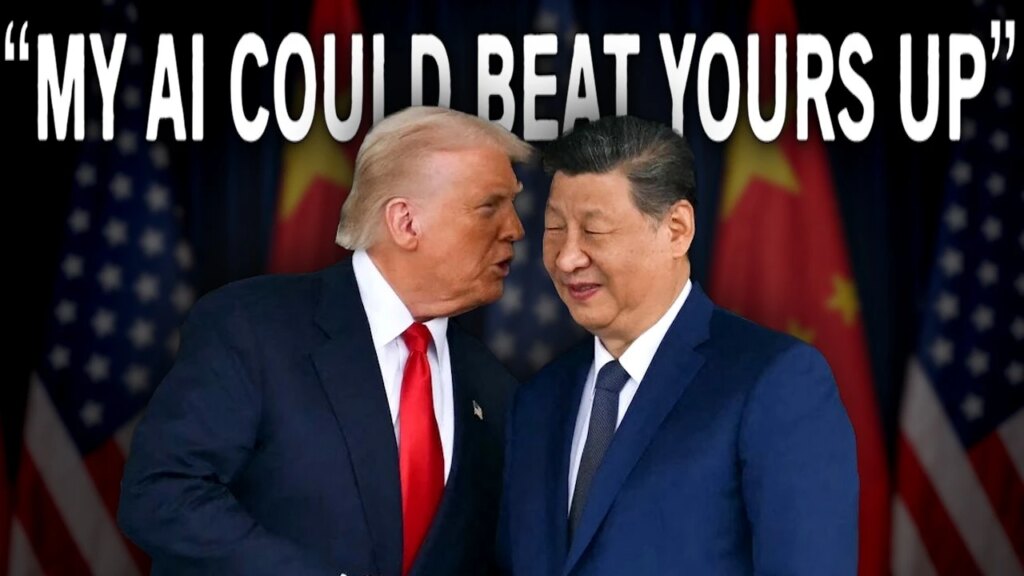
The American AI industry has discovered one of Washington’s oldest truths: if you want favorable treatment, sell your business model as a national emergency.
That is increasingly how the politics of artificial intelligence now works. The largest firms warn that China could overtake the United States if regulation goes too far, if energy policy slows down, if export controls are too weak, or if government moves too cautiously. The message is always urgent. The policy ask is usually convenient. And the commercial benefit often flows to the same companies sounding the alarm.
This is what makes the current AI debate feel less like a clean national-security argument and more like a lobbying campaign wrapped in patriotic language. Major firms have sharply increased political spending, pushed aggressively for favorable treatment, and framed the conversation around geopolitical necessity. At the same time, their behavior often suggests something more familiar: the pursuit of market power, lighter rules and public subsidy.
The contradiction is hard to miss. Some of the same companies warning that China must not be allowed to catch up are also involved in selling advanced tools or chips that help sustain China’s AI ambitions. If the technology is truly irreplaceable and strategically decisive, then treating it as a business opportunity and a civilizational threat at the same time is more than awkward. It reveals the degree to which the rhetoric and the incentives do not fully align.
That matters because the industry’s preferred policy package is revealing in its own right. The loudest demands are not mainly for tighter safety rules, clearer liability or stronger consumer protections. They are for faster data-center approvals, easier access to energy, looser environmental constraints and a lighter regulatory touch overall. In other words, the political energy is not focused on making AI safer. It is focused on making AI faster and more profitable.
This is where the “arms race” framing becomes especially useful. Once AI is cast as a competition the U.S. cannot afford to lose, almost any industry request can be dressed up as a matter of national survival. Tax breaks become strategic necessity. Deregulation becomes patriotic urgency. Delays become weakness. Critics become obstacles. It is an old formula, but a powerful one. And it works especially well in a policy environment where lawmakers fear being seen as the people who slowed the next industrial revolution.
The irony is that China, the country most often invoked as a reason the U.S. must move faster, has actually taken a much more comprehensive regulatory approach to AI than the United States has. China requires registration, labeling and compliance for certain AI systems and has built a more explicit framework for control and enforcement. That framework is not necessarily liberal or consumer-friendly. Much of it serves state control more than public accountability. But it is still regulation, and it is real. By contrast, the U.S. approach remains fragmented, softer and more vulnerable to industry pressure.
That gap matters because it undercuts the neatest version of the American industry’s argument. If China is both tightly regulating AI and still competing aggressively, then the claim that meaningful oversight would automatically hand the future to Beijing becomes less persuasive. What it more likely threatens is the growth rate and operating freedom of current market leaders.
This is why the fight over AI policy increasingly resembles a fight over industrial privilege. Data centers need land, power and political approval. Chip companies want export rules that protect pricing power without cutting off too much demand. Model companies want minimal liability, light disclosure burdens and broad room to scale. None of those goals is surprising. But none should be confused with pure public interest either.
The broader danger is that Washington may end up mistaking industry self-interest for strategy. That has happened before in other sectors. Companies present themselves as indispensable, ask for exceptional treatment, and use geopolitical competition as the justification for policies that ultimately enrich incumbents more than they strengthen national resilience. The result is often a weaker form of oversight combined with stronger forms of corporate dependence on the state.
The AI sector now appears to be following that pattern. The lobbying is intense. The warnings are apocalyptic. The actual requests are often about speed, energy, exemptions and legal insulation. The industry speaks as if it is preparing for a national emergency, while behaving as if it is optimizing a growth stock.
That does not mean the geopolitical stakes are imaginary. China is a serious technological rival. Export controls, infrastructure policy and security reviews all matter. But the existence of a real strategic competition does not mean every corporate demand made under its banner deserves to be taken at face value.
The more honest interpretation is that several things are true at once. AI is strategically important. China matters. The U.S. does need policy that is serious about compute, chips and infrastructure. And major AI firms are still using that environment to push for looser rules, larger allowances and stronger market positions for themselves.
That is why the central question is no longer whether AI matters geopolitically. It clearly does. The question is who gets to define what that means in policy terms.
If the answer is mostly the companies with the most money, the biggest data-center ambitions and the strongest incentive to avoid constraints, then the “arms race” story may end up doing less to protect the country than to protect the margins of the firms telling it.
All writings are for educational and entertainment purposes only and does not provide investment or financial advice of any kind.