The New Economic Cold War: How U.S.–China Competition Is Reshaping Markets and Creating New Investment Opportunities
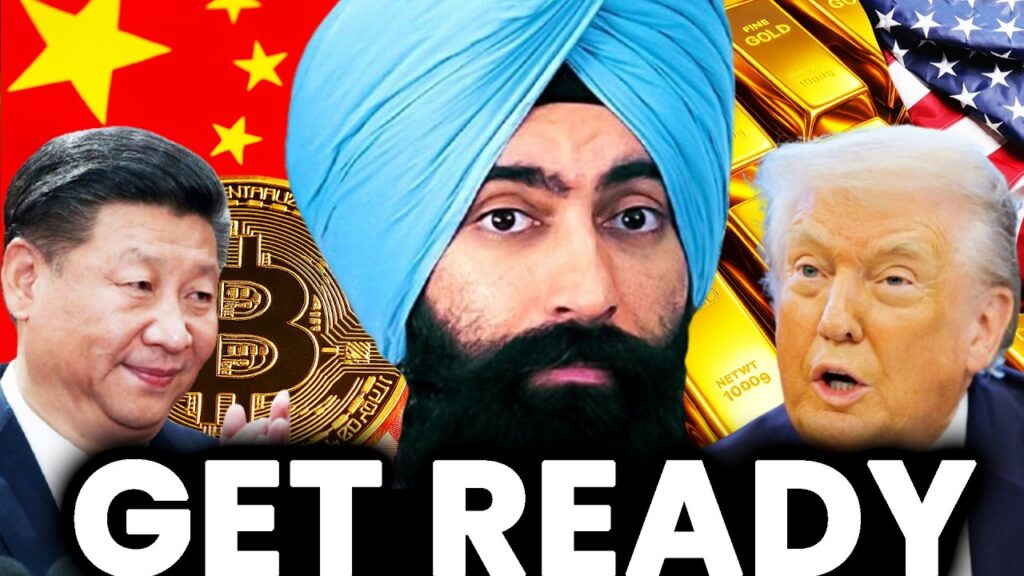
The economic rivalry between the United States and China has moved far beyond tariffs and trade headlines. It’s now a full-spectrum competition currencies, commodities, manufacturing, cryptocurrency, and global influence. And whether most
Americans realize it or not, this rivalry is reshaping investment opportunities in real time.
Today, the U.S. economy stands at roughly $30.5 trillion, while China’s has grown to $19.3 trillion. China’s annual growth rate around 4.8%, is outpacing the U.S. at 3.8%. Economists expect China could overtake the U.S. as the world’s largest economy by 2035. That projection alone is influencing policy decisions on both sides. The U.S. remains the world’s largest spender, using fiscal policy to stimulate growth, while tariffs are being used strategically to weaken China’s manufacturing advantage and incentivize companies to relocate operations back to the U.S.
Currency power is becoming just as important as GDP. Since the U.S. left the gold standard in 1971, the dollar has been backed by confidence not metal. But with global inflation concerns rising and foreign investors diversifying away from the dollar, that confidence is being tested. The Federal Reserve is now considering revaluing its gold reserves from $42.22 per ounce to as high as $3,300. Such a move would raise the value of U.S. gold assets from $11 billion to approximately $860 billion, strengthening the balance sheet and reinforcing the dollar’s position as the world’s reserve currency.
Meanwhile, China is aggressively buying gold to bolster the yuan and challenge dollar dominance. As more countries slowly “de-dollarize,” this tug-of-war over currency strength becomes a critical part of the broader economic chess match.
Tariffs and currency moves aren’t the only battlegrounds investment areas are shifting as well. Higher tariffs on Chinese goods generate revenue for the U.S. and push companies to move supply chains to Mexico, India, or back home. At the same time, the U.S. is quietly building a cryptocurrency ecosystem designed to counter China’s dominance in digital payments. President Trump has said he wants the U.S. to become the “Bitcoin capital of the world,” prompting regulatory changes that favor crypto infrastructure, mining companies, and financial institutions investing in digital assets.
Gold demand is also surging as nations hedge against currency instability. China remains the world’s largest buyer, and as global demand rises, investment opportunities grow in gold miners, ETFs, and physical holdings.
Rare earth metals essential to defense, EVs, semiconductors, and renewable technologies—are another pressure point. China currently controls most of the global supply chain and has already restricted exports. The U.S. is now rushing to rebuild domestic production, investing in companies like MP Materials and supporting new exploration and processing projects. This sector may become one of the most strategically important investment categories over the next decade.
Manufacturing is also reshaping. The U.S. government is pushing “Made in America” initiatives, offering companies lower tax rates and fewer tariffs if they manufacture domestically. This directly benefits machinery makers, semiconductor manufacturers, and industrial companies that help rebuild domestic production capacity.
All of these shifts currency battles, tariffs, gold reserves, domestic manufacturing, crypto policy, rare earths signal something bigger than a trade dispute. They point to a structural power transition where economic strength, not military force, determines global leadership. China wants to control key resources like gold and rare earths. The U.S. wants to control cryptocurrency, manufacturing, and strategic infrastructure.
Investors should be watching the sectors positioned to benefit from this rivalry: crypto infrastructure, gold, rare earth metals, and U.S.-based manufacturing. These areas sit at the center of a global power struggle that’s accelerating faster than most people realize.
This isn’t just a trade war. It’s an economic cold war and the winners will be those who understand where money, policy, and geopolitical power are moving next.
Jaspreet Singh is not a licensed financial advisor. He is a licensed attorney, but he is not providing you with legal advice in this article. This article, the topics discussed, and ideas presented are Jaspreet’s opinions and presented for entertainment purposes only. The information presented should not be construed as financial or legal advice. Always do your own due diligence.