The Pros and Cons of Flat Roofs for Commercial Buildings
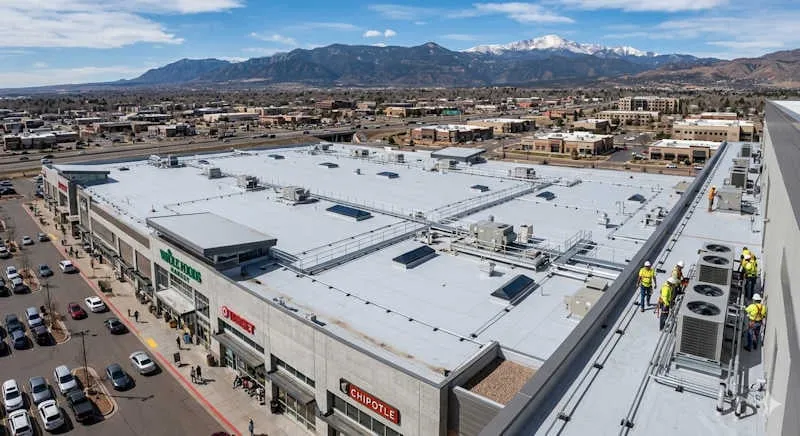

Flat roofs are a common feature in commercial construction, and for good reason. From warehouses to office buildings, many property owners and developers opt for flat roofing systems because of their practicality and cost efficiency. Still, like any design choice, flat roofs come with both advantages and drawbacks.
If you’re considering installing, replacing, or repairing a flat roof for a commercial building, or simply evaluating an existing one, it’s important to understand how these systems perform over time and what trade-offs they involve.
Why Flat Roofs Are So Common in Commercial Construction
Flat roofs have become a standard choice in commercial real estate, largely due to their simplicity and versatility. Compared to pitched roofs, they are easier to design, require fewer materials, and are generally faster to install. This can lead to meaningful cost savings during the construction phase.
They also offer a clean, modern appearance that aligns well with many commercial architectural styles. More importantly, flat roofs provide usable space. Building owners can take advantage of the roof surface for equipment placement, storage, or even functional outdoor areas. This practical flexibility is one of the main reasons flat roofs remain so widely used, even as roofing technology continues to evolve.
The Advantages of Flat Roof Systems
One of the most significant benefits of flat roofs is accessibility. Maintenance, inspections, and repairs are typically easier to perform because the surface is relatively level. This can reduce labor costs and make routine upkeep more manageable. Flat roofs are also well-suited for accommodating mechanical systems, as heating, ventilation, and air conditioning units can be placed on the roof without interfering with the building’s interior space. This helps maximize usable square footage inside the structure.
Energy efficiency is another potential advantage. Flat roofs can support reflective materials or coatings that reduce heat absorption, which may help lower cooling costs in warmer climates. They can also be adapted for green roofing systems or solar panel installations, providing additional long-term value. From a financial perspective, the lower initial construction cost is often a major factor. For many commercial projects, staying within budget is critical, and flat roofs can help achieve that goal.
The Challenges and Potential Drawbacks
Despite their advantages, flat roofs are not without limitations. One of the most common concerns is drainage. Because the surface is nearly level, water does not run off as easily as it would on a sloped roof. This can lead to pooling if the drainage system is not properly designed or maintained. Standing water can then increase the risk of leaks and accelerate wear on roofing materials. Over time, this may result in more frequent repairs or a shorter lifespan compared to some pitched roofing systems.
Maintenance is another important consideration. While flat roofs are easier to access, they often require more consistent attention. Debris can accumulate more easily, and small issues can develop into larger problems if they are not addressed promptly.
Weather can also play a role in performance. For example, in areas with heavy snowfall, the weight of accumulated snow may place additional stress on the structure. Proper design and regular inspections are essential to ensure that the roof can handle these conditions safely.
Longevity and Material Considerations
The lifespan of a flat roof depends largely on the materials used and the quality of installation. Modern flat roofing systems have improved significantly, with options designed to withstand environmental stress and provide long-term durability.
Even so, flat roofs may not last as long as some pitched roof systems, particularly if maintenance is inconsistent. Regular inspections and timely repairs are key to extending the life of the roof and protecting the underlying structure. Choosing the right materials for your specific climate and building type can make a substantial difference. Working with experienced professionals during both installation and maintenance can help ensure that the roof performs as expected.
Balancing Cost and Performance
For many commercial property owners, the decision ultimately comes down to balancing cost and performance. Flat roofs offer clear savings upfront, but they may require more attention over time to maintain their condition. That doesn’t mean they are a poor investment. In many cases, the benefits outweigh the drawbacks, especially when the roof is properly designed and maintained. The key is to approach the decision with a realistic understanding of what will be required over the life of the building.
Final Thoughts on Flat Roofs for Commercial Buildings
Flat roofs remain a popular and practical option for commercial buildings, offering flexibility, accessibility, and cost efficiency. At the same time, they require thoughtful design and ongoing maintenance to perform at their best.
By understanding the advantages and potential challenges, property owners can make decisions that align with their goals and resources. With the right approach, a flat roof can be a reliable and effective component of a commercial property for years to come.