The Retirement “Critical Zone”: The 10-Year Window That Can Make or Break Your Plan
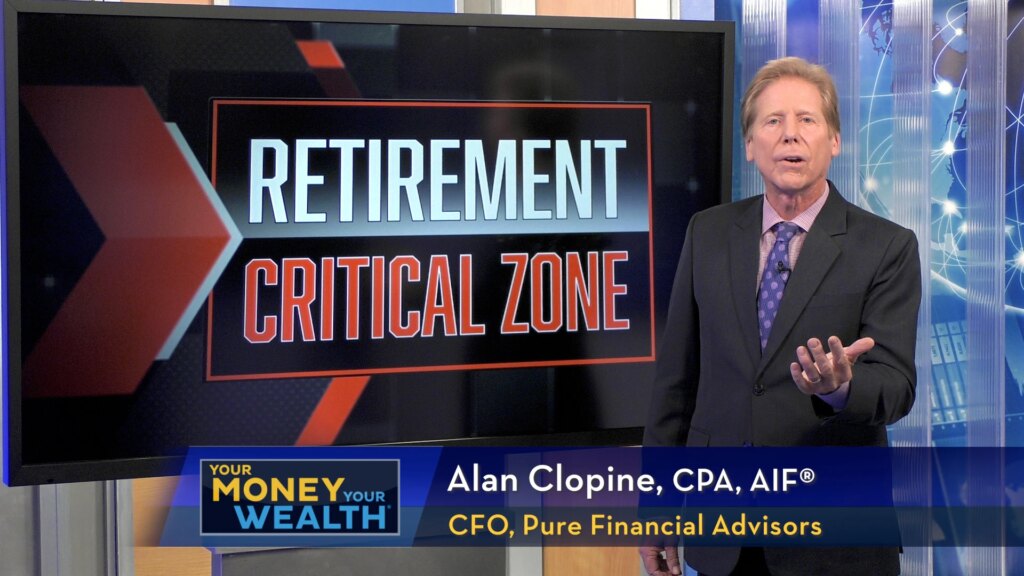
There’s a stretch of time in every retirement plan that matters more than almost everything else. It’s not the first year someone starts saving. It’s not the day they retire. It’s the 10-year window around retirement: roughly five years before and five years after. That window is known as the retirement critical zone, and it’s where small mistakes can permanently change the outcome of an entire financial life.
During the critical zone, the goal shifts. Retirement planning stops being about building wealth as fast as possible and becomes about protecting income, managing risk, and creating a sustainable withdrawal plan even when markets are unpredictable.
What the “critical zone” really means
The critical zone is the period when the portfolio is most vulnerable to damage because the investor is transitioning from accumulation to withdrawals. In the years leading up to retirement, the portfolio is usually at its largest. In the years immediately after retirement, withdrawals begin. That combination high balances plus cash flowing out creates a risk environment that is very different from the working years.
This is also the stage where many people realize they’ve been saving without a true retirement income strategy. In fact, a large percentage of Americans over 40 still don’t know how much they can safely spend from their retirement savings without running out.
Why asset allocation changes as retirement approaches
Asset allocation is one of the biggest levers retirees can control, and it becomes far more important near retirement than it was in their 30s or 40s.
During working years, a market drop is unpleasant, but it’s survivable because paychecks are still coming in and contributions continue. Near retirement, a market drop can become a structural problem, because the portfolio may not have time to recover before withdrawals begin.
That’s why many retirement strategies recommend shifting away from an aggressive growth mix and toward a more balanced allocation. A portfolio that looks like 80% stocks / 20% bonds may work for someone 20 years away from retirement. But for someone entering the critical zone, a shift toward a more conservative structure something closer to 35% stocks / 65% bonds in some cases can reduce volatility and create a more stable income foundation.
This isn’t about fear. It’s about math and timing.
The risk that retirees underestimate most: sequence of returns
The single biggest risk in the critical zone is sequence of returns risk the danger of suffering poor market returns early in retirement while withdrawals are happening.
Two retirees can earn the exact same average return over 30 years and still end up with completely different outcomes based on when the bad years hit.
If a retiree experiences major losses early, withdrawals compound the damage. That’s because money pulled out during a downturn is money that can’t participate in the recovery.
This is why market declines are so brutal in retirement. A 50% market drop doesn’t just require a 50% rebound. It requires a 100% gain to break even. That’s a long climb when withdrawals are happening at the same time.
Withdrawal strategy matters as much as investment performance
Retirement success isn’t just about what the market returns. It’s about how withdrawals are structured.
The most famous rule is the 4% rule, which suggests withdrawing 4% of a portfolio annually as a starting point. But the deeper truth is that the best withdrawal strategy depends on flexibility, taxes, inflation, and the retiree’s time horizon.
Several common withdrawal approaches show why this matters:
Fixed Dollar Strategy
This is the classic “$40,000 per year from a $1 million portfolio” approach. It feels simple and stable, but inflation can erode purchasing power over time, and the portfolio may struggle during extended downturns.
Fixed Percentage Strategy
This means withdrawing the same percentage every year. It reduces the risk of fully depleting the portfolio, but spending may fall sharply during bear markets, forcing lifestyle cuts when retirees least want them.
4% Rule Style Strategy (inflation-adjusted)
Withdraw 4% in year one, then adjust the dollar amount upward for inflation. This provides lifestyle stability, but it requires discipline and strong planning, especially if markets are weak early.
The best retirement plans don’t rely on one rigid rule. They build flexibility into spending so that downturns don’t force panic decisions.
Interest rates and bonds: stability comes with tradeoffs
As retirees shift toward fixed income, it’s important to understand how interest rates affect bonds.
When rates rise, bond prices can drop in the short term. That volatility surprises many investors who believed bonds were always “safe.” But higher rates can also improve long-term income potential because new bonds pay more yield.
The key is owning the right kind of bond exposure for retirement goals. Shorter-term bonds, high-quality bonds, and diversified fixed income strategies can help create stability without overreaching for yield.
Retirees chasing high-yield bonds for income can unintentionally take on stock-like risk, which defeats the purpose of building a safer retirement foundation.
Tax planning becomes a retirement income weapon
A retirement plan isn’t just about how much is saved. It’s about how efficiently money can be accessed.
Retirement income usually comes from three “pools”:
Taxable accounts (brokerage)
Tax-deferred accounts (traditional IRA/401(k))
Tax-free accounts (Roth)
A common rule of thumb says to withdraw from taxable accounts first. But a more strategic approach can reduce lifetime taxes dramatically by blending withdrawals across all three pools.
This matters because taxes don’t work like a flat fee. They work like a staircase. The goal is to fill lower tax brackets intentionally over time instead of accidentally jumping into higher ones later through forced withdrawals, Social Security taxation, or RMDs.
A well-structured retirement tax plan can sometimes reduce lifetime taxes by a meaningful amount, while also improving cash flow and keeping Medicare premiums lower.
Social Security timing becomes more powerful in volatile markets
Social Security is one of the few retirement income sources that is not dependent on the market. That makes it a stabilizer during the critical zone.
Delaying benefits can increase monthly income, and for many retirees, that guaranteed increase becomes even more valuable when markets are shaky. A larger Social Security check later can reduce the need to pull from the portfolio during downturns, which directly lowers sequence of return risk.
The smartest move: do a “critical zone review” before it’s urgent
The biggest mistake retirees make is waiting until retirement is right in front of them to make major changes.
A critical zone review should happen at least five years before retirement. That review should answer questions like:
How much risk is actually appropriate now?
What happens if the market drops 20% in year one?
Where will retirement income come from each year?
How will withdrawals be taxed?
What accounts should be used first and why?
Is Social Security being used as a strategy, not just a benefit?
The critical zone is not the time to improvise. It’s the time to tighten the plan, reduce unnecessary risk, and build an income system that can survive both good markets and bad ones.
Because retirement isn’t just about reaching the finish line. It’s about making sure the money lasts once you stop running.
Intended for educational purposes only. Opinions expressed are not intended as investment advice or to predict future performance. Past performance does not guarantee future results. Neither the information presented, nor any opinion expressed constitutes a solicitation for the purchase or sale of any security. Consult your financial professional before making any investment decisions. Opinions expressed are subject to change without notice.
IMPORTANT DISCLOSURES:
• Investment Advisory and Financial Planning Services are offered through Pure Financial Advisors, LLC. A Registered Investment Advisor.
• Pure Financial Advisors, LLC. does not offer tax or legal advice. Consult with a tax advisor or attorney regarding specific situations.
• Opinions expressed are subject to change without notice and are not intended as investment advice or to predict future performance.
• Investing involves risk including the potential loss of principal. No investment strategy can guarantee a profit or protect against loss in periods of declining values.
• All information is believed to be from reliable sources; however, we make no representation as to its completeness or accuracy.
• Intended for educational purposes only and are not intended as individualized advice or a guarantee that you will achieve a desired result. Before implementing any strategies discussed you should consult your tax and financial advisors.