The Six Medicare Costs That Surprise Retirees Most
Medicare is often described as health insurance that begins at 65, but that description leaves out the part that catches many retirees off guard: Medicare has premiums, deductibles, coinsurance and services it does not cover at all. Even people who qualify for premium-free Part A can face thousands of dollars in medical costs unless they understand how the program’s two main components work and what additional coverage they may need.
Original Medicare consists of Part A, which primarily covers inpatient hospital care, skilled nursing facility care, hospice and certain home-health services, and Part B, which generally covers physicians, outpatient care, testing, preventive services and durable medical equipment. The two parts provide broad access to covered care, but they do not create a comprehensive annual cap on what a beneficiary can spend. That gap is why many retirees pair Original Medicare with Medigap and Part D coverage or choose a Medicare Advantage plan instead.
Part A May Have No Premium, but Hospital Care Is Not Free
Most people qualify for premium-free Part A because they or a spouse paid Medicare payroll taxes for at least 40 quarters, generally equivalent to 10 years of covered work. Someone without enough work credits may be able to buy Part A, but the premium depends on the number of quarters accumulated. Premium-free eligibility therefore means no monthly charge for the coverage itself, not that every hospital stay is free.
In 2026, Original Medicare charges a Part A inpatient hospital deductible for each benefit period rather than once per calendar year. After that deductible is paid, the beneficiary owes no hospital coinsurance for the first 60 inpatient days, $434 per day for days 61 through 90 and $868 per lifetime reserve day after day 90. Once the 60 lifetime reserve days have been exhausted, the patient is responsible for all costs after day 90 in a later benefit period.
The benefit-period structure creates an important risk because a person can owe the hospital deductible more than once in a year. A new benefit period generally begins after the beneficiary has gone 60 consecutive days without inpatient hospital care or skilled care in a facility. Someone hospitalized early in the year, recovered for several months and admitted again later could therefore face another deductible even though the calendar year never changed.
Skilled Nursing Coverage Has Its Own Cost Cliff
Part A can also cover qualifying care in a skilled nursing facility, but it is not unlimited nursing-home coverage. In 2026, beneficiaries owe nothing for the first 20 covered days in a benefit period, $217 per day for days 21 through 100 and the full cost beginning with day 101. Coverage can end earlier if the patient no longer requires Medicare-covered skilled nursing or rehabilitation.
That daily charge can become substantial. Twenty days in the coinsurance period would cost $4,340, while using all 80 coinsurance days would create $17,360 in cost sharing. A Medigap policy may cover this coinsurance when the stay qualifies under Medicare, but it cannot extend the 100-day limit or turn custodial long-term care into a covered Medicare service.
This distinction is one of the most common sources of confusion. Medicare covers short-term skilled care under defined conditions, while long-term assistance with bathing, dressing, eating and other daily activities is generally excluded. A retiree can therefore have Part A, Part B and a strong supplemental plan while still lacking coverage for an extended custodial nursing-home stay.
Part B Creates a Monthly Cost Before Care Begins
Unlike premium-free Part A, Part B normally requires a monthly premium. The standard Part B premium is $202.90 in 2026, although higher-income beneficiaries pay more through IRMAA and people who delayed enrollment without qualifying coverage may owe a late-enrollment penalty. The premium must be paid even during months when the beneficiary receives no Part B services.
Most beneficiaries have the premium deducted automatically from Social Security or Railroad Retirement benefits. People who are not yet collecting those benefits generally receive a Medicare bill. Medicare can also bill directly for premium Part A, Part B and Part D IRMAA, with payment available through Medicare’s online system, automatic bank payments or other methods listed on the bill.
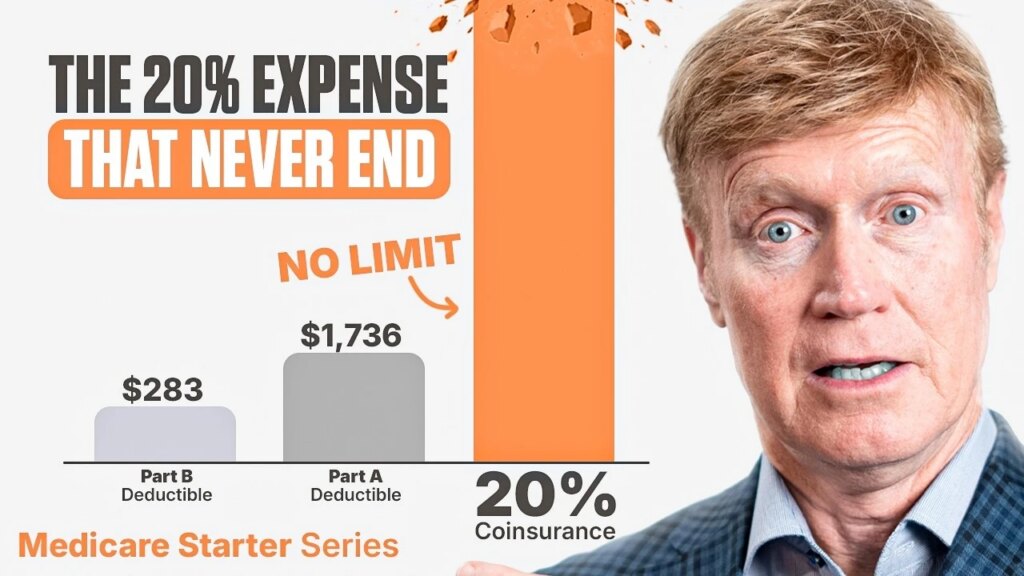
Part B also has an annual deductible of $283 in 2026. Once that deductible has been met, Original Medicare generally pays 80% of the Medicare-approved amount for covered Part B services, leaving the beneficiary responsible for 20%. Certain preventive and laboratory services may be covered without the usual cost sharing, but it is inaccurate to assume that every outpatient service is paid in full.
The absence of a broad annual cap under Original Medicare is what makes the 20% liability potentially dangerous. A beneficiary facing chemotherapy, outpatient surgery, repeated imaging or expensive physician-administered treatment may continue owing coinsurance throughout the year. A 20% share of a small office visit is manageable; 20% of extensive medical treatment can become a serious financial burden.
IRMAA Can More Than Triple the Part B Premium
Higher-income beneficiaries pay an Income-Related Monthly Adjustment Amount on both Part B and Part D. Social Security generally determines the surcharge using modified adjusted gross income from the tax return filed two years earlier. For 2026 premiums, that normally means 2024 income. Medicare MAGI for this purpose is adjusted gross income plus tax-exempt interest.
The standard $202.90 Part B premium applies in 2026 when MAGI is $109,000 or less for an individual or $218,000 or less for a married couple filing jointly. Above those levels, total Part B premiums rise through several tiers to as much as $689.90 per person per month. Part D IRMAA is added separately to the premium charged by the beneficiary’s drug plan and can reach $91 per month at the highest tier.
IRMAA operates like a cliff rather than a gradual tax rate. Crossing a threshold by a relatively small amount can move the beneficiary into the next monthly premium tier for the year. For a married couple in which both spouses have Medicare, a poorly timed Roth conversion, investment gain or retirement-account withdrawal can increase premiums for both people two years later.
The surcharge is recalculated annually, so it is not necessarily permanent. A beneficiary whose income falls after retirement may ask Social Security to use more recent information when the reduction resulted from a qualifying life-changing event. Form SSA-44 recognizes events including marriage, divorce, the death of a spouse, work stoppage, work reduction, loss of income-producing property, loss of pension income and certain employer settlement payments.
The request generally begins after the beneficiary receives an IRMAA determination. Social Security requires evidence of the qualifying event and the reduced income, which may include tax documents, an employer statement, a marriage certificate, divorce decree or death certificate depending on the circumstances. A voluntary Roth conversion or unusually large investment gain is not itself one of the listed life-changing events, so it should not be assumed that every surcharge can be appealed successfully.
Part B Excess Charges Are Real but Limited
Most physicians and providers who participate in Medicare accept assignment, meaning they accept the Medicare-approved amount as full payment for a covered service. The beneficiary then owes the normal deductible and coinsurance rather than an additional balance above Medicare’s approved amount.
A nonparticipating provider may be permitted to charge more than the approved amount. In many cases, federal rules limit that excess to 15%, known as the limiting charge. A physician who has opted out of Medicare is different and may require a private contract under which the patient pays according to the physician’s terms, except in certain emergency or urgent situations.
Excess charges are often overstated in Medicare sales discussions. They can create an extra cost, but they do not apply to every doctor who bills Medicare, and many states restrict them further. Beneficiaries concerned about the issue can ask whether a provider accepts Medicare assignment before scheduling treatment. Certain Medigap plans, including Plan G, cover eligible Part B excess charges, while Plan N generally does not.
The larger Part B exposure for most people is still the ordinary 20% coinsurance, not excess charges. Focusing heavily on a possible 15% excess fee while ignoring an unlimited 20% share of covered outpatient treatment can lead retirees to misunderstand where their greatest financial risk actually lies.
Original Medicare Does Not Cover Everything
Original Medicare covers a broad range of medically necessary care, but it excludes several services retirees commonly expect to need. It generally does not cover long-term custodial care, routine dental care, dentures, hearing aids, routine eye exams for prescription glasses, massage therapy or ordinary physical examinations. Some related services may be covered under narrow medical circumstances, but the general exclusions remain.
Prescription drugs taken at home are also not generally covered by Parts A and B, which is why beneficiaries usually need separate Part D coverage unless they have another source of creditable prescription insurance. Part D premiums, deductibles, formularies and pharmacy costs vary by plan, and higher-income beneficiaries may owe a separate Part D IRMAA.
A retiree calculating Medicare costs should therefore include more than the standard Part B premium. The complete budget may contain a Medigap or Medicare Advantage premium, Part D coverage, dental and vision expenses, hearing aids and potential long-term-care costs. Medicare substantially reduces healthcare risk, but it does not remove healthcare from the retirement budget.
The Three Main Coverage Paths Shift Costs Differently
The first option is Original Medicare Part A and Part B without supplemental coverage. This offers broad access to providers who accept Medicare, but it leaves the beneficiary responsible for hospital deductibles, extended-stay costs, the Part B deductible, 20% coinsurance and possible excess charges. Original Medicare also lacks a general annual out-of-pocket maximum for Parts A and B.
The second option combines Original Medicare with a private Medigap policy and usually a separate Part D plan. Medigap helps pay some or most of the deductibles and coinsurance left by Original Medicare, depending on the standardized plan selected. The trade-off is a separate monthly premium that can vary by insurer, location, age and pricing method. Each spouse needs an individual Medigap policy.
The third option is Medicare Advantage, which delivers Part A and Part B benefits through a private plan approved by Medicare. Beneficiaries must continue paying the Part B premium and may also pay an additional plan premium. Cost sharing, provider networks and prior-authorization rules vary, but plans must establish an annual out-of-pocket limit for covered Part A and Part B services. Many also include prescription coverage and certain dental, vision or hearing benefits not routinely covered by Original Medicare.
None of the three choices is automatically best for everyone. Original Medicare with Medigap generally emphasizes provider flexibility and predictable medical costs, while Medicare Advantage may emphasize lower upfront premiums and bundled benefits in exchange for managed networks and variable copayments. Remaining on Original Medicare alone may keep monthly premiums lower but exposes the beneficiary to considerably more open-ended medical cost sharing.
The Real Medicare Price Is the Entire Package
Medicare planning often begins with the statement that Part A is free and Part B costs $202.90. Both statements can be technically accurate for a particular beneficiary while producing a misleading estimate of the household’s true healthcare expense.
The more useful calculation includes every recurring premium, the deductible and coinsurance structure, prescription coverage, expected dental and vision costs, and the possibility of higher IRMAA premiums. It should also account for whether the beneficiary wants nationwide Original Medicare access with supplemental insurance or is comfortable receiving care through a Medicare Advantage network.
Retirees should review their coverage annually because Part B and Part A costs change, Part D and Medicare Advantage plans revise premiums and benefits, and income can move beneficiaries into or out of IRMAA tiers. A plan that was appropriate at 65 may become expensive or restrictive several years later as medications, physicians and travel patterns change.
Medicare provides valuable protection, but the word “covered” does not mean “paid in full.” The strongest retirement plans recognize the gaps before medical care is needed and choose a coverage structure capable of absorbing them without turning a health problem into a financial emergency.