The Three Economic Shifts That Could Reshape Investing Over the Next Decade
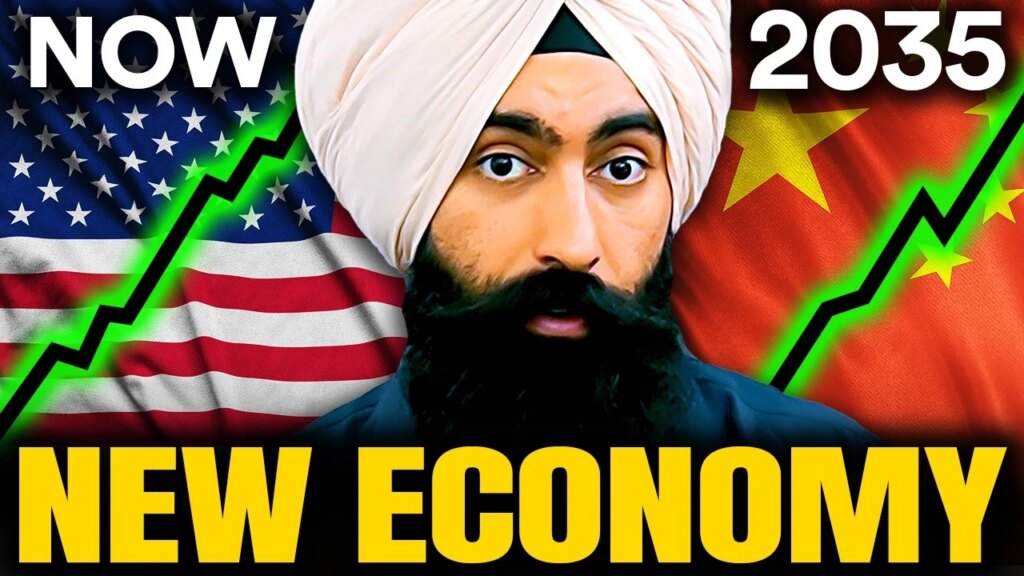
Three large economic shifts are happening at once, and together they are changing how investors should think about risk and opportunity.
The first is the size of U.S. debt. The second is the gradual erosion of the dollar’s dominance in global reserves. The third is the growing economic weight of China, especially when measured by purchasing power rather than exchange-rate optics. None of these shifts guarantees immediate crisis. But together they are reshaping the background against which long-term wealth will be built.
Start with the debt.
The U.S. Treasury’s debt-to-the-penny data shows federal debt has risen above $39 trillion, and CBO projects deficits near $1.9 trillion in fiscal 2026, with interest costs rising from 3.3% of GDP this year to 4.6% by 2036. That matters because debt is no longer just a political talking point. It is becoming a structural economic force, one that absorbs more tax revenue, limits policy flexibility and raises the risk that markets will eventually demand higher compensation for financing the government.
The danger is not simply that the debt is large. It is that interest payments are rising fast enough to become their own problem.
When a country must borrow heavily just to keep pace with current obligations, the system starts to look more fragile. More debt leads to more interest expense. More interest expense leads to more borrowing. And if investors ever begin to doubt that the fiscal path is manageable, long-term yields can rise in ways that pressure everything from mortgages to corporate borrowing to stock valuations.
That would be serious enough on its own. But it is happening while the dollar’s global dominance is slowly thinning.
IMF reserve data shows the dollar’s share of disclosed global foreign-exchange reserves fell from its 2001 peak of roughly 72% to 56.77% in 2025Q4. The Federal Reserve’s own review of the dollar’s international role described the reserve share as about 58% in 2024. The dollar remains dominant by a wide margin, but the direction is clear: the world is diversifying, even if it is not yet abandoning the U.S. currency.
That shift matters because reserve-currency privilege has helped the United States finance deficits more comfortably than most countries could.
When the rest of the world wants your currency and your bonds by default, you can borrow more easily and with fewer immediate consequences. If that demand becomes even modestly less automatic, the burden of supporting the system rises. The U.S. does not need to lose reserve status outright for the change to matter. A gradual decline in unquestioned demand is enough to make debt management harder and inflation risks more persistent.
This is where China enters the story.
On a nominal exchange-rate basis, the U.S. remains larger. But IMF DataMapper shows China already ahead of the United States on a GDP purchasing-power-parity basis, with a larger share of world output by that measure. That does not mean China is richer per person, more attractive to investors, or ready to replace the U.S. financial system. It does mean that the global economy is no longer organized around one unchallenged center of gravity.
That matters because economic scale eventually becomes geopolitical leverage.
A larger PPP economy gives China more room to build trade relationships, deepen regional influence and push for systems less dependent on the U.S. dollar. At the same time, the U.S. is responding with tariffs, semiconductor controls and broader efforts to slow Chinese strategic gains. That tension is economic, political and financial all at once. Investors do not need to predict every twist in U.S.-China relations to understand the broad point: the world is becoming more contested, and markets will increasingly reflect that.
The practical question, then, is what these shifts mean for wealth building.
The long-run lesson from history is that income alone rarely keeps up. Costs of housing, education, healthcare and other major life expenses tend to rise faster than wages over long stretches. By contrast, ownership of productive or scarce assets, stocks, real estate, and at certain times gold, has historically been a much better defense against inflation, currency erosion and policy instability. That is not ideology. It is the arithmetic of compounding.
Stocks remain the most powerful long-term compounding tool for most investors.
Even after recessions, crashes and political shocks, broad equity ownership has historically outperformed cash and ordinary income growth over multi-decade periods. That does not make stocks immune to downturns. It means the patient owner of diversified businesses has usually been better positioned than the person relying entirely on wages or bank balances to preserve purchasing power.
Real estate has played a similar role, though in a different way.
Property can benefit from inflation because rents, replacement costs and land scarcity tend to adjust over time. It also adds a layer of practical utility that financial assets do not. But it requires management, financing discipline and tolerance for illiquidity. Real estate has often been an effective wealth builder, but not a passive one. Its power comes from leverage, cash flow and time, not from simplicity.
Gold belongs in the conversation too, though for different reasons.
Gold is not an income-producing asset, but it has historically responded well when confidence in currencies weakens or inflation fears intensify. In a world where central banks are diversifying reserves and fiscal discipline looks thin, gold continues to serve as a hedge against monetary instability. It is not a replacement for broad ownership of productive assets. It is a reminder that money itself can be a risk.
The deeper lesson is that these macro shifts do not eliminate the case for long-term investing. They strengthen it.
A weakening reserve share for the dollar, a growing Chinese economy and a debt-heavy U.S. fiscal path all point toward a future with more volatility, more inflation sensitivity and more importance placed on asset ownership. The investor who panics at every downturn will still lose. The investor who understands the direction of the world and keeps buying strong assets through the noise is still far more likely to build lasting wealth.
That is why the most important economic question is no longer whether the world is changing. It clearly is.
The more important question is whether your money is positioned for that change, or still relying on a version of stability that is slowly fading.
Jaspreet Singh is not a licensed financial advisor. He is a licensed attorney, but he is not providing you with legal advice in this article. This article, the topics discussed, and ideas presented are Jaspreet’s opinions and presented for entertainment purposes only. The information presented should not be construed as financial or legal advice. Always do your own due diligence.