Volkswagen Group Cuts Could Reshape 5 Major Brands
Volkswagen Group plans to shrink its global model lineup by up to 50%, but the cuts will not be shared equally across its brands.
Those numbers change meaning when you look at the brands involved. Volkswagen, Audi, SEAT, Škoda and Porsche occupy very different positions inside the same empire. Some are profitable and growing. Others are fighting declining sales, overlapping products or costly electric-vehicle programs.
That makes the VW Group cuts less about deleting a few slow-selling cars and more about deciding which brands deserve investment. The company has not released a final list of canceled models, so individual forecasts remain unconfirmed. The direction is becoming clear.
Volkswagen’s American Reinvention Is Taking Shape
Volkswagen Must Protect Its Volume Leaders
The Volkswagen passenger-car brand remains the center of the group, but size no longer guarantees protection. In 2025, Volkswagen generated €86.6 billion in revenue and €2.6 billion in operating profit. The group’s official future plan now calls for fewer models concentrated in the most attractive segments, which favors high-volume vehicles such as the Golf, Tiguan, T-Roc and Atlas.
The vulnerable products are likely to be body styles and regional models that overlap with stronger sellers. Coupe-style SUVs, convertibles and closely related crossovers become harder to defend when each variation adds engineering, tooling, marketing and inventory costs. Volkswagen has not confirmed which nameplates will disappear.
Audi’s 2027 EV Push Brings 912 Horsepower and Big Price Tag
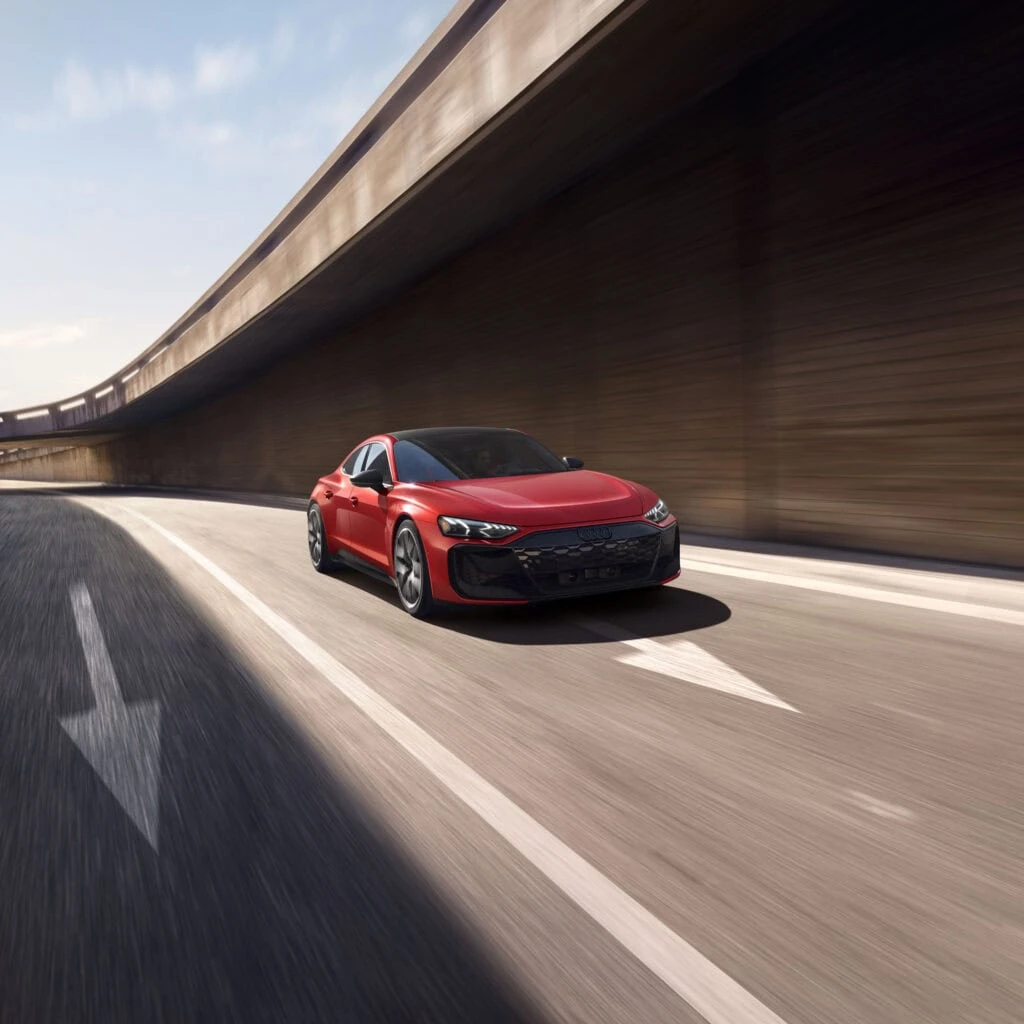
2026 Audi e-tron GT. Audi’s 2027 EV Push Brings 912 Horsepower and Big Price Tag
Audi Is Retreating From the Bottom of Luxury
Audi is already narrowing its reach. The TT and R8 are gone, the Q8 e-tron ended with the Brussels factory closure, and the A1 and Q2 have reached the end of production without direct replacements.
That suggests Audi will focus on midsize and large luxury vehicles, performance models and electric cars that can support premium pricing. Sportback versions of existing SUVs may face greater scrutiny because they add complexity without creating an entirely new market. Audi is not leaving electrification, but fewer electric models may have to work harder.
VW Showcases Audi’s Future and Scout’s U.S. Comeback in Munich
VW Group Cuts Could Reshape Five Major Brands SKODA
SEAT Faces the Hardest Identity Question
SEAT may be the most exposed brand because CUPRA is increasingly doing the exciting work. In 2025, SEAT deliveries fell while CUPRA reached record volume and overtook its sibling. Yet the combined SEAT/CUPRA business produced €1 million in operating profit, down from €633 million a year earlier.
SEAT still offers affordable vehicles and has strong recognition in parts of Europe. The problem is overlap. Volkswagen serves mainstream buyers, Škoda emphasizes value and practicality, and CUPRA offers a more emotional image. In a group removing duplication, SEAT must prove it serves a customer the others cannot reach.
Volkswagen Is Getting Smaller. Here’s What Went Wrong
Škoda Looks Like the Clear Winner
Škoda has the strongest argument for protection. The group’s annual report shows that it generated €2.5 billion in operating profit during 2025, nearly matching the Volkswagen passenger-car brand despite producing about one-third of its revenue.
Its position is easy to understand. Škoda sells practical, spacious vehicles using shared Volkswagen Group technology at more accessible prices. Demand for the electric Elroq and Enyaq has strengthened its case, while first-half 2026 results showed Škoda growing as several sibling brands declined.
Individual models could still be cut as electric and combustion lineups overlap, but Škoda itself appears safer than almost any other volume brand in the group.
The Halo Car Didn’t Disappear. It Got Taller and Tougher.
Porsche 718 Cayman Could be Driving Off into the Sunset After VW Cuts
Porsche Will Protect Icons, Not Every Model
Porsche remains one of the world’s strongest automotive names, but its finances no longer make every product untouchable. Volkswagen Group reported that Porsche’s operating result fell sharply in 2025 as weaker Chinese demand, tariffs, battery costs and product-planning changes hit the business.
The 911, Cayenne and Macan remain central because they carry identity or volume. The tougher questions surround the Taycan, Panamera, 718 program and additional body styles that require major investment for smaller returns. Porsche’s official first-quarter results showed the 911 rising while the Panamera, Taycan and 718 declined.
For shoppers, fewer models could mean simpler choices and more focused development. It may mean less variety and the loss of interesting niche vehicles. Volkswagen Group is not merely shrinking a catalog. It is redefining what each brand is allowed to be, and SEAT may have the most to prove while Škoda enters from a position of strength.