Why Even The 1% Are Living Paycheck to Paycheck in 2025
The New Reality for High Earners
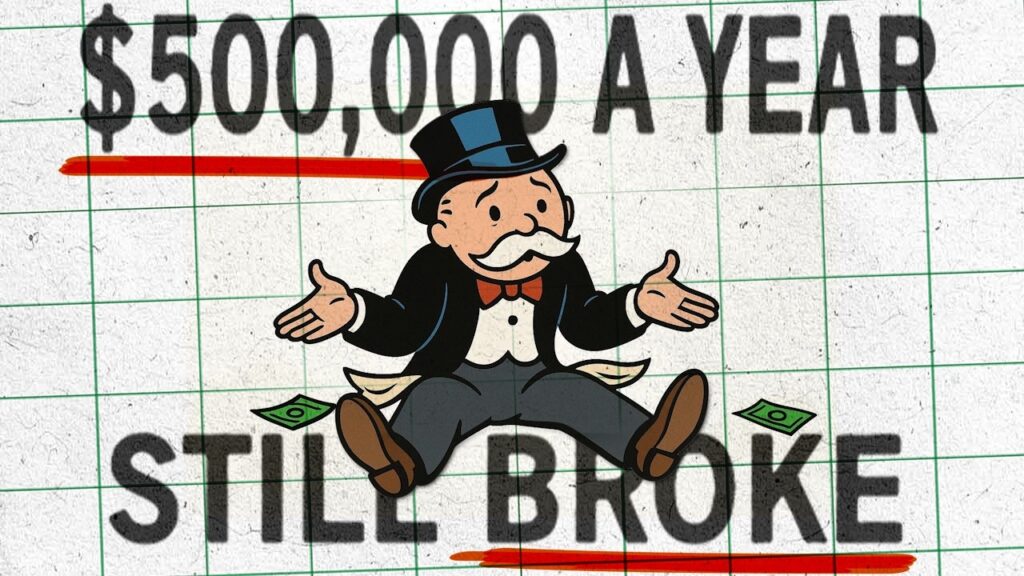
The idea that someone earning over half a million dollars a year could struggle financially seems impossible yet it’s becoming one of the biggest economic shifts of the last decade. More high-income households are feeling the same financial pressure once associated only with the middle class. Understanding why it’s happening helps explain the broader inequality shaping today’s economy.
1. A Surprising Number of Wealthy People Are Living Paycheck to Paycheck
Recent data shows a dramatic shift in the financial stability of top earners:
- 40% of people earning over $500,000 a year now live paycheck to paycheck.
- Fewer than one-third consistently save or invest for long-term goals.
- Public reaction to this trend has been unsympathetic, but the underlying economic reality is far more complex.
This isn’t just overspending it’s a sign of how dramatically the cost of maintaining a “high-income lifestyle” has changed.
2. The Economic Landscape Has Shifted Faster Than Income Growth
The people who once seemed financially untouchable professionals, executives, business owners—are now part of the same financial squeeze as everyone else.
The question is:
Have high-income earners gotten worse at managing money, or has the system become more expensive to participate in?
The answer lies somewhere in the middle. Industries that profit from wealthy consumers have exploded, from luxury housing to “exclusive” lifestyle services. The cost of living like a high-income earner has inflated far faster than wages.
3. Inequality Now Exists Within the Top 1%
Even among the wealthiest Americans, the distribution of wealth is extremely lopsided.
- The top 1% controls almost one-third of all millionaire wealth.
- Many high earners spend time around peers who are even wealthier a comparison trap that fuels lifestyle inflation.
- This internal inequality leads to financial strain as earners try to “keep up” with individuals in a completely different tier.
This quiet divide inside the top 1% explains why so many high earners feel financially insecure despite their income.
4. Lifestyle Pressure Outweighs Financial Literacy
Income doesn’t guarantee financial discipline.
Many high-income earners:
- Graduate with no financial education, especially in fields like medicine or law
- Feel pressure to buy luxury homes, drive high-end cars, or enroll kids in elite schools
- Carry large amounts of debt because they assume high income makes it manageable
The irony is clear:
They earn the most but often learned the least about managing money.
Lifestyle inflation does more damage than taxes ever will.
5. Companies Now Target High-Income Families as Their Primary Customers
As middle- and low-income budgets become exhausted, companies have shifted their focus.
- Luxury goods have exploded in availability
- High-end travel, experiences, and memberships have skyrocketed
- Premium pricing is now the standard
Businesses know exactly where discretionary income still exists and they’ve priced accordingly.
The result?
High earners are surrounded by opportunities to overspend without realizing how quickly it adds up.
6. Despite Short-Term Struggles, High Earners Still Have Long-Term Advantages
While living paycheck to paycheck is stressful at any income level, the long-term outlook is different for high earners.
- They often receive employer-funded retirement contributions
- They benefit from tax-advantaged investment accounts
- Their incomes can support wealth-building once lifestyle is brought under control
Even if the present feels tight, the potential for long-term wealth remains strong provided spending is corrected and investing becomes consistent.
Final Takeaway
The financial struggles of high-income earners may be surprising, but they reveal a deeper truth about today’s economy:
Income alone isn’t enough. Wealth requires intentional planning, disciplined spending, and a refusal to let lifestyle outpace earnings.
All writings are for educational and entertainment purposes only and does not provide investment or financial advice of any kind.