Why the Mormon Church’s Finances Keep Drawing So Much Scrutiny
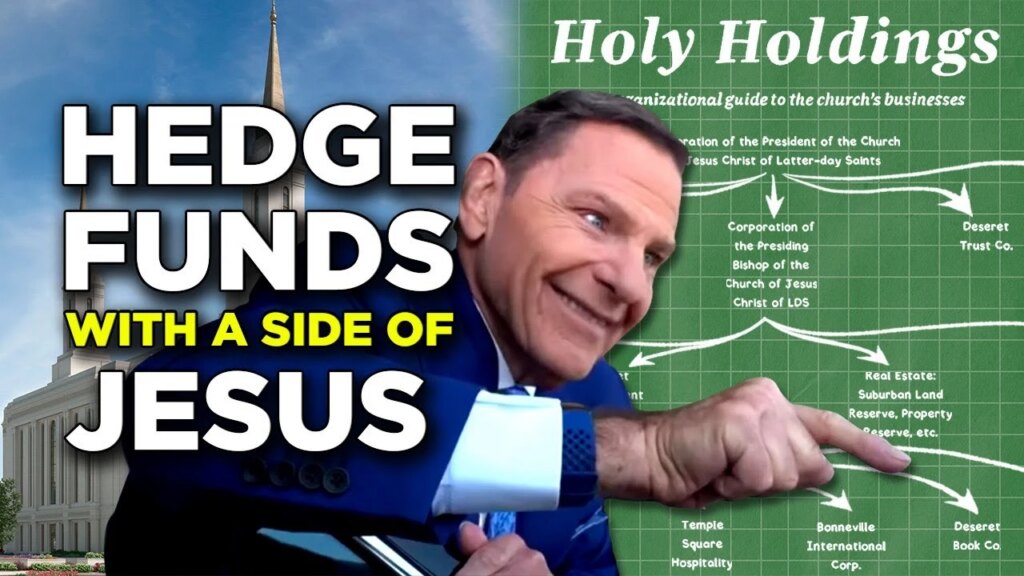
The real controversy around the finances of the Church of Jesus Christ of Latter-day Saints is not simply that it is wealthy. Many large religious institutions are wealthy.
The controversy is that the church appears to combine three kinds of power at once: religious authority, tax-advantaged capital accumulation and a financial structure that, for years, revealed less than outsiders believed an institution of that scale should reveal. That combination has made its finances unusually difficult to ignore.
The church has long defended its financial practices as part of prudent stewardship. On its own official materials, it says church finances are used to support worship, humanitarian and educational work, and that Ensign Peak Advisors assists with cash-management and reserve functions that help support those efforts.
But prudence is not what drew the Securities and Exchange Commission into the story.
In February 2023, the SEC charged Ensign Peak Advisors and the church over reporting failures tied to the church’s equity holdings. According to the SEC, Ensign Peak, with the church’s knowledge, used multiple LLCs to obscure the size of the overall portfolio and avoid disclosing the church’s securities holdings in the way federal rules required. The settlement required Ensign Peak to pay $4 million and the church to pay $1 million.
That enforcement action mattered because it shifted the debate from vague suspicion to a formal finding by a federal regulator. The amounts paid were not financially significant relative to the size often associated with the church’s reserves, but the episode reinforced a broader perception: this was not just an institution with substantial wealth, but one that had gone to notable lengths to keep that wealth less visible.
This is what makes the church’s finances such a durable public story. The issue is not merely tithing, or even the existence of a large reserve fund. It is the scale of the reserve, the opacity that surrounded it, and the tax treatment that allows the underlying capital to continue compounding with relatively little outside pressure.
Tithing sits at the center of that system.
For members, tithing is a religious obligation, not just a funding mechanism. For outsiders, it is also the beginning of a financial machine. Donations to churches are generally tax-deductible under U.S. law, and religious institutions enjoy broad tax protections. That means money given by members can move into a structure that is not taxed like an ordinary corporation and, when invested effectively, can grow with extraordinary efficiency. The church’s own statement frames that model as a way to support its religious mission over time. Critics see something more complicated: a system in which spiritual commitment helps finance one of the most powerful pools of tax-advantaged capital in the country.
This is where the argument becomes less about doctrine and more about political economy.
A church that commands billions in reserves, major real-estate holdings, educational assets and a professionally managed investment arm does not function only as a congregation. It also functions, in material terms, like a highly sophisticated institution with the balance-sheet advantages of both a long-term endowment and a tax-favored religious entity. That does not make it unlawful by itself. It does make the usual language of “church finances” sound far too small for what is actually being described.
The SEC case sharpened another question that goes beyond legality: how much transparency should the public expect from a religious institution of this scale?
That question has no easy answer because churches are not public companies, and many Americans would recoil at the idea of government intruding too aggressively into religious administration. Yet it is equally true that once an institution controls enormous pools of financial assets, receives tax advantages and exercises broad social influence, demands for accountability become harder to dismiss as anti-religious hostility. The church’s official statement on the SEC settlement said it relied on legal counsel and believed the structure was lawful, while also acknowledging the need to improve compliance.
That response did little to settle the larger issue.
For critics, the problem was never just whether a filing rule had been mishandled. It was whether a church that teaches sacrifice and disciplined giving should simultaneously operate with the defensive secrecy of a large financial institution. The SEC order did not answer that moral question. It simply made it more difficult to avoid.
The broader American context matters too. The United States gives religious organizations unusually wide latitude compared with many other institutions of similar economic size. That latitude reflects constitutional protection, political caution and deep cultural reluctance to police faith communities too closely. But it also creates conditions in which large, sophisticated religious entities can accumulate wealth on terms that would look highly unusual in almost any other sector.
That does not mean every wealthy church is abusing the system, or that every reserve fund is evidence of bad faith. It does mean the Mormon Church has become the clearest case study in what happens when religious exemption, member loyalty and institutional finance intersect at very large scale.
Supporters will argue that this is exactly what stewardship looks like: save carefully, invest wisely and build resources that can sustain religious work for generations. Critics will argue that once reserves become vast enough, the institution begins to look less like a ministry protecting its future and more like a financial empire sheltered by religion. The SEC case did not resolve that dispute. It merely gave both sides a harder set of facts to work with.
That is why the scrutiny is unlikely to fade.
The church is too large, too financially sophisticated and too tax-advantaged for the public to treat its money as a purely internal matter forever. And the more its reserve structure resembles the architecture of major institutional capital, the more people will ask a question that goes well beyond this one church:
At what point does a religious institution stop looking merely wealthy and start looking financially unaccountable in ways the public no longer finds acceptable?
All writings are for educational and entertainment purposes only and does not provide investment or financial advice of any kind.