Why This Market Feels More Like 1929 Than Many Investors Want to Admit
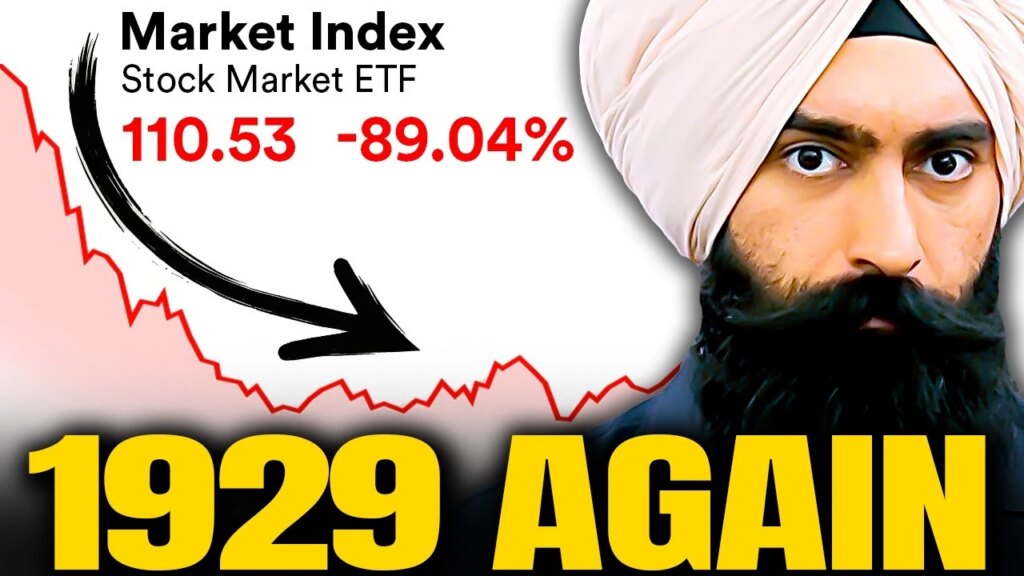
Every era that looks overheated insists it is different.
That was true in the late 1920s, when stocks seemed to be climbing on a permanent escalator and speculation began masquerading as modernity. It is true again now, as markets hover near highs, artificial-intelligence spending has taken on the tone of a gold rush, and retail investors are being invited further into complex corners of finance with fewer barriers than before. The comparison to 1929 is not exact. But it is no longer far-fetched either.
The most striking similarity is not simply that prices are high. It is the psychology underneath them.
From 1928 into 1929, the market rose with a momentum that encouraged people to believe the gains themselves were proof of safety. A 90% run-up can do that. It persuades investors that valuation matters less than participation, that skepticism is just missed opportunity, and that the only real mistake is failing to get in fast enough. That same psychology has returned in modern form. Investors are again buying assets not only because they believe in long-term cash flow, but because they believe someone else will want to pay more tomorrow. That is speculation in its purest form.
Speculation becomes dangerous when it is joined by leverage.
This is where the historical comparison grows more serious. The late 1920s were not just a time of optimism. They were a time of borrowed optimism. Debt amplified gains on the way up and devastation on the way down. Today’s version is more sophisticated, but the logic is similar. Margin use and leverage across the financial system remain central features of modern market behavior. Borrowed money makes booms feel smarter than they are, right until prices reverse and forced selling takes over. Then the same leverage that made gains look easy becomes the accelerant that turns correction into panic.
The third similarity is weakening restraint.
One of the less appreciated risks in modern markets is not merely that investors are speculative, but that access to speculative assets has broadened faster than financial understanding has. Regulatory guardrails that once limited certain risks to more sophisticated investors have gradually loosened, allowing more retail money into opaque or lightly understood products. The language used to justify this is usually democratic: more access, more opportunity, more inclusion. But access without understanding is not empowerment. In some cases, it is just another way of spreading risk more widely before the downside becomes obvious.
This is where today differs sharply from 1929, and why the outcome may not look identical even if the setup feels familiar.
The modern financial system is far more interventionist. Bank deposits have FDIC protection. The Federal Reserve is much more aggressive and much more willing to provide liquidity in a crisis. The government has shown repeatedly that it will not sit passively through systemic collapse if it believes intervention can stabilize markets. That is a major difference, and it matters. It makes a classic Depression-style banking failure less likely in the old form. It does not make markets safe. It simply changes the mechanics of how instability plays out.
If anything, the ability to print money and backstop markets may make crashes more volatile rather than less meaningful.
That sounds counterintuitive until one remembers what happened in 2020. Markets collapsed rapidly, then recovered with equally unusual speed because monetary and fiscal support arrived on a historic scale. The lesson many investors learned from that episode was not caution. It was that every crash might be brief and every decline a buying opportunity to be rescued by policy. That belief may prove costly if the next downturn arrives in an environment where inflation, debt or currency pressure limits how easily policymakers can respond.
That is what makes the present moment so uneasy. The economy is not obviously in free fall. Unemployment remains relatively low. Stocks remain elevated. Yet beneath the surface sit high public debt, persistent inflation risk, elevated speculation and a deep dependence on policy support. It is not the same structure as 1929. But it is another structure in which confidence may prove more fragile than current prices suggest.
And confidence is usually what turns correction into cascade.
Still, the lesson of 1929 is not simply that bubbles burst. It is also that crashes transfer wealth from the unprepared to the prepared. That is the part investors often forget when fear dominates the headlines. Recessions and major drawdowns are painful, but they are also the periods when long-term wealth is often built most efficiently. Panic creates forced sales. Forced sales create discounts. Discounts create the opportunity for patient capital to buy strong assets at prices that are unavailable in calmer times.
This does not mean every dip should be treated casually. The path from peak to trough can be long, messy and economically damaging. Recovery times vary. Some crashes reverse in months. Others take years. The point is not that downturns are easy. It is that they are productive for the investor who has liquidity, discipline and a long enough horizon to buy when others are desperate to sell.
That is why the most useful response to a market that feels increasingly speculative is not panic. It is preparation.
Preparation means understanding that recessions are not rare accidents. They are recurring features of capitalism. It means keeping enough cash or dry powder to take advantage of overselling rather than becoming part of it. It means resisting the urge to treat recent gains as proof that risks have disappeared. And it means remembering that long-term wealth tends to come not from predicting the exact date of the next crash, but from knowing what to do when one arrives.
This is where the “1929” comparison is most valuable. Not as a prophecy, but as a warning against complacency.
Markets do not need to repeat history exactly to rhyme with it dangerously. Speculation, leverage and looser restraint have always been combustible. Policy support can delay the reckoning, soften parts of it, or redirect it. It cannot permanently repeal valuation, debt or human psychology. Sooner or later, the market has to rediscover what it actually owns and what it was merely willing to believe.
That is why this market feels more like 1929 than many investors want to admit. Not because the outcome is predetermined, but because the ingredients are becoming familiar again.
Jaspreet Singh is not a licensed financial advisor. He is a licensed attorney, but he is not providing you with legal advice in this article. This article, the topics discussed, and ideas presented are Jaspreet’s opinions and presented for entertainment purposes only. The information presented should not be construed as financial or legal advice. Always do your own due diligence.