Your Home May Build Wealth, but It Is Not a Retirement Plan
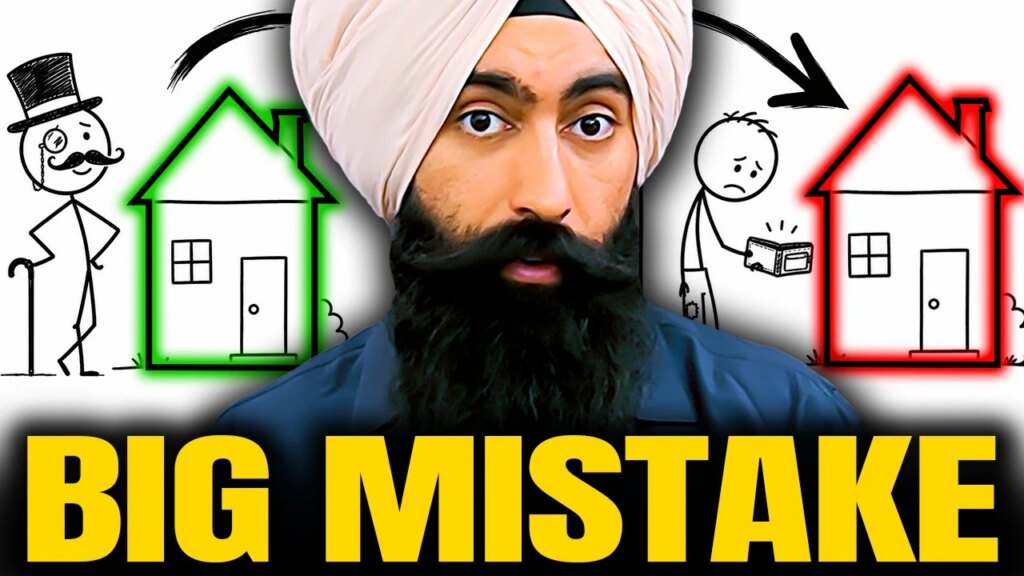
Homeownership occupies an unusual place in the American understanding of wealth. A house is shelter, a source of stability, a forced-savings mechanism and, for many families, the largest asset they will ever own. Years of mortgage payments can gradually convert debt into equity, while rising property values may create wealth that would have been difficult to accumulate through saving alone.
That does not make a home a complete financial plan.
A house does not normally produce spendable income while its owner lives in it. Even after the mortgage is paid off, property taxes, homeowners insurance, utilities, maintenance and repairs continue. A retiree may own a valuable home and still struggle to pay monthly bills because the wealth is locked inside the property.
The distinction matters because many households treat homeownership as proof that retirement is secure. In reality, a home can be an important part of wealth without providing the liquidity, diversification or income needed to fund several decades after work ends.
A Paid-Off Home Is Not a Free Home
Eliminating a mortgage can dramatically reduce a household’s expenses, but it does not eliminate the cost of living in the property. Homeowners remain responsible for taxes, insurance, utilities, association dues where applicable and the continuing expense of maintaining the structure. Freddie Mac notes that property taxes and insurance premiums can change over time, even when the principal-and-interest payment on a fixed-rate mortgage remains constant.
Those increases can become particularly difficult for retirees whose income does not rise at the same pace. A home that was affordable at the time of purchase may later carry much higher tax and insurance bills because its assessed value, replacement cost or exposure to natural hazards has increased. Rising ownership costs can create financial pressure even though the homeowner has no remaining mortgage balance.
Maintenance is less predictable but equally real. Roofs, heating systems, plumbing, appliances and exterior structures eventually need repair or replacement. These expenses may not arrive every year, which makes them easy to underestimate, but failing to reserve money for them does not make them disappear.
Home equity should therefore be considered separately from cash flow. A retiree can have a $700,000 home, no mortgage and only a small amount of spendable savings. On a balance sheet, that person may appear wealthy. In practice, the retiree may lack the income and liquid assets needed to pay taxes, repair the property or withstand a medical emergency.
Mortgage Payments Build Equity Slowly at First
A mortgage payment is divided between interest and principal. The principal portion reduces the amount owed and builds equity, while the interest compensates the lender for providing the loan. Most monthly housing payments also include amounts for property taxes and homeowners insurance.
During the early years of a standard fixed-rate mortgage, a relatively large share of each principal-and-interest payment goes toward interest. The balance changes gradually because interest is calculated on the outstanding loan amount, which is highest at the beginning. As the balance declines, more of each payment is applied to principal.
This does not mean mortgage payments benefit only the bank. The borrower receives the use of the home, protection from rent increases on the financed portion of the payment and the opportunity to build equity over time. It does mean that homeowners should not assume every dollar paid is being converted directly into wealth.
Transaction costs also affect the calculation. Buyers may pay closing costs at purchase, while sellers often face commissions, transfer taxes, repairs and other expenses. A home that rises modestly in value over a short ownership period may still produce little or no net profit after financing and transaction costs are included.
Homeownership tends to work best as a long-term arrangement rather than a reliable path to quick gains. It can provide stability and gradual wealth accumulation, but the outcome depends on purchase price, financing, maintenance, local market conditions and how long the owner remains in the property.
Appreciation Is Valuable but Difficult to Spend
A rising home value can improve a household’s net worth, but appreciation does not automatically increase retirement income. The owner generally must sell, refinance, obtain a home-equity loan or use a reverse mortgage before the gain becomes available for spending.
Each option involves a trade-off. Selling may require moving away from a familiar community. Borrowing creates interest costs and repayment obligations. A reverse mortgage can provide liquidity to an eligible older homeowner, but fees and accumulating interest reduce the equity available later.
This is why a home should not be treated like a dividend-paying investment. It may appreciate substantially, but it usually consumes cash while the owner occupies it.
The financial value can still be significant. A paid-off home reduces the amount of retirement income needed for housing, and downsizing may release equity for other goals. The mistake is assuming that a high property value removes the need for a diversified portfolio, emergency savings and dependable income.
Wealth Requires More Than One Asset
A household whose net worth is concentrated almost entirely in one home is exposed to a single property, one neighborhood and one regional economy. The home may perform well, but it cannot provide the diversification available through investments spread across many companies, industries and countries.
Financial resilience usually develops through several forms of wealth. Cash provides immediate liquidity. Bonds can support stability and income. Stocks offer long-term growth potential. Retirement accounts provide tax advantages, while insurance protects against risks that would be difficult to absorb independently.
A home can sit alongside those assets without replacing them.
Diversification does not guarantee a profit or prevent losses, but it reduces dependence on one financial outcome. The Securities and Exchange Commission notes that stocks have historically rewarded investors who remained invested over long periods, while also warning that prices can fall and investors can lose money.
The appropriate mix depends on age, goals, income and tolerance for risk. What matters is that the household is not relying exclusively on continued home appreciation to create retirement security.
A Simple Budget Rule Can Create a Starting Point
One approach to managing income is to divide it among current expenses, long-term investments and accessible savings. A framework such as allocating 75% to living expenses, 15% to investing and 10% to savings can provide a useful starting point for someone who has never established a system.
The percentages are not universal. A household with high housing costs may be unable to keep expenses at 75%, while someone with a strong emergency fund may need less additional cash savings and more retirement investing. A worker attempting to catch up later in life may need to invest well above 15%.
The value lies less in the precise percentages than in deciding in advance that part of every paycheck will be retained. Separate accounts can reinforce that decision by preventing money intended for emergencies or investing from blending into ordinary spending.
The savings portion can build an initial emergency fund and prepare for near-term expenses. The investment portion can fund retirement accounts and other long-term assets. Once an emergency reserve is established, part of the original savings allocation may be redirected toward investing, debt repayment or another priority.
A workable system should be sustainable enough to survive ordinary life. A plan that leaves no room for family needs, recreation or irregular expenses may look impressive on paper but eventually be abandoned.
Compound Growth Rewards Time, but Assumptions Matter
Starting early gives investments more time to compound. Returns earned in one period can remain invested and potentially produce additional returns in later years. Even small contributions can become meaningful when they continue for decades.
The effect becomes dramatic when unusually high returns are assumed. An $8,000 investment compounding at 20% annually for 40 years would mathematically grow to nearly $11.8 million.
The calculation is correct. The assumption is the problem.
Achieving 20% every year for four decades would be extraordinary. Historical U.S. stock-market returns have been closer to roughly 10% annually before inflation over very long periods, and actual investor results vary with fees, taxes, timing and behavior. The SEC also cautions that past performance does not predict future results and that performance claims can be presented in misleading ways.
At an 8% annual return, the same one-time $8,000 investment would grow to about $174,000 after 40 years. At 10%, it would grow to approximately $362,000. Those results remain powerful, but they are far removed from the fortune implied by a 20% assumption.
Realistic projections help investors save enough rather than depending on exceptional returns to rescue an underfunded plan. Compounding is most dependable when paired with regular contributions, low costs, diversification and a long time horizon.
Credit Card Interest Compounds in the Wrong Direction
Investment growth allows returns to work for the saver. High-interest debt allows compounding to work for the lender.
Americans carried approximately $1.25 trillion in credit-card balances during the first quarter of 2026. Average balances vary depending on whether the data include all consumers, active cardholders or only those carrying debt, but several recent estimates place the typical individual balance at roughly $6,500 to $7,000.
At a 20% annual percentage rate, an $8,000 balance can generate roughly $1,600 in interest over a year when the balance remains near that level. Minimum payments may cover interest and only a small portion of principal, extending repayment and making purchases far more expensive than their original prices.
Paying off such debt produces a powerful, effectively guaranteed benefit because every dollar of avoided interest remains with the household. It is difficult to justify pursuing speculative investment returns while carrying revolving debt at rates near or above 20%.
This does not mean someone should stop every retirement contribution until all debt disappears. Contributing enough to capture an employer match may still be worthwhile, and households need some emergency savings to avoid returning to credit cards after the next unexpected expense. Beyond those priorities, high-interest debt often deserves attention before additional taxable investing.
Higher Income Does Not Automatically Create Wealth
Earning more can accelerate financial progress, but income and wealth are not the same.
A household can earn several hundred thousand dollars and accumulate little if nearly all of the income is committed to housing, vehicles, tuition, debt and recurring lifestyle expenses. Another household with a moderate income may steadily build wealth by maintaining lower fixed costs and directing part of every paycheck toward assets.
The process can be understood in three stages. Money must first be earned, then retained and invested, and eventually protected. Weakness at any stage can undermine the others.
Someone who earns well but spends everything has nothing left to grow. Someone who saves diligently but keeps all long-term money in cash may lose purchasing power to inflation. Someone who accumulates assets but lacks appropriate insurance, estate documents or diversification may remain vulnerable to a single setback.
Financial progress rarely comes from one breakthrough decision. It comes from repeatedly creating a gap between income and spending, then using that gap to reduce debt and acquire productive assets.
Passive Income Is Useful, but It Is Rarely Passive at the Beginning
The idea of passive income is appealing because it suggests money arriving without continued labor. Dividends, bond interest, rental income and business distributions can eventually provide cash flow that is less dependent on a salary.
Creating those assets usually requires substantial effort, capital or both.
A rental property may generate monthly income, but the owner must arrange financing, manage tenants, maintain the building and absorb vacancies. A business can produce distributions after the founder steps away, but only if systems, employees and customers remain in place. An investment portfolio requires years of contributions before its income becomes large enough to support a household.
Passive income is therefore better understood as delayed compensation for prior saving, work and risk. It can create financial freedom, but it is not a shortcut around the need to build assets.
Money Beliefs Can Shape Financial Behavior
People do not make financial decisions through arithmetic alone. Childhood experiences, family attitudes and previous losses can influence whether someone saves, spends, invests or avoids money altogether.
A person raised in a household where bills caused constant conflict may associate money with fear. Someone taught that wealthy people are greedy may unconsciously resist earning or accumulating more. Others may spend quickly because money never felt secure enough to keep.
These beliefs can produce real financial consequences. Fear of investing may leave retirement savings in cash for decades. Guilt about earning more may lead someone to underprice work or give away money before personal needs are secure. Anxiety may prevent a household from reviewing accounts until a problem becomes severe.
Reframing money as a tool can create a healthier approach. Money can provide housing, medical care, education, time with family and support for causes that matter. Building wealth does not require treating accumulation as the sole purpose of life. It means creating enough financial capacity to make choices without every decision becoming an emergency.
Financial health should be viewed as one part of overall well-being. Chronic money stress can affect relationships, sleep and physical health, while a clear plan can replace some uncertainty with a sense of control.
Quick-Wealth Promises Exploit Impatience
The desire to build wealth faster is understandable, particularly for people who feel behind. It also creates an opening for speculative investments, trading systems and scams that promise extraordinary gains with little risk.
Claims of consistent 20% returns should be approached with particular caution. An investment capable of producing a very high return normally carries a meaningful risk of loss. Anyone promising exceptional gains without explaining the corresponding risk is leaving out the most important part of the transaction.
Fast-money pitches often rely on urgency. The buyer is told that an opportunity is available only briefly, that conventional advisers do not understand it or that other investors are already becoming rich. These tactics discourage the careful research that legitimate investments should withstand.
Wealth is more commonly built through an unremarkable process: increasing income, keeping fixed expenses manageable, eliminating expensive debt, investing regularly and allowing time to do much of the work.
Protecting Wealth Is Part of Building It
Accumulating assets is only one part of a financial plan. Households also need protection against events that could erase years of progress.
Homeowners insurance protects the property but may require additional coverage for floods, earthquakes or other exclusions. Disability insurance can protect earning power during the working years, while life insurance may be necessary when family members depend on one person’s income. Liability protection, health coverage and an adequate emergency fund reduce the likelihood that one event forces the sale of long-term investments.
Estate planning becomes increasingly important as assets grow. A will, properly designated beneficiaries and appropriate legal documents can determine who receives property and who is authorized to act during incapacity. More complex households may need trusts or specialized planning, but even a basic estate plan is better than leaving every decision to default state law.
Protection should be proportional to the actual risk. Buying every available insurance product can consume money that would otherwise be saved or invested. The objective is to transfer risks capable of causing severe financial harm while retaining smaller risks the household can reasonably absorb.
A Home Should Support the Plan, Not Become the Entire Plan
Homeownership can be one of the most valuable financial decisions a household makes. It can stabilize housing costs, create equity and provide a place to live without rent in retirement. For many families, selling or downsizing later will release money that supports other needs.
The problem begins when the home is expected to do every job.
A house cannot provide emergency liquidity without being sold or borrowed against. It does not automatically generate retirement income. Its value depends on one property market, while its ownership creates continuing expenses that may rise over time.
A well-rounded retirement plan treats home equity as one resource among several. Social Security and pensions can provide dependable income. Investment accounts can support growth and flexible withdrawals. Cash can cover emergencies, while insurance protects against major losses.
The objective is not to prove that renting is better than owning or that a home is a poor investment. The appropriate decision depends on lifestyle, location, expected length of residence and the full cost of each alternative.
The more important lesson is that wealth cannot be measured solely by the market value of the roof overhead. Lasting financial security comes from the ability to pay ongoing expenses, withstand setbacks and support a desired life without depending on one asset continuing to rise forever.
Jaspreet Singh is not a licensed financial advisor. He is a licensed attorney, but he is not providing you with legal advice in this article. This article, the topics discussed, and ideas presented are Jaspreet’s opinions and presented for entertainment purposes only. The information presented should not be construed as financial or legal advice. Always do your own due diligence.