$2 Million Is a Retirement Milestone. It’s Also Where New Financial Mistakes Begin
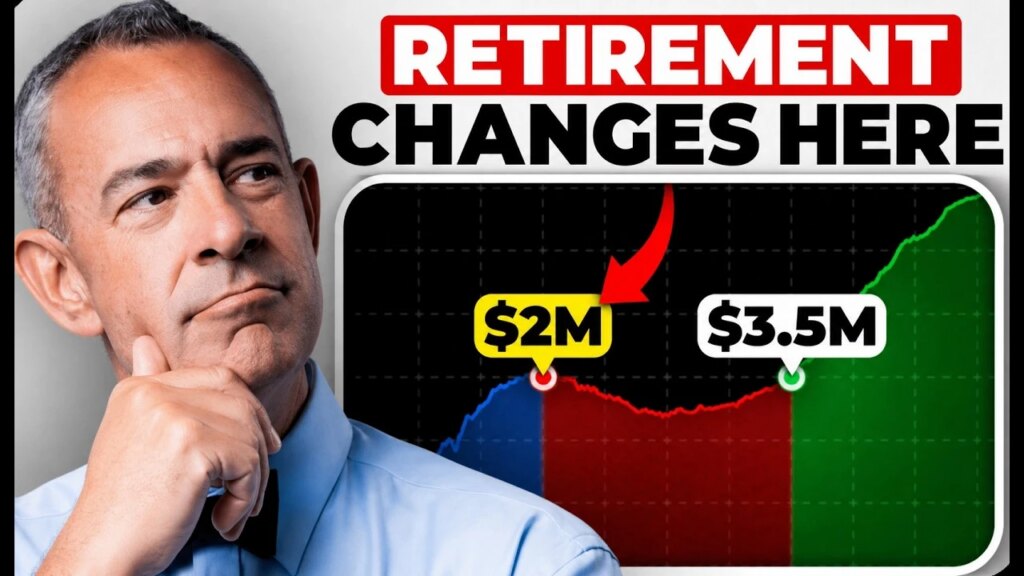
Reaching $2 million in retirement savings sounds like the point when financial planning should become easier. For many households, it does provide substantial security. A portfolio of that size can support meaningful withdrawals, absorb ordinary unexpected expenses and create options that are unavailable to someone entering retirement with a few hundred thousand dollars. Yet $2 million also tends to be the point where investors begin encountering a different category of financial mistakes.
The danger is no longer simply failing to save enough. Investors with larger portfolios are more likely to encounter complicated investment products, substantial tax-deferred balances, concentrated positions and estate-planning decisions that can affect several generations. A market decline that once meant losing $40,000 can suddenly erase $400,000 on paper, while an apparently harmless decision about which account to withdraw from can affect taxes and Medicare premiums years later. Wealth creates flexibility, but it also raises the dollar cost of getting important decisions wrong.
There are four traps that become particularly relevant around this level: unnecessary complexity, poor tax diversification, early-retirement market losses and an estate plan that does not match the owner’s intentions. None requires abandoning growth or becoming excessively conservative. The goal is to make sure a portfolio that was difficult to build does not become unnecessarily difficult to manage.
1. More Money Often Attracts More Complexity
A $2 million investor rarely receives the same investment pitch as someone with $20,000. As wealth rises, so does access to private credit, structured notes, private real estate, alternative funds, annuities and other strategies promoted as ways to improve diversification or generate income beyond traditional stocks and bonds. Some of these investments can serve legitimate purposes, but complexity should never be confused with sophistication.
Every additional product creates questions about fees, liquidity, valuation and risk. A publicly traded index fund can generally be sold during market hours at a transparent price. A private investment may restrict withdrawals for years, rely on periodic estimates of fair value and charge multiple layers of management or performance fees. Those characteristics do not make the investment inherently bad, but they increase the burden on the investor to understand what is actually being purchased.
The most useful test is whether the product solves a specific problem that cannot be solved more simply. If a private credit allocation meaningfully diversifies a portfolio and the investor can tolerate its illiquidity, it may have a place. If a complicated product merely promises a slightly higher yield while obscuring fees and limiting access to capital, the sophistication may belong primarily to the sales presentation.
A larger portfolio also makes seemingly modest fees much more expensive. A 1% annual cost on $2 million is $20,000, before accounting for any underlying fund expenses. That does not mean professional management is never worth the cost, but every recurring fee should be able to answer a straightforward question: What financial problem is this expense solving?
Complexity Can Make Risk Harder to See
Diversification is valuable because different assets behave differently, but adding more holdings does not automatically create better diversification. An investor can own 15 funds that ultimately hold many of the same large U.S. companies or several alternative products whose risks all depend on credit remaining readily available.
The difficulty becomes more serious when investments are hard to value. Private funds and other illiquid assets can appear less volatile partly because they are not repriced every second like publicly traded securities. A smoother statement does not necessarily mean the underlying economic value is more stable; it can mean price discovery occurs less frequently.
Retirees should therefore know not only the names of their investments but the underlying exposures. How much is ultimately tied to stocks, real estate, corporate credit and interest rates? How much can be converted to cash within a week? How much could remain inaccessible during a market crisis? Those questions matter far more than whether a portfolio contains the newest investment category.
Around $2 million, simplicity itself can become a financial advantage. A portfolio that the owner understands is easier to rebalance, easier to tax-manage and far easier for a surviving spouse to administer if one partner has historically handled most financial decisions.
2. A $2 Million Portfolio Can Hide a Large Future Tax Bill
The second trap is assuming that every dollar in a retirement account has the same economic value. A household with $2 million almost entirely inside traditional 401(k)s and IRAs is in a very different tax position from another household with the same amount divided among traditional, Roth and taxable accounts.
Traditional retirement money generally benefited from tax deferral when it went into the account, but withdrawals are generally taxable as ordinary income. That arrangement can work extremely well when contributions were deducted at high tax rates and distributions later occur at lower rates. The problem arises when decades of successful investing leave retirees with so much pretax money that future withdrawals are driven by tax rules rather than spending needs.
Required minimum distributions eventually become part of that calculation. Under current law, the applicable RMD age is 73 for people who reach 73 before 2033, while it rises to 75 for people who reach 74 after 2032. Roth accounts in employer plans are no longer subject to lifetime RMDs for the original owner.
For someone with a large traditional account, those mandatory distributions can eventually create taxable income even when the money is not needed for living expenses. That can affect ordinary income taxes, the taxation of Social Security and Medicare premiums. The tax problem is therefore not that the account grew too much; it is that the owner may have too little control over when the taxable income arrives.
Medicare Can Turn Tax Planning Into Healthcare-Cost Planning
Medicare’s income-related monthly adjustment amount, or IRMAA, is one reason large retirement distributions deserve careful timing. In 2026, the standard Part B premium is $202.90 per month for beneficiaries with modified adjusted gross income of $109,000 or less as individuals or $218,000 or less for married couples filing jointly. Above those levels, premiums increase through several tiers, reaching $689.90 per month per person at the highest income level.
That means a Roth conversion or unusually large IRA withdrawal can produce costs beyond the federal income-tax bracket itself. Because Medicare generally looks back two years when determining IRMAA, a large income event can affect premiums after the original tax year has passed. The same transaction that looks attractive when viewed only through an income-tax calculator may be less compelling after healthcare surcharges are included.
This does not mean retirees should avoid realizing income merely to remain below an IRMAA threshold. Sometimes voluntarily paying additional tax and Medicare premiums today can still reduce much larger future RMDs. The point is that retirement tax planning should consider the entire cost, not simply whether a conversion remains inside a preferred federal bracket.
A $2 million household often has enough wealth for this optimization to matter but not so much that the costs are irrelevant. That makes coordinated tax planning particularly valuable at this level.
The Years Before RMDs Can Be Exceptionally Valuable
Retirement can create a temporary window in which income is lower than it was during the working years and lower than it may become later. Someone might retire at 63, delay Social Security and have more than a decade before RMDs begin at 75. During that period, salary has disappeared while mandatory retirement distributions have not yet arrived.
Strategic Roth conversions can take advantage of that gap by deliberately recognizing taxable income at chosen rates. The objective is not to convert the largest possible amount but to fill tax brackets thoughtfully while considering Social Security, pensions, capital gains, Medicare and state taxes. Current 2026 federal brackets, for example, place the 22% bracket above $50,400 of taxable income for single filers and $100,800 for married couples filing jointly, with the 24% bracket beginning above $105,700 and $211,400 respectively.
The appropriate conversion amount can therefore change every year. A household may convert more before Social Security begins, less after a pension starts and nothing during a year when a large capital gain already consumed the desired tax bracket. Planning becomes a multi-year exercise rather than a one-time decision.
Tax diversification provides the payoff later. Having traditional, Roth and taxable assets gives retirees choices about where the next $50,000 should come from, which can be particularly valuable when an unexpected purchase would otherwise push income into an unfavorable range.
3. A 20% Market Decline Becomes a $400,000 Event
Market percentages can feel abstract during the accumulation years. At $2 million, they become difficult to ignore. A 20% decline represents $400,000 of portfolio value, while a 30% decline represents $600,000.
Those losses are not necessarily permanent if the investor remains invested and markets recover. The danger for a new retiree is having to sell assets at depressed prices at the same time the portfolio is declining. This is sequence-of-returns risk, and it explains why the timing of market losses can matter almost as much as the average return over an entire retirement.
Morningstar’s retirement research has repeatedly found that poor investment returns during the first years of retirement can substantially reduce portfolio sustainability because withdrawals prevent all of the depleted capital from participating in the later recovery. Two retirees can experience the same long-term average returns and still end with dramatically different outcomes if one encounters the worst years immediately after retirement.
A $2 million portfolio does not eliminate this risk. In some cases, the psychological effect can make it worse because a six-figure decline can prompt an investor who tolerated volatility while working to suddenly sell stocks at precisely the wrong moment.
Cash Buckets Can Help, but Two or Three Years Is Not a Universal Rule
One popular defense is the bucket strategy. Near-term expenses are placed in cash or highly stable investments, intermediate spending is supported with bonds or other moderate-risk assets, and money unlikely to be needed for many years remains invested for growth. During a stock-market decline, the retiree can draw from the safer assets rather than immediately selling depressed equities.
The approach has behavioral advantages because it creates a visible source of near-term spending. Morningstar’s research on retirement-income bucket strategies has found that the structure can help investors manage behavior and avoid impulsive responses to volatility, although bucket strategies do not automatically outperform systematic withdrawal approaches. The effectiveness depends on asset allocation, replenishment rules and how much cash is held.
Keeping two or three full years of spending in cash is therefore not automatically appropriate. If Social Security and a pension cover most essential expenses, the actual portfolio shortfall may be relatively small, meaning the cash reserve should be based on what the investments must fund rather than the household’s entire spending budget. Excessive cash can create its own risk by reducing long-term growth and losing purchasing power to inflation.
The objective is not to eliminate the possibility that stocks will ever need to be sold during a decline. It is to create enough flexibility that one poor market year does not force a panicked restructuring of the entire retirement plan.
Spending Flexibility Can Be as Important as Asset Allocation
A second defense against sequence risk is often overlooked because it does not involve an investment product. Retirees who can temporarily reduce discretionary withdrawals after severe market losses can relieve pressure on the portfolio at exactly the moment it matters most.
That does not require cutting groceries or healthcare whenever stocks decline. A household may identify a core spending level that must continue regardless of markets and a separate discretionary layer for travel, gifts, renovations or other expenses that can move from one year to another. A poor market year might postpone an expensive trip rather than force the sale of additional stock.
This is one reason a $2 million portfolio supporting $60,000 of annual withdrawals is financially different from the same portfolio supporting $120,000. The dollar balance may create the impression that both households are wealthy, but one portfolio is being asked to perform a much harder job.
Market risk should therefore be evaluated through spending, not simply portfolio value. A large account with modest demands can tolerate considerable volatility, while a similarly sized account supporting an expensive lifestyle may require substantially more protection.
4. Estate Planning Becomes Too Important to Leave on Autopilot
At $2 million, federal estate tax usually is not the primary issue. The 2026 federal basic estate and gift tax exclusion is $15 million per individual, far above the wealth level of most households with a $2 million investment portfolio. State estate or inheritance taxes can apply at lower levels, but avoiding federal estate tax should not be the reason every moderately affluent retiree rushes into elaborate trusts.
Estate planning still matters enormously because taxes are only one part of transferring wealth. Beneficiary designations can determine who receives retirement accounts, while wills and trusts can govern other assets. An outdated designation can override what someone believed the will said, and incapacity documents can be just as important as death planning if a spouse or child eventually needs authority to handle finances.
Retirees should also identify the purpose of the inheritance. Leaving $500,000 equally among financially independent adult children is different from supporting a child with special needs, protecting money from a beneficiary’s creditors or providing for children from a previous marriage. The legal structure should follow the problem rather than assuming everyone with $2 million needs the same trust.
Estate planning at this level is therefore primarily about making sure ownership, beneficiaries and legal documents produce the intended outcome. Tax minimization may be part of the process, but clarity should come first.
Be Skeptical of the “Third Generation Loses Everything” Statistic
Wealth-transfer discussions frequently cite a dramatic claim that 70% of wealthy families lose their wealth by the second generation and 90% lose it by the third. Those figures have been repeated so frequently that they are often presented as established statistical facts.
The evidence is much weaker than the slogan suggests. CFA Institute has examined the supposed “third-generation curse” and notes that the familiar 70% and 90% figures are widely quoted but should not be interpreted as demonstrating that family wealth inevitably disappears on that schedule. Academic research actually finds meaningful persistence of wealth across several generations, including a measurable association between grandparents’ and grandchildren’s economic position even after accounting for parental wealth.
That does not make family communication unimportant. Large inheritances can still create conflict, poor investment decisions or radically different expectations among beneficiaries. The stronger reason for discussing wealth with heirs is not that an arbitrary percentage guarantees they will squander it but that people manage money better when they understand its purpose and the responsibilities that accompany it.
A family does not need to reveal every account balance to have those conversations. Parents can explain why certain assets exist, what they hope the inheritance accomplishes and who will be responsible for decisions if they become unable to manage the money themselves.
A $2 Million Portfolio Does Not Necessarily Make You Wealthy
Two million dollars is a substantial sum, but its meaning depends entirely on what it must support. A 55-year-old retiring with $2 million and annual spending of $150,000 faces a very different problem from a 70-year-old couple spending $70,000 with most basic expenses covered by Social Security and pensions.
Location, taxes, housing, health and family responsibilities can change the calculation further. A paid-off home can reduce required withdrawals substantially, while a large mortgage and high property taxes can place continued pressure on even a sizable portfolio. Someone supporting adult children or expecting expensive long-term care may also need a larger margin of safety.
This is why $2 million should not become another universal retirement benchmark. The portfolio is valuable because of the cash flow and flexibility it can produce, not because the balance itself crosses an impressive-looking threshold.
The planning should begin with the household’s spending and reliable income, then determine what role the investments must play. Only after that calculation does it become possible to decide how much market risk, tax complexity and illiquidity the portfolio can reasonably tolerate.
The Best Plan Usually Gets Simpler as the Stakes Get Higher
There is a temptation to believe that accumulating more money should produce a correspondingly more complicated financial plan. Sometimes complexity is necessary, particularly when a household owns businesses, concentrated stock, unusual real estate or complicated family structures. Complexity for its own sake, however, can make a strong financial position harder to understand and easier to damage.
Around $2 million, the most useful questions are often surprisingly basic. What does every investment cost? How quickly can the money be accessed? What portion of future withdrawals will be taxable? What happens to the plan after a 20% market decline? Who receives each account if the owner dies tomorrow?
If those questions have clear answers, sophisticated strategies can be added where they create measurable value. If they do not, another private fund, insurance structure or tax strategy may simply add another moving part to a plan whose foundation has not yet been organized.
Wealth management should reduce uncertainty rather than manufacture complexity. The larger the portfolio becomes, the more valuable that principle can be.
The Goal Changes Once Accumulation Is No Longer the Main Problem
Building the first $2 million generally requires years of earning, saving and investing. Protecting it requires a different mindset. The investor no longer needs to concentrate exclusively on maximizing the account balance because taxes, withdrawals, liquidity and family decisions begin affecting the value the portfolio can actually provide.
That means resisting four predictable mistakes. Do not buy complexity merely because wealth creates access to it. Do not allow every retirement dollar to accumulate in the same tax bucket without considering future RMDs and Medicare costs. Do not enter retirement without a plan for surviving an early market decline, and do not assume that a will written years ago guarantees today’s assets will reach the people intended.
None of those problems means $2 million is insufficient. They exist precisely because the household has accumulated enough money for planning mistakes to become expensive.
The real transition at this level is from asking how to make the portfolio bigger to asking how to make the portfolio work better. Once that shift happens, the goal is no longer simply wealth accumulation. It is preserving flexibility, controlling avoidable risks and making sure the money eventually accomplishes what it was built to do.
Intended for educational purposes only. Opinions expressed are not intended as investment advice or to predict future performance. Past performance does not guarantee future results. Neither the information presented, nor any opinion expressed constitutes a solicitation for the purchase or sale of any security. Consult your financial professional before making any investment decisions. Opinions expressed are subject to change without notice.
IMPORTANT DISCLOSURES:
• Investment Advisory and Financial Planning Services are offered through Pure Financial Advisors, LLC. A Registered Investment Advisor.
• Pure Financial Advisors, LLC. does not offer tax or legal advice. Consult with a tax advisor or attorney regarding specific situations.
• Opinions expressed are subject to change without notice and are not intended as investment advice or to predict future performance.
• Investing involves risk including the potential loss of principal. No investment strategy can guarantee a profit or protect against loss in periods of declining values.
• All information is believed to be from reliable sources; however, we make no representation as to its completeness or accuracy.
• Intended for educational purposes only and are not intended as individualized advice or a guarantee that you will achieve a desired result. Before implementing any strategies discussed you should consult your tax and financial advisors.