The Best Age to Claim Social Security Depends More on Your Portfolio Than Most People Think
Most Social Security debates are framed too simply.
Claim at 62 and get the money early, or wait until 70 and collect the biggest possible check. The conversation usually stops there, often with a neat break-even chart suggesting that if you live long enough, delaying wins.
That is not wrong, exactly. It is just incomplete.
The better Social Security decision depends not only on life expectancy, but on what your portfolio is doing while you wait. That is the part many retirees miss. Delaying benefits does not happen in a vacuum. It usually means drawing more heavily from investment accounts in the meantime. And once that reality is added to the equation, the “best” age to claim becomes much more personal than the standard advice suggests.
That is what makes Social Security timing so important. The decision has a ripple effect across the rest of retirement. It shapes withdrawal pressure, investment growth, taxes, healthcare affordability and the size of the guaranteed-income floor later in life.
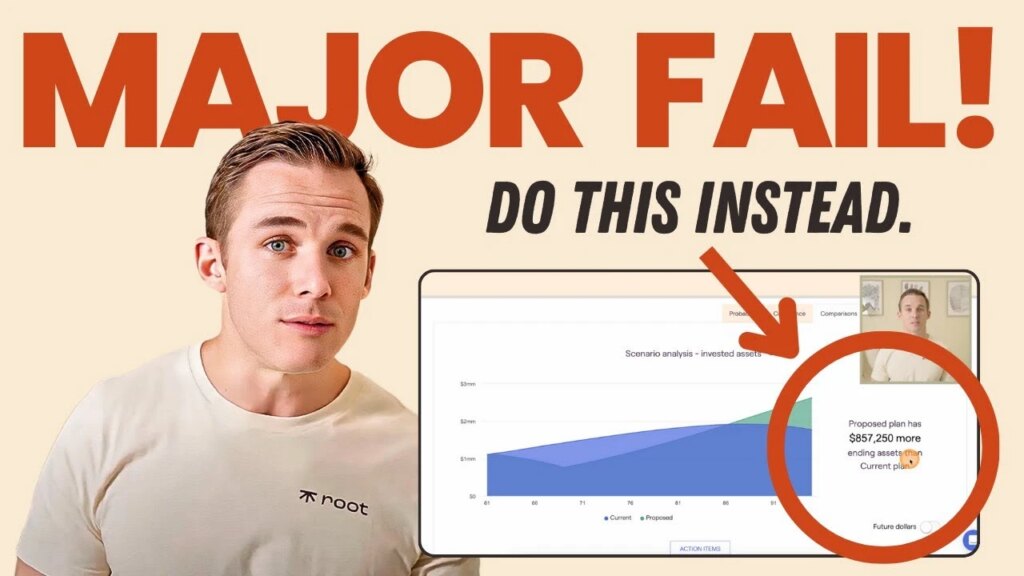
Take a couple retiring at 62 with roughly $1.1 million in investable assets, a paid-off home and monthly spending around $6,000 before taxes and healthcare. On paper, the usual advice might push them toward waiting. The monthly check grows. The lifetime income looks better if they live into their 80s or 90s. The break-even math seems to support patience.
But the problem with that conclusion is that it often ignores what happens to the portfolio while they wait.
If benefits are delayed, the retiree is effectively self-funding more of the early retirement years. That means withdrawing more from savings, which reduces the amount of money left invested and compounding. If the portfolio grows aggressively over time, that opportunity cost can become quite large. If returns are more modest, the tradeoff changes again. In both cases, the answer is being shaped as much by the investments as by Social Security itself.
This is why break-even analysis can be misleading. It treats Social Security as though it exists independently from the rest of the balance sheet. In reality, the choice is deeply connected to everything else.
A person who claims at 62 may receive a permanently reduced benefit, often around 70% of the full retirement amount. A person who waits until 70 gets a much larger monthly payment. But that larger payment was purchased with time and, in many cases, with heavier early portfolio withdrawals. The question is not simply which benefit is bigger. The question is whether the bigger future check is worth what had to be given up to get it.
That answer depends heavily on the assumed growth rate of the portfolio.
This is one of the most important and most overlooked variables in retirement planning. If someone assumes very strong long-term returns, delaying Social Security may actually create a large hidden cost, because the money pulled from the portfolio early would otherwise have stayed invested and potentially compounded for decades. If, on the other hand, returns are lower and more conservative, the opportunity cost of waiting is reduced, and the larger guaranteed income later may become more attractive.
That is why unrealistic return assumptions can distort the entire decision.
A plan based on an 8%-plus annual return can make almost any strategy look comfortable. A plan based on more modest returns can tell a very different story. The portfolio might still work either way, but the margin for error changes dramatically. And once the margin changes, so does the Social Security decision.
This is the deeper flaw in generic advice to “always wait until 70.” Waiting may well be the right answer for many people, especially those with strong longevity, limited pensions, and a desire to maximize survivor protection. But it is not automatically the right answer for everyone. For some households, claiming earlier can reduce stress on the portfolio, preserve flexibility and still produce an entirely successful retirement.
That is especially true when there are other moving parts, such as healthcare costs before Medicare, taxable withdrawals, or the emotional realities of retirement cash flow. A household that wants to retire immediately may value the smaller early check because it reduces the need to pull money from investments during the first vulnerable years. That may not maximize total Social Security income on paper, but it can improve the resilience of the broader plan.
Longevity still matters, of course. If someone dies early, claiming late often looks like a mistake in hindsight. If someone lives a very long time, delaying often looks smart. But even that should not be reduced to a simple life expectancy bet. The portfolio, taxes and income structure all shape how meaningful that longevity protection actually is.
This is also why spousal and survivor considerations deserve more attention. For married couples, delaying the higher earner’s benefit can provide more than just a larger monthly check. It can create stronger survivor protection later. In some households, that makes waiting more compelling even if the pure break-even math looks less obvious. In others, the need for present income and the structure of the portfolio may still tilt the decision toward claiming sooner.
The larger point is that Social Security claiming should never be treated as a separate math problem.
It is part of a retirement income system. It should be analyzed alongside investment returns, withdrawal rates, health insurance, taxes, longevity and the household’s real spending needs. A couple with a paid-off house, moderate expenses and strong assets may have more flexibility than they realize. Another couple with the same projected Social Security benefits but weaker investments may need a completely different answer.
That is why the best claiming strategy is rarely found in a chart or a rule of thumb. It comes from looking at the entire picture honestly.
The usual break-even question, “Will I get more if I wait?” is too small. The better question is, “What does waiting do to the rest of my plan, and is that trade worth it?”
Sometimes the answer is yes. Sometimes the answer is no. But the people who get it right are usually the ones who stop treating Social Security as a standalone decision and start treating it as one of the most powerful levers in the entire retirement plan.
You should always consult a financial, tax, or legal professional familiar about your unique circumstances before making any financial decisions. This material is intended for educational purposes only. Nothing in this material constitutes a solicitation for the sale or purchase of any securities. Any mentioned rates of return are historical or hypothetical in nature and are not a guarantee of future returns.
Past performance does not guarantee future performance. Future returns may be lower or higher. Investments involve risk. Investment values will fluctuate with market conditions, and security positions, when sold, may be worth less or more than their original cost.