6 Retirement Purchases That Can Quietly Cost You Your Freedom
One of the biggest retirement mistakes is not running out of money.
It is locking yourself into the wrong things.
That is what makes certain retirement purchases so dangerous. They do not always look reckless at first. In fact, many of them feel well-earned. A dream home. A luxury car. A second property. An investment pitched as safer, richer, or more sophisticated. But the real cost of these decisions is not only financial. It is the way they reduce flexibility, increase fixed obligations, and quietly make retirement harder to live.
That is why retirement spending should not be judged only by whether you can afford it today.
It should be judged by what it does to your freedom tomorrow.
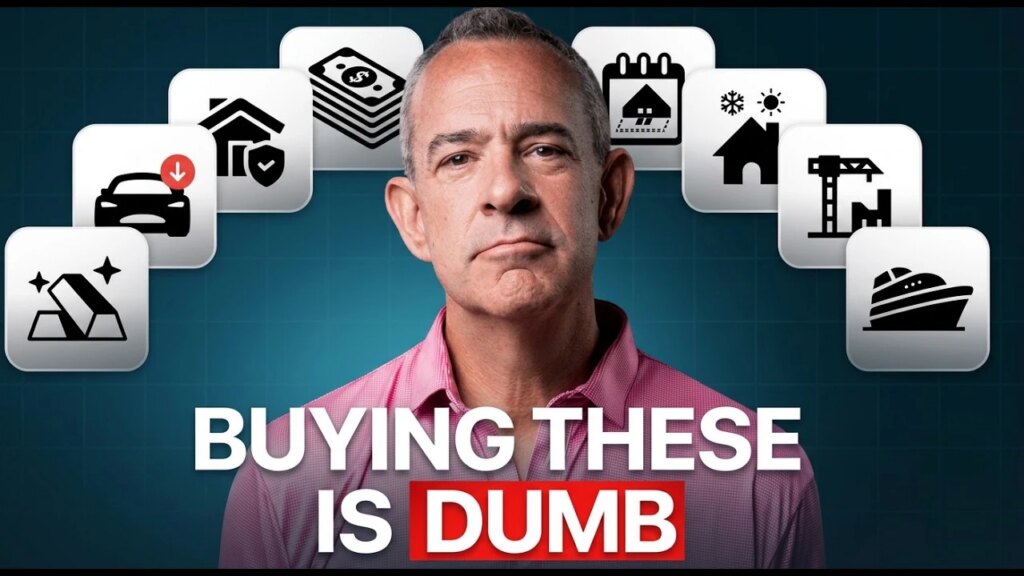
Here are six retirement purchases that can cost far more than many retirees expect.
1. A bigger dream home
This is one of the most common and most emotionally appealing retirement mistakes.
A nicer home feels like a reward for decades of work. It promises comfort, space, and a sense of arrival. But bigger homes rarely bring only bigger satisfaction. They usually bring bigger property taxes, bigger insurance bills, bigger utility costs, bigger maintenance obligations, and bigger repair surprises. Those costs often rise faster than inflation, which makes them especially dangerous in retirement.
The deeper problem is not just expense. It is rigidity. A large home ties retirees to one location, one routine, and one set of responsibilities. The best retirement housing usually supports life with less friction, not more. In many cases, the financially smarter move is not upgrading. It is simplifying.
2. A brand-new luxury vehicle
Luxury cars can be one of the fastest ways to convert retirement savings into permanent depreciation.
The first few years of ownership are usually the most expensive, and that loss is never recovered. On top of depreciation come higher insurance, registration, maintenance, and repair costs. And unlike a home, a car is almost never an appreciating asset. It is a draining one.
This is especially important in retirement because transportation should support independence, not weaken cash flow. A reliable late-model used vehicle paid for in cash often does that far better than an expensive new one with premium branding and rapidly aging technology.
3. Extended warranties and protection plans
These products are sold as peace of mind. They are usually better understood as highly profitable add-ons.
In many cases, retirees pay substantial upfront or ongoing costs for plans they never fully use. Even when the coverage is real, the value often falls short of the price. These are high-margin products precisely because they are so attractive emotionally. They let people feel protected without actually improving long-term financial resilience.
For many retirees, the better answer is not buying more warranties. It is keeping enough liquidity to absorb manageable setbacks and reserving real insurance for catastrophic risks.
4. A vacation home used a few weeks a year
A second home sounds like freedom. In practice, it often becomes obligation disguised as leisure.
Property taxes, insurance, HOA fees, utilities, maintenance, repairs, travel costs, and idle capital all keep running even when the house sits empty. Over time, the true cost per night can exceed what a retiree would have paid renting high-end properties wherever they actually wanted to go.
The less obvious problem is that a vacation home can reduce flexibility. Instead of encouraging exploration, it often pressures retirees to keep returning to the same place simply to justify ownership. Renting preserves optionality. Owning creates attachment, responsibility, and often more cost than expected.
5. Complex annuities bought as default retirement solutions
Annuities are not inherently bad. But many retirees buy the wrong ones for the wrong reasons.
The problem is not income guarantees themselves. It is the complexity, commissions, surrender periods, confusing riders, and loss of liquidity that often come with heavily marketed annuity products. These contracts are frequently sold as all-in-one retirement solutions when they are often better viewed as very specific tools for very specific situations.
A retiree who does not fully understand the structure may give up control over capital, flexibility, and future planning options in exchange for safety that could have been built more transparently elsewhere. For many people, simpler tools, Social Security, pensions, bond ladders, or immediate annuities used carefully, are more effective than expensive, complicated contracts.
6. High-fee “exclusive” investments
Retirees are often told that access equals sophistication.
Private deals, ultra-wealthy strategies, high-return promises, specialized funds, and complex alternatives are frequently pitched as though they offer a higher tier of investing. Sometimes they do. Often they mainly offer a higher tier of fees.
This is one of the easiest ways retirees quietly lose purchasing power. Layered advisory fees, product fees, trading costs, and opaque structures can drain returns without delivering meaningfully better results. The damage is even worse in retirement because the goal is not merely accumulation. It is dependable after-fee income and long-term purchasing power.
A simple, diversified, low-cost strategy usually does more for retirement freedom than a “special” investment that sounds impressive but erodes net returns.
The thread connecting all six mistakes is the same.
Each one reduces flexibility.
That is the real currency of retirement. Not just wealth, but flexibility. The ability to move, adjust, simplify, spend intentionally, and avoid being trapped by fixed costs or unnecessary complexity. The most successful retirees are often not the ones who buy the most. They are the ones who remain hardest to corner financially.
That is why what you choose not to buy matters so much.
Retirement freedom is lost less often through dramatic collapse than through slow accumulation of obligations: too much house, too much car, too much illiquidity, too many fixed expenses, too little room to adapt. That is how a retirement that looked affordable on paper starts to feel tight in real life.
The smartest retirement spending decision is often not the most exciting one. It is the one that preserves choice. And in retirement, choice is often worth far more than anything flashy you can buy.
Intended for educational purposes only. Opinions expressed are not intended as investment advice or to predict future performance. Past performance does not guarantee future results. Neither the information presented, nor any opinion expressed constitutes a solicitation for the purchase or sale of any security. Consult your financial professional before making any investment decisions. Opinions expressed are subject to change without notice.
IMPORTANT DISCLOSURES:
• Investment Advisory and Financial Planning Services are offered through Pure Financial Advisors, LLC. A Registered Investment Advisor.
• Pure Financial Advisors, LLC. does not offer tax or legal advice. Consult with a tax advisor or attorney regarding specific situations.
• Opinions expressed are subject to change without notice and are not intended as investment advice or to predict future performance.
• Investing involves risk including the potential loss of principal. No investment strategy can guarantee a profit or protect against loss in periods of declining values.
• All information is believed to be from reliable sources; however, we make no representation as to its completeness or accuracy.
• Intended for educational purposes only and are not intended as individualized advice or a guarantee that you will achieve a desired result. Before implementing any strategies discussed you should consult your tax and financial advisors.