Why Gas Prices Remain High, and When Drivers Could See Relief
Gas prices remain high across the U.S., but easing oil costs and softer demand could finally bring drivers meaningful relief this fall.
Why Gas Prices Remain High in August
The national gasoline average is finally moving in the direction drivers want, but the change is small enough to feel almost theoretical. AAA reported that regular gasoline averaged $4.063 per gallon on Aug. 6, down about three cents from a week earlier. That is still roughly 89 cents higher than the $3.170 average recorded one year ago.
Put that into the language of an actual fill-up. Fifteen gallons now costs about $60.95, compared with $47.55 at last year’s average. A driver making that stop four times a month is spending about $54 more before considering any other increase in household expenses. A modest weekly decline therefore does not mean fuel has become affordable again.
The reasons go well beyond the nearest station owner. The pump price includes crude oil, taxes, refining, distribution and retail expenses. Crude is usually the largest component, which is why uncertainty surrounding the Strait of Hormuz pushed gasoline sharply higher earlier this year. Oil has since retreated into the $70-per-barrel range, but gasoline inventories remain tight enough to slow the relief reaching motorists.
You may also enjoy: Gas Prices Are About to Cross $4 Again
You may also like this video:
Why High Prices Hurt Some Drivers More
The national average is useful, but it does not describe the damage to an individual budget. A vehicle that travels 12,000 miles annually and returns 25 mpg uses about 480 gallons. At the current national average, that is roughly $1,950 a year. A 35-mpg vehicle covering the same distance uses about $1,393, saving approximately $557.
That difference explains why a few cents at the pump matter more to owners of pickups, large SUVs and older vehicles. A commuter with a short trip in an efficient hybrid may barely notice a three-cent weekly move. A contractor towing with a gasoline truck or a parent driving a three-row SUV across town all week will feel every one of those pennies.
Drivers should use the government’s official vehicle fuel-economy comparison tool as a baseline, then adjust for their real mileage, weather, traffic and driving style. The useful number is not simply miles per gallon. It is the amount of money the vehicle consumes during the life the owner actually leads.
You may also enjoy: High Gas Prices Hit Big Truck Buyers
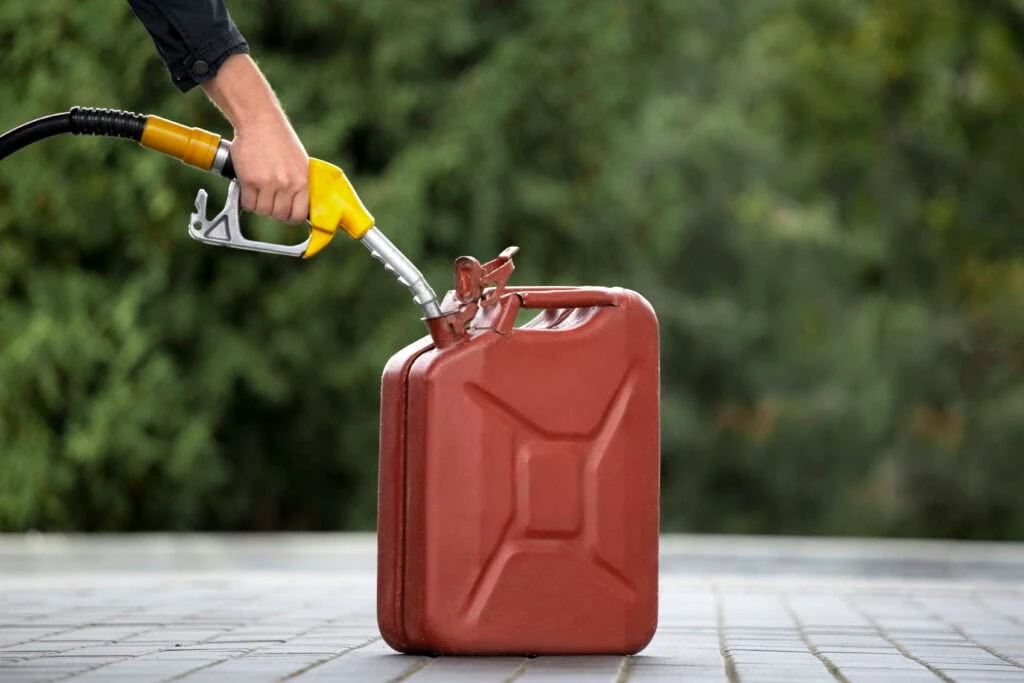
A man fills jerry cans at a gas station. A man fills gasoline in a canister at a gas station. Pouring gasoline into a canister.
Why Gas Costs Vary So Much by State
AAA said half of the states were averaging less than $4 on Aug. 6, but the range was enormous. California stood at $5.62, Hawaii at $5.45 and Washington at $5.14. Indiana, by contrast, averaged $3.54, while South Carolina and Tennessee were near $3.61.
Those gaps are not evidence that one station has discovered generosity and another has embraced villainy. As the Energy Information Administration explains, regions have different fuel specifications, taxes, refinery access and transportation networks. The West Coast has limited connections to the country’s other major refining centers, tighter local supply conditions and, in several states, higher taxes. The Gulf Coast benefits from dense refining capacity and generally lower fuel taxes.
Local disruptions can widen the difference. A refinery outage, pipeline interruption or hurricane may create a regional jump even when the national oil market is calm. Federal gasoline tax is 18.4 cents per gallon, while state taxes and fees averaged 33.55 cents as of January 2026. Local levies can add more, making geography a permanent part of the price.
You may also enjoy: How to Stretch Your Gas Mileage With Prices at Four-Year Highs
Woman fueling car on gas station, fuel refill. Petrol, gasoline or diesel refuel service, petroleum refueling
When Drivers Could Finally See Relief
The government’s outlook offers cautious encouragement. The U.S. Energy Information Administration expects regular gasoline to average about $3.80 during the third quarter, down from more than $4.20 in the second quarter. As inventories rebuild and summer driving fades, the agency forecasts prices around $3.40 in the fourth quarter.
That forecast is not a promise printed on a gas receipt. It assumes oil supply increases, trade flows normalize and gasoline inventories recover. Renewed conflict, an active hurricane season or major refinery trouble could quickly change the calculation. Pump prices also tend to fall more slowly than crude because wholesale and retail margins, inventory purchased at earlier prices and regional supply constraints remain in the chain.
Still, several pieces are moving in the right direction. AAA reported slightly lower gasoline demand in the latest week, while crude inventories increased. Schools are reopening and the peak road-trip period is ending. If those trends hold, drivers could see a gradual decline rather than a dramatic overnight reset.
You may also enjoy: Rising Gas Prices, Rising Car Prices: How Hybrids Save You Money
Guy holding gas nozzle
What Drivers Can Do Right Now
Nobody can negotiate with the price board from the driver’s seat, but driving behavior changes how often it wins. The Department of Energy says aggressive acceleration, hard braking and speeding can lower fuel economy substantially. Smooth inputs, sensible highway speeds, combined errands and less idling reduce consumption without requiring a different vehicle.
Maintenance matters as well. Proper tire pressure can improve mileage by an average of about 0.6% and as much as 3%. Removing an unused rooftop cargo box is another easy gain because aerodynamic drag becomes especially costly at interstate speeds. These are not miracle cures, but small percentages become real money across thousands of miles.
High prices can also distort car-buying decisions. Replacing a paid-off vehicle solely because gasoline spiked may cost far more than it saves. Compare the purchase price, insurance, financing and realistic annual fuel expense before deciding whether a hybrid, EV or smaller gasoline model makes sense. Gas prices remain high today, but the smartest response is clear math rather than panic—and a little patience while the expected fall decline works its way to the pump.
You may also enjoy: Simple Driving Habits That Cut Your Gas Bill