Telluride vs Palisade: Which Rugged SUV Wins?
Telluride vs Palisade: Which Rugged SUV Wins?
Telluride vs Palisade compares Kia’s turbocharged X-Pro with Hyundai’s V6 XRT Pro to reveal which rugged three-row SUV fits your family.
Hyundai and Kia are corporate cousins, but their most adventurous three-row SUVs have developed very different personalities. The 2026 Hyundai Palisade XRT Pro AWD is the calmer, more polished choice, while the 2027 Kia Telluride X-Pro is boxier, taller and more openly rugged. Both promise three rows, all-wheel drive, all-terrain tires, useful towing ability and enough trail hardware to make the school run feel like an expedition.
This is not a contest between a good SUV and a bad one. It is a choice between two interpretations of the same family assignment. Hyundai favors V6 smoothness, an organized cabin and a restrained kind of luxury; Kia answers with turbocharged torque, extra ground clearance and a stronger visual attitude.
You may also enjoy: 2027 Kia Telluride X-Pro Review: Real Ruggedness
You may also enjoy this Video:
Telluride vs Palisade Starts With Turbo Versus V6
The defining difference sits under the hood. Hyundai kept a naturally aspirated 3.5-liter V6 in the Palisade XRT Pro, producing 287 horsepower and 260 pound-feet of torque through an eight-speed automatic transmission. Kia replaced the previous Telluride V6 with a 2.5-liter turbocharged four-cylinder that produces 274 horsepower and a much stronger 311 pound-feet of torque.
The numbers tell only part of the story. The Palisade has the horsepower advantage, but its real appeal is the smooth, predictable way a naturally aspirated V6 delivers power. It feels familiar and relaxed, especially to buyers who remain suspicious of asking a smaller turbocharged engine to do the work once assigned to a larger six-cylinder.
The Telluride counters with considerably more torque, the force drivers tend to notice when pulling away, merging, climbing a grade or towing. Its turbo engine should feel more eager in ordinary driving even though the Kia gives up 13 horsepower on paper. The tradeoff is character: the four-cylinder may be busier when pushed, while the Hyundai’s V6 feels more traditional and less hurried.
Neither SUV is trying to be a performance model. Families will care more about smooth low-speed control, passing confidence and how the vehicle behaves when full of people and luggage. On that score, the Kia feels more alert, while the Hyundai makes a stronger case for calm.
You may also enjoy: 2026 Hyundai Palisade Is the Family SUV to Beat
2027 Telluride X-Pro
The Family Test Happens Behind the Front Seats
Three-row SUVs are often sold from the driver’s seat, but families decide whether they love them from rows two and three. The Telluride offers a generous 43 inches of second-row legroom, and Kia redesigned the second-row slide-and-tilt system to improve third-row access. That matters when the daily passenger list includes child seats, teenagers, grandparents or adults attempting to enter the back without surrendering their dignity.
The Palisade XRT Pro takes a more lounge-like approach with second-row captain’s chairs, rear climate controls, manual window shades and charging access throughout the cabin. Its atmosphere is calmer and more carefully organized than the Kia’s, with controls and storage placed for people who will use the SUV every day rather than merely admire it during a test drive. The Telluride feels rugged and roomy; the Palisade feels deliberately relaxing.
Cargo space gives Kia a measurable advantage. The Telluride provides 22.3 cubic feet behind the third row, 48.7 cubic feet with that row folded and 89.3 cubic feet at maximum capacity. Those figures matter when people, luggage and dogs must travel together, because a large maximum number is less useful if every seat has to be folded before the groceries fit.
Hyundai answers with an easy cargo opening, useful underfloor storage, power seat-release controls and a household-style 115-volt outlet in the XRT Pro. Dog owners should look beyond the brochure and check load height, rear ventilation, tie-down locations and whether a crate fits without blocking visibility. This is the glamorous end of automotive journalism: washable mats, muddy paws and discovering which suitcase has to stay home.
You may also enjoy: Best SUVs for 3 Car Seats and 2 Big Dogs
Hyundai Palisade calligraphy
Technology and Safety Should Reduce Family Friction
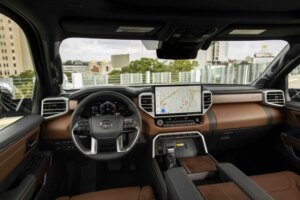
Both cabins look modern, but their best features are practical rather than theatrical. The Palisade XRT Pro uses a 12.3-inch navigation touchscreen with wireless Apple CarPlay and Android Auto, Bose audio, wireless phone charging and USB-C connections across the cabin. Passenger Talk lets the driver’s voice play through the rear speakers, while Rear Seat Quiet Mode lowers the rear audio output when somebody finally falls asleep.
The Telluride offers an available dual 12.3-inch panoramic display setup, wireless smartphone integration, available Wi-Fi capability, seven USB-C ports and two wireless charging pads up front. Two charging pads sound like a minor detail until two adults begin a road trip with nine percent battery and incompatible ideas about whose phone matters more. Good family technology often succeeds by preventing an argument nobody planned to have.
Driver assistance is similarly comprehensive. Telluride systems can help monitor speed, lane position, blind spots, forward-collision risks, rear cross traffic and driver attention. Available Highway Driving Assist 2 can help maintain following distance and lane position and can support certain lane changes when conditions allow.
Hyundai offers comparable help through features that include Smart Cruise Control, Blind-Spot View Monitor, Rear Cross-Traffic Collision-Avoidance Assist and front and rear parking sensors. These systems can reduce workload, but they do not turn either SUV into a self-driving vehicle. The driver remains responsible for steering, braking, monitoring the road and resisting the temptation to treat assistance as autonomy.
You may also enjoy: 2026 Honda Pilot Review: The Calm Family SUV
Kia Telluride X-Pro on a rock
How Much Off-Road Ability Do You Really Need?
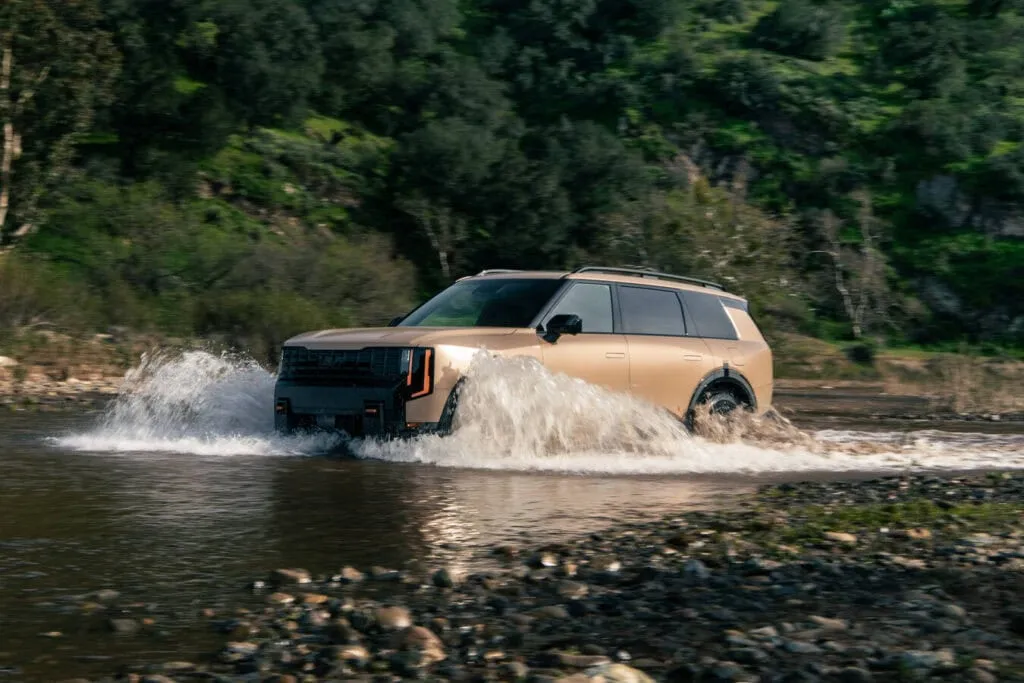
The Telluride X-Pro wins the ground-clearance contest with 9.1 inches, compared with 8.4 inches for the Palisade XRT Pro. Kia also adds wider all-terrain tires, all-wheel drive, an upgraded suspension with additional travel, an electronic limited-slip differential, terrain modes and front and rear recovery points. Those are meaningful upgrades for a family crossover, not merely dark trim and an adventurous badge.
Hyundai’s hardware is equally thoughtful even if the body sits lower. The XRT Pro combines HTRAC all-wheel drive, all-terrain tires, terrain settings for mud, sand and snow, an electronic limited-slip rear differential, downhill brake control and exposed recovery hooks. For snowy roads, washed-out trailheads, gravel access roads and muddy campsites, either vehicle offers much more confidence than a normal family SUV wearing street-focused tires.
The camera systems may be more useful than the styling. Hyundai supplies a forward ground view and off-road displays for pitch, roll, compass heading and elevation. Kia’s Ground View Monitor builds a composite picture of the surface beneath the vehicle at very low speeds and pairs it with an off-road status screen, helping the driver see rocks, ruts, parking blocks and the expensive curb beside the coffee shop.
The honest limitation is that both use comfort-oriented unibody construction and neither has low-range gearing or the heavy underbody protection of a dedicated off-roader. That is not a failure; it is useful buyer guidance. Most families need snow confidence, trailhead access, safe highway manners and enough clearance to reach a campsite, not the ability to conquer Moab before lunch.
You may also enjoy: 2027 Kia Telluride Hybrid: More Space, Better MPG
Hyundai Palisade hybrid
Towing, Price and the Final Choice
Properly equipped, the gasoline versions of both SUVs can tow up to 5,000 pounds. That covers many small campers, personal watercraft, utility trailers and lightweight boats, although the headline number is never the whole calculation. Payload, passenger weight, cargo, hitch equipment, tongue weight and cooling requirements all affect what a specific vehicle can tow safely.
Kia includes Tow Mode across the gasoline Telluride range, while the Palisade XRT Pro comes with a factory-installed hitch hidden behind a rear fascia panel and a Tow Mode that can hold lower gears longer. Buyers should read the owner’s manual and the certification label for the exact vehicle rather than treating a television commercial as a towing license. A family SUV can move a trailer without becoming a ranch truck.
Price creates a clearer separation. Hyundai originally listed the 2026 Palisade XRT Pro at $49,370 before destination, while the 2027 Telluride X-Pro SX AWD is $53,690 and the X-Pro SX Prestige AWD reaches $56,790 before destination. Equipment and model-year timing complicate a direct comparison, but the Kia asks buyers to pay more for the highest level of rugged hardware and design attitude.
Against the Honda Pilot, Toyota Grand Highlander, Volkswagen Atlas and Ford Explorer, these two stand out by feeling expensive without wandering fully into luxury-brand pricing. The Palisade is more premium and relaxed; the Telluride is taller, tougher-looking and more energetic. Buyers focused on fuel economy should examine the hybrid Palisade and Telluride instead, because all-terrain tires, extra weight and adventurous styling eventually arrive at the gas pump with an invoice.
The final choice is refreshingly simple. Buy the 2026 Hyundai Palisade XRT Pro if you value V6 smoothness, a quieter personality, organized family features and a lower starting price. Buy the 2027 Kia Telluride X-Pro if you want more torque, more ground clearance, slightly greater cargo capacity and an SUV that wears its outdoor intentions more confidently.
Both are adventure-ready family crossovers rather than leather-lined mountain goats. The Palisade makes daily life calmer, while the Telluride makes it feel a little more energetic. Choosing between them is less about which one wins every category and more about whether your driveway needs polish or attitude.