U.S.-Canada Auto Tariffs Could Fall to 15%
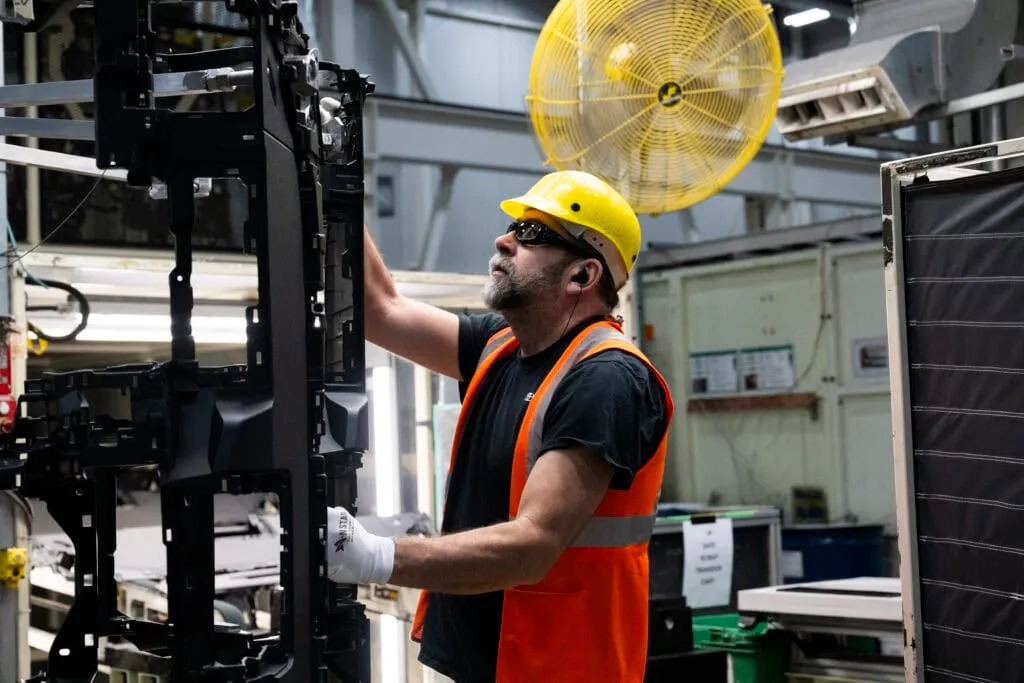
U.S.-Canada Auto Tariffs could fall from 25% to 15%, but a dispute over parts content will determine whether buyers actually save.
The United States and Canada are discussing a potentially important reduction in the tariff on Canadian-built vehicles. The rate under consideration would fall from the current 25 percent Section 232 tariff to 15 percent. It is not yet a deal, and the headline rate is only half the story.
The harder question is what portion of a vehicle would face that 15 percent charge. Washington wants to continue deducting only verified U.S.-made content before calculating the duty. Ottawa wants the deduction expanded to all North American content, including parts produced in Canada and Mexico. For a highly integrated vehicle, those formulas can produce dramatically different bills.
You may also enjoy: Tariff Tango: Automakers Navigate New Trade Realities
You may also like this video:
What the 15% Proposal Would Change
The existing U.S. policy applies a 25 percent tariff to imported automobiles, including cars, SUVs, crossovers, minivans and light trucks. A vehicle qualifying under the United States-Mexico-Canada Agreement may have its documented U.S. content removed from the value subject to that duty.
A reduction to 15 percent would ease the burden even if the U.S. formula stayed intact. It would also bring Canadian vehicles closer to the tariff treatment currently given to vehicles from Japan, South Korea and the European Union.
The proposal sits inside a wider trade negotiation. A separate U.S. threat would impose 50 percent tariffs on roughly $20 billion of Canadian goods beginning August 19. Autos have their own Section 232 structure, so the numbers should not be blended. The deadline adds pressure, and Canadian counter-tariffs on U.S. vehicles are also on the table.
You may also enjoy: The Most American Cars? Not Who You Think
Toyota RAV4 production line in Canada
Why the Content Calculation Matters More
Consider a simplified $40,000 vehicle with 40 percent documented U.S. content. Under the present formula, the 25 percent tariff would apply to the remaining $24,000, producing a $6,000 duty. Lower the rate to 15 percent while keeping the same base and the duty becomes $3,600, a $2,400 reduction.
Now use Canada’s preferred regional-content approach. If 90 percent of that vehicle’s value came from the United States, Canada and Mexico combined, only $4,000 would remain subject to the 15 percent tariff. The duty would be $600. That is why negotiators can agree on the headline rate and still be miles apart on the economic result.
Those figures are illustrations, not estimates for a particular model. Customs values are not sticker prices, sourcing percentages differ by trim, and the tariff calculation is not identical to the U.S./Canadian parts percentage printed on a window label. The federal parts-content label explains final assembly and major component origins; it is not a customs calculation.
You may also enjoy: Car Imports Drop After the 25% Tariff
The broader North American formula would recognize how the industry operates. Steel, electronics, engines and subassemblies can cross borders before a finished vehicle reaches a U.S. dealer. The U.S.-only formula rewards specifically American content. Canada’s version rewards the continental supply chain created under USMCA. That distinction is policy, but it lands as cost.
RAV4 production line in Canada
Which Canadian-Built Vehicles Are Exposed
This is not a niche issue involving a few unusual imports. Canada manufactured 1.28 million vehicles in 2024. The Canadian Vehicle Manufacturers’ Association says approximately 90 percent of domestic production is exported and 93 percent of those exports go to the United States. A tariff that changes the economics of that flow can affect plant schedules, model allocation and dealer inventory on both sides of the border.
Canadian production includes some of America’s most recognizable vehicles. Toyota builds the RAV4 Hybrid and Lexus RX and NX models in Ontario. Honda’s Alliston operations build the Civic and CR-V. GM’s Oshawa plant produces Chevrolet Silverado pickups, while Stellantis’ Windsor plant builds Chrysler minivans and Dodge Charger variants.
You may also enjoy: Toyota’s RAV4 Hybrid Bet Starts in Kentucky
That list should not be used as a blanket tariff guide. Some nameplates are produced at more than one plant, and two vehicles with the same badge may have different assembly locations or component sourcing. Check the individual window sticker for the final assembly point, U.S./Canadian parts content, engine origin and transmission origin.
Canadian built Chevy Silverado
Would Lower U.S.-Canada Auto Tariffs Cut Prices?
Possibly, but not in a clean one-for-one fashion. Tariffs are paid by importers, with Customs and Border Protection administering Section 232 duties. Automakers then decide how much cost to absorb, offset through production changes, recover through higher prices or manage with smaller incentives. Dealers also price around inventory, demand and local competition. A ten-point tariff reduction does not automatically produce a ten-percent discount on the Monroney label.
Relief could still matter to shoppers. Lower import costs can reduce pressure for midyear price increases, preserve low-rate financing or cash incentives and make it easier for manufacturers to send the right trims to U.S. dealers. The earliest visible benefit may be the absence of a price increase rather than a dramatic red tag hanging from the mirror.
You may also enjoy: Honda’s Next Move: Hybrids, EVs, and Supply
Buyers shopping now should negotiate the transaction in front of them, not a diplomatic outcome that has not happened. Compare out-the-door prices, ask whether incentives are protected through delivery and verify the build location on the actual vehicle. If a purchase is flexible, watching manufacturer pricing and incentive bulletins after any signed agreement is sensible. Delaying an urgently needed vehicle solely because negotiators are discussing a lower rate is a much riskier bet.
The immediate takeaway is encouraging but conditional. A 15 percent rate would be meaningful relief. An all-North-American content deduction could be transformative for some Canadian-built vehicles. Until the two governments agree on both pieces and publish implementation details, though, the potential savings remain negotiating math—not money in a buyer’s pocket.