Corporate Bankruptcies Are Rising Again; And This Time It’s Not Just Retail
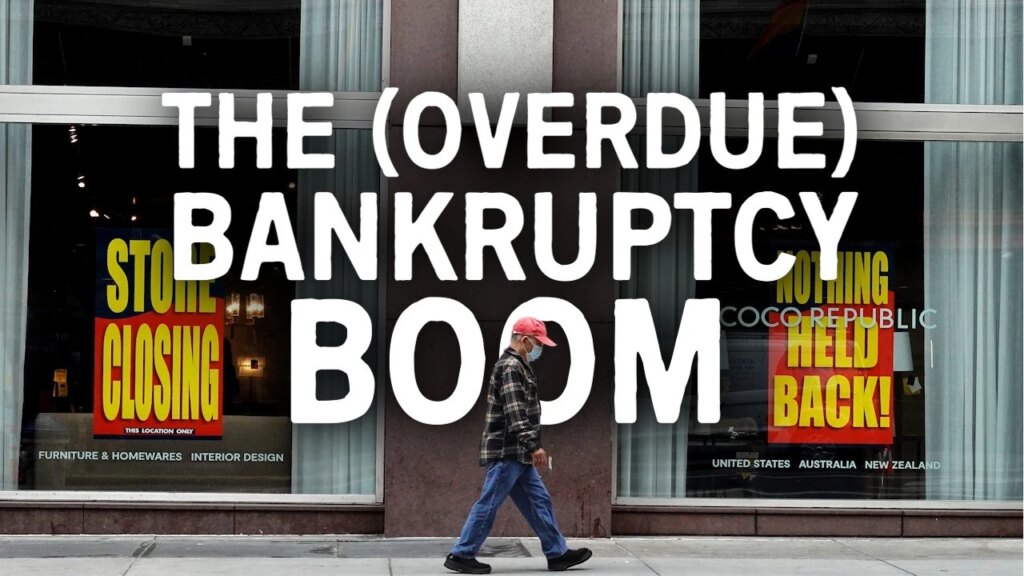
Corporate bankruptcies surged in 2023 to levels not seen since the aftermath of the 2008 financial crisis. At the time, high-profile collapses like WeWork, Vice Media, and Bed Bath & Beyond dominated headlines. But the deeper story wasn’t just about mismanaged companies or outdated business models. It was about debt.
Now, heading deeper into 2025 and 2026, the wave hasn’t disappeared. It has evolved.
Recent high-profile bankruptcies and restructurings including companies like Rite Aid, WeWork’s post-bankruptcy restructuring, Party City, Red Lobster, and several regional healthcare systems reflect the ongoing pressure from high interest rates, heavy leverage, and shifting consumer demand. Even sectors once considered stable, like healthcare staffing firms and regional banking institutions, have faced acute stress.
This isn’t just a retail story anymore.
Why Bankruptcies Keep Climbing
At the core of the bankruptcy surge is a debt problem.
For more than a decade, ultra-low interest rates made borrowing cheap. Companies refinanced aggressively, private equity firms executed leveraged buyouts, and balance sheets swelled with debt. As long as rates stayed low and credit flowed easily, many businesses could survive even thrive despite thin margins.
But when interest rates tripled between 2022 and 2024, that math changed fast.
Companies that borrowed heavily at 3% suddenly faced refinancing at 8% or higher. For businesses operating on tight margins, that increase can wipe out profitability entirely.
This is especially dangerous for so-called “zombie companies” firms that generate just enough cash to service interest payments but not enough to meaningfully reduce debt or invest in growth. During the era of low rates and stimulus, many survived. In a higher-rate world, survival becomes much harder.
The Private Equity Effect
One of the most debated drivers behind recent bankruptcies is private equity strategy.
Private equity firms often use leveraged buyouts (LBOs), acquiring companies with borrowed money and loading that debt onto the company’s balance sheet. The goal is to improve operations, increase cash flow, and exit at a profit.
When it works, returns are substantial. When it doesn’t, the company not the private equity firm often bears the debt burden.
Several recent restructurings in retail, restaurants, and healthcare services reflect this dynamic. High leverage combined with rising rates creates a narrow path to profitability. A small drop in revenue or a modest cost increase can push a company into Chapter 11.
The Debt Wall Ahead
Another looming issue is the corporate “debt wall.”
Nearly $2 trillion in lower-quality corporate debt is scheduled to mature between 2024 and 2028. Many of these bonds were issued during the low-rate era. As they mature, companies must refinance at today’s higher rates.
If earnings have not improved significantly, refinancing may not be feasible without restructuring.
That is why bankruptcy filings have remained elevated into 2025, particularly among mid-sized firms that lack the balance sheet strength of large multinational corporations.
Small Businesses Feel It Most
While big-name bankruptcies grab attention, small and mid-sized businesses account for the majority of filings.
These firms employ nearly half of working Americans. When they struggle, the impact is widespread even if individual bankruptcies don’t make national headlines.
Many small businesses also face additional pressure from the expiration of pandemic-era relief programs. Paycheck Protection Program loans are no longer a buffer. Rent, labor, and insurance costs have climbed sharply. Margins are thinner than they were in 2019.
Higher interest rates compound those pressures.
Chapter 7 vs. Chapter 11: Not All Bankruptcies Are Equal
It’s important to understand that bankruptcy doesn’t always mean the end.
Chapter 7 involves liquidation. Assets are sold, operations cease, and the company shuts down permanently.
Chapter 11, however, allows companies to reorganize. They can renegotiate debt, restructure leases, reduce liabilities, and continue operating. In many cases, businesses emerge smaller but financially healthier.
For some companies, Chapter 11 has become a strategic reset rather than a collapse.
That said, the process can be controversial. Executives may receive retention bonuses or performance-based incentives during restructuring, even as creditors and shareholders take losses. These compensation arrangements often spark public frustration, but they are permitted within bankruptcy law.
What This Means for the Economy
Rising corporate bankruptcies signal financial stress, but they are not automatically catastrophic.
In some cases, bankruptcies clear inefficient companies from the system, allowing capital and labor to reallocate more productively. That’s part of how market economies adjust.
However, when bankruptcies accelerate quickly especially in credit-heavy sectors they can tighten lending conditions further. Banks become more cautious. Investors demand higher yields. Credit becomes more expensive. That cycle can slow economic growth.
The combination of high debt, higher rates, and slowing consumer demand creates a fragile environment.
The Bigger Picture
The bankruptcy surge isn’t simply about mismanagement. It’s about leverage meeting reality.
For more than a decade, low rates masked structural weaknesses. Now those weaknesses are being exposed. Companies with strong balance sheets and adaptable business models are surviving. Those heavily dependent on cheap credit are not.
For investors and workers alike, the lesson is straightforward: debt magnifies outcomes.
In good times, it boosts returns. In tightening cycles, it accelerates collapse.
And as the debt wall approaches over the next several years, this story may not be over yet.
All writings are for educational and entertainment purposes only and does not provide investment or financial advice of any kind.