Sell the Business or Keep Growing? The Retirement Timing Decisions That Can Make or Break Your Wealth
Most financial advice focuses on what to do. Save more. Invest smarter. Diversify.
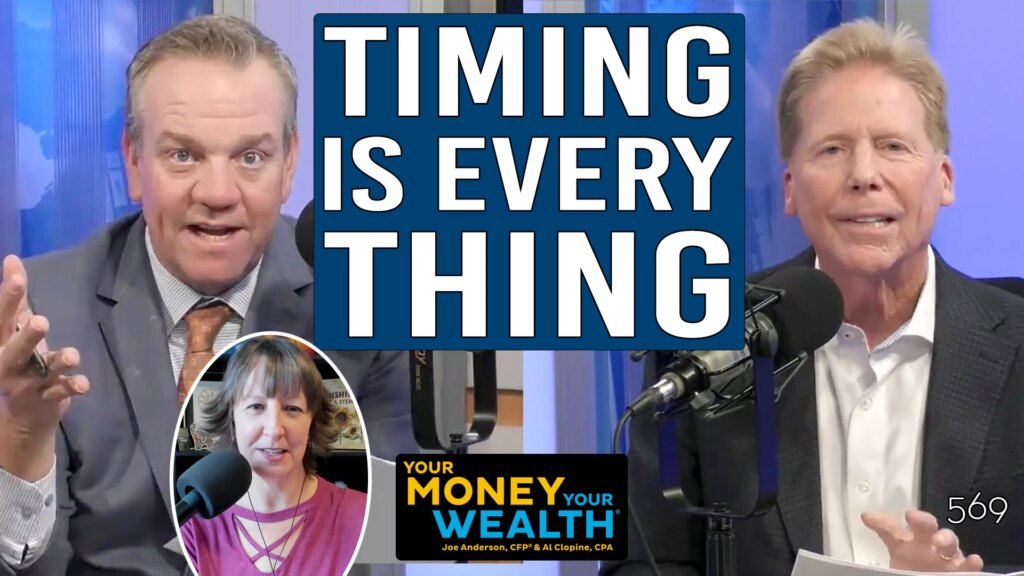
But the real difference between good outcomes and great ones often comes down to something far less discussed: timing.
When you sell. When you convert. When you retire.
At key financial crossroads, those decisions can mean the difference between financial freedom and leaving millions on the table.
The $14 Million Question: Sell the Business or Stay In?
Consider a 42-year-old business owner sitting on a potential $14 million valuation. After taxes and ownership splits, the net could be around $6 million upfront.
That’s life-changing money.
Selling today could mean immediate financial independence. No more operational risk. No more stress. Just freedom.
But here’s the tradeoff.
If the business continues to grow, that same stake could double in value within five years. Walking away now might mean sacrificing millions in future upside.
This is where timing becomes everything.
One of the smartest strategies isn’t all-or-nothing. It’s taking a partial sale pulling some chips off the table while keeping ownership and upside. That approach reduces risk while preserving future opportunity.
Because once you sell 100%, you don’t get a second chance.
Retirement Isn’t Just a Number—It’s a Target That Moves
For high earners aiming to retire early, say age 50 with $13 to $14 million, the math might seem straightforward.
Generate $400,000 per year, and you’re set.
But reality is more nuanced.
Taxes, inflation, and market returns all shape what that income actually looks like over time. A portfolio that looks sufficient on paper can fall short if those factors aren’t modeled correctly.
That’s why running multiple scenarios matters.
Not just best-case projections, but stress-tested outcomes that account for downturns, rising costs, and changing tax environments.
The Hidden Power of Tax Timing
One of the biggest levers in retirement planning isn’t how much you save, it’s how and when you pay taxes.
Take Roth conversions. Many people assume they should convert aggressively while they’re still working.
In reality, the most efficient window is often after retirement, when income drops and tax brackets shrink.
That creates an opportunity to convert large portions of tax-deferred accounts at significantly lower rates.
In some cases, relocating to a lower-tax state before converting can amplify the benefit even further.
The key is understanding the gap between your current tax rate and your future one and exploiting that difference over time.
RMD Timing: A Small Decision With Long-Term Impact
Required Minimum Distributions (RMDs) are unavoidable, but how you handle them still matters.
One lesser-known strategy is taking RMDs early in the year January instead of December.
Why?
Because it gives that money more time to grow in a taxable account, where gains may be taxed at lower capital gains rates instead of ordinary income rates.
It’s a subtle shift, but over decades, small timing advantages like this can compound into meaningful differences.
Protecting Wealth as You Age
For retirees in their 60s and beyond, the focus shifts from accumulation to preservation.
That includes simplifying financial life. Consolidating accounts. Automating bill payments. Creating systems that work even if cognitive ability declines later.
It also means planning for contingencies.
Healthcare costs. Assisted living. Long-term care. These aren’t hypotheticals they’re probabilities.
Having a plan in place ensures those risks don’t derail everything you’ve built.
Emergency Funds and Market Reality
One of the most misunderstood areas of retirement planning is cash reserves.
The traditional advice of keeping three to six months of expenses in cash doesn’t fully apply to retirees.
Instead, the strategy often expands to include:
- Three months of cash for immediate needs
- Several years of fixed income (bonds) to weather market downturns
This layered approach protects against selling investments at the worst possible time.
Because the biggest risk in retirement isn’t volatility. It’s being forced to react to it.
Early Retirement Comes With Tradeoffs
Retiring at 62, or earlier, sounds appealing. And in many cases, it’s achievable.
But it requires careful coordination.
Social Security timing, healthcare costs, and withdrawal strategies all play a bigger role. Income gaps need to be filled. Portfolios need to last longer.
That doesn’t mean early retirement is a bad idea.
It just means it needs to be planned with intention, not optimism.
The Real Takeaway: Timing Beats Perfection
There is no perfect financial strategy.
There is no single decision that guarantees success.
But there are moments that matter more than others.
Selling a business. Converting assets. Retiring. Drawing income.
Get those moments right, and everything else becomes easier.
Get them wrong, and even great habits can struggle to compensate.
That’s why the most successful retirees and investors don’t just focus on what to do.
They focus on when to do it.
Intended for educational purposes only. Opinions expressed are not intended as investment advice or to predict future performance. Past performance does not guarantee future results. Neither the information presented, nor any opinion expressed constitutes a solicitation for the purchase or sale of any security. Consult your financial professional before making any investment decisions. Opinions expressed are subject to change without notice.
IMPORTANT DISCLOSURES:
• Investment Advisory and Financial Planning Services are offered through Pure Financial Advisors, LLC. A Registered Investment Advisor.
• Pure Financial Advisors, LLC. does not offer tax or legal advice. Consult with a tax advisor or attorney regarding specific situations.
• Opinions expressed are subject to change without notice and are not intended as investment advice or to predict future performance.
• Investing involves risk including the potential loss of principal. No investment strategy can guarantee a profit or protect against loss in periods of declining values.
• All information is believed to be from reliable sources; however, we make no representation as to its completeness or accuracy.
• Intended for educational purposes only and are not intended as individualized advice or a guarantee that you will achieve a desired result. Before implementing any strategies discussed you should consult your tax and financial advisors.