The Fed’s Leadership Change Is Arriving at the Worst Possible Time
Central-bank transitions are rarely comfortable. This one looks worse than that.
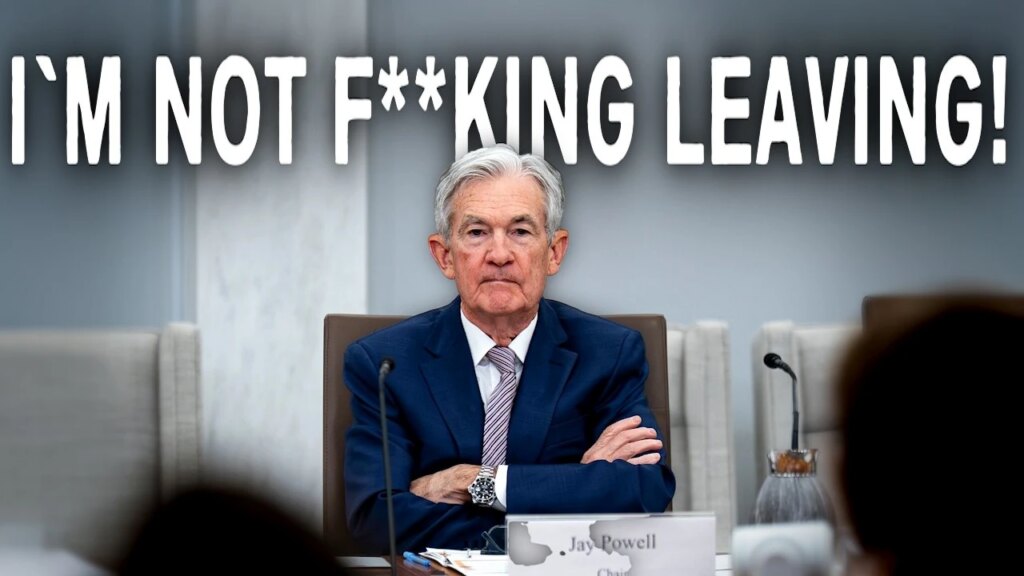
The Federal Reserve is changing leaders at a moment when the institution is already under unusual strain. Kevin Warsh has now been confirmed as Fed chair, while Jerome Powell remains on the Board of Governors through January 31, 2028, creating an awkward overlap between formal succession and continuing institutional influence. Reuters has reported that Powell stayed on the board after his chair term ended and that Warsh has already begun leading the central bank, while Powell remains a potentially important internal voice.
That alone would be enough to make markets uneasy. But the leadership change is colliding with a much larger problem: the Fed is being asked to steer through inflation risk, political pressure, high asset prices, weak consumer confidence and a more unstable geopolitical environment all at once. The result is that this transition matters less as a personnel story than as a policy-risk story.
Warsh arrives with a reputation for skepticism toward an overgrown Fed balance sheet and with a policy environment that offers few clean choices. Reuters reported this week that he is pushing for a meaningful reduction in the central bank’s balance sheet, though some officials doubt how far that effort can realistically go. That means the new chair is stepping into office already associated with a possible shift in how the Fed manages liquidity and market support.
The timing is difficult because inflation pressure is not coming from only one source. The outline’s broader point is right: policy now has to deal with a mix of supply-side and political forces, not just conventional demand weakness. Tariffs, oil-market stress linked to the Iran war, and broader geopolitical uncertainty all complicate the inflation picture. If prices are being pushed up by supply shocks and external events, then rate cuts become a much more dangerous tool than they would be in a softer, cleaner slowdown.
That is why the White House’s preference for lower rates matters so much. Rate cuts could support short-term growth and financial conditions, but if they arrive into still-elevated inflation pressure, they may also weaken confidence in the dollar and push long-term borrowing costs higher rather than lower. That is the part of the story many people miss. The Fed controls short-term rates. Markets price long-term distrust separately. If investors decide inflation discipline is slipping, the 10-year and 30-year Treasury can still sell off even if the Fed cuts.
That dynamic is already visible in bond markets. The outline notes that 10-year yields rose materially after the Iran conflict intensified, and that kind of move matters far beyond bond desks. Higher Treasury yields feed through to mortgage rates, corporate borrowing costs, student loans and small-business financing. A central bank that cuts into inflation risk can therefore create a paradox: easier policy at the front end, tighter financial conditions at the long end.
This is where the dollar issue becomes more important. Reserve-currency status does not disappear overnight, but confidence can erode in stages. If investors start to believe the Fed is being pushed toward rate cuts for political reasons while inflation remains unresolved, dollar weakness can become part of the inflation problem itself. Imports cost more. Foreign buyers demand higher yields. Debt service becomes more expensive. For a country already carrying roughly $40 trillion in debt, that is not a secondary issue. It is part of the policy trap.
The Fed’s internal structure makes the transition even trickier. The chair is influential, but the Federal Open Market Committee still works through votes, relationships and institutional memory. Powell’s long tenure and continuing board presence mean that the new chair is not inheriting a blank slate. He is entering a system where the departing chair may still command significant influence, formal and informal, precisely because the current environment is so fragile.
That fragility is amplified by uncertainty around the economic data itself. The outline emphasizes conflicting signals between high asset prices and poor consumer sentiment, along with doubts about how cleanly employment and inflation data reflect reality. Whether or not one accepts the strongest version of that critique, the practical consequence is clear: policymakers are operating in an environment where confidence in the signal quality is weaker than usual. That makes every policy move riskier.
The AI point in the outline fits here too, though not as a standalone story. Productivity gains from automation may eventually be disinflationary, but the transition is unlikely to feel neat. If firms use new tools to cut labor while still facing high energy, data-center and capital costs, the short-run result could be a messy combination of layoffs, margin pressure and uneven productivity gains rather than a clean boom in efficiency. That leaves the Fed trying to interpret labor softness that may not be purely cyclical while inflation remains influenced by costs that monetary policy cannot easily fix.
That is why the current moment feels so unstable. The Fed is not just responding to a normal cycle. It is trying to manage a collision between politics, inflation, debt, geopolitics and technological disruption, all while markets remain priced for resilience and consumer confidence remains much weaker. This is less like steering through one storm than through several weather systems crossing at once.
For households and investors, the most practical takeaway is not to guess the next quarter-point move. It is to understand that policy uncertainty is unusually high, and that long-term borrowing costs, inflation and market volatility may not move in the tidy, historical patterns people expect. A Fed transition in calmer conditions might be manageable. A Fed transition in a world of tariff pressure, energy shocks, elevated yields and political demands for cheaper money is far more combustible.
The central risk is not simply that the new chair will make the wrong call. It is that the institution itself is being asked to preserve credibility at a time when every available option comes with visible costs. Tight policy risks slowdown and political backlash. Easier policy risks inflation, dollar weakness and higher long-term yields. In that kind of environment, the leadership change is not just a change of faces. It is a test of whether the Fed can still make unpopular decisions when the storm is already underway.
All writings are for educational and entertainment purposes only and does not provide investment or financial advice of any kind.