The Only 5 High Paying Jobs Safe From AI Through 2030
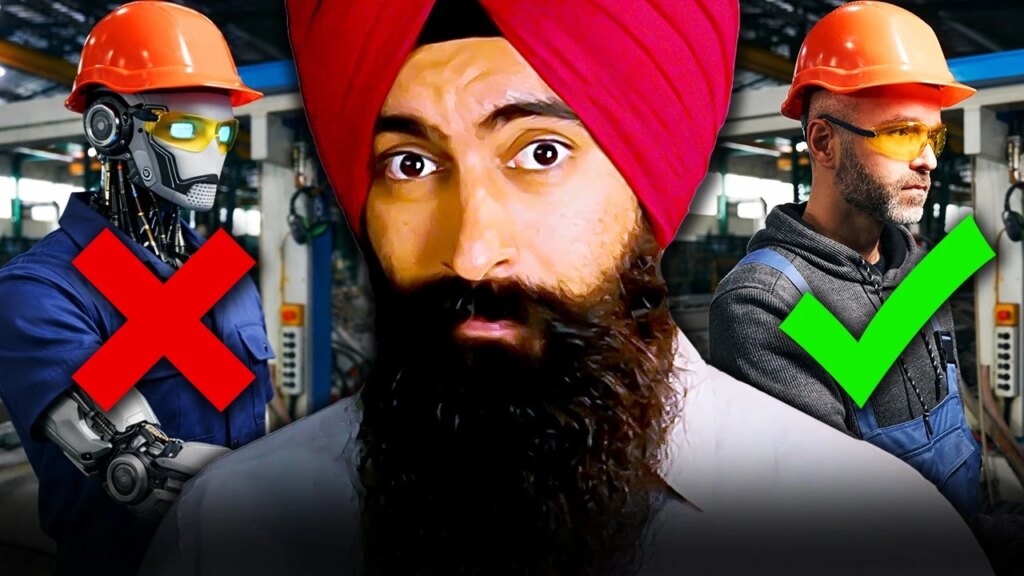
Artificial intelligence is no longer a distant concept that only affects software engineers or Silicon Valley startups. It is beginning to reshape how the economy works, how businesses hire, and what kinds of skills are likely to hold the most value in the years ahead. For decades, waves of technology mostly replaced manual labor first. Steam power changed farming. Assembly lines transformed manufacturing. Robots replaced factory work. Offshoring moved industrial jobs overseas. What feels different now is that AI is moving directly into white-collar territory, targeting the kinds of jobs many people once assumed were the safest.
That is why so many people feel uneasy. The old assumption was that higher education and office work would protect you from automation. But AI is increasingly being used to write, summarize, analyze, design, code, answer questions, and complete routine knowledge work. In other words, it is beginning to challenge the economic logic that shaped a generation of career advice. The biggest threat is not simply that some jobs will change. It is that many people may discover their work is more automatable than they ever imagined.
At the same time, this is not just a story about jobs disappearing. It is also a story about jobs shifting. Some roles are likely to become more valuable precisely because AI struggles to replace the parts of work that depend on trust, relationships, physical presence, and human judgment in messy real-world environments. That distinction matters because the future of work is not just about technology becoming more capable. It is about understanding where technology still runs into human limits.
One clear area of opportunity is skilled trades. Plumbing, electrical work, HVAC, and other hands-on fields are difficult to automate because they require physical interaction, adaptability, and problem-solving in highly variable environments. A robot may eventually help with some of this work, but it is far from replacing the person who shows up, diagnoses a real-world problem, and fixes it in a house, apartment, or job site where conditions are never identical. The country already faces shortages in many of these fields, and AI’s growth may actually increase demand for them because more data centers, more electrification, and more infrastructure require more people who can build, maintain, and repair physical systems.
That point is easy to miss if people only think about AI as software. AI runs on physical infrastructure. It needs chips, servers, cooling systems, transmission capacity, backup power, and huge amounts of electricity. That creates a second layer of opportunity beyond the software itself. The more AI expands, the more it drives demand for semiconductors, data centers, grid modernization, and even nuclear and broader energy infrastructure. In that sense, the AI economy is not only digital. It is deeply industrial.
Another category that looks more resilient is high-trust, relationship-based sales. Not all sales jobs are equal. Basic transactional selling is much easier to automate. But enterprise sales, business development, and high-value relationship selling still depend heavily on trust, credibility, and the human dynamics that make someone comfortable making a large commitment. AI can assist with research, scripts, follow-up, and qualification, but closing big deals often requires the kind of relationship-building that software still struggles to replicate convincingly. That means the people who can combine human trust with smart use of AI tools may become even more valuable.
Healthcare is another major example. AI is likely to become incredibly powerful in diagnostics, workflow support, decision assistance, and even some procedural tasks. But medicine is not only about technical accuracy. It is also about trust, empathy, touch, communication, and care. Many patients still want a human being explaining what is happening, listening to concerns, and helping them through vulnerable moments. That human need does not disappear just because algorithms improve. In fact, in an aging society, healthcare may become even more valuable because the demand for care, comfort, and direct human support keeps rising.
There is also a new career category emerging right in the middle of this transition: AI implementation. Many businesses know they need to adopt AI tools, but they do not know how to integrate them into workflows, train staff, choose vendors, manage data, or redesign processes. That gap is creating demand for people who can bridge business needs and practical AI usage. These roles may not always look glamorous, but they could become some of the most valuable positions in the economy because companies need help turning AI from a buzzword into an operating advantage.
This is one reason the old advice that everyone should learn to code may already be becoming outdated. Coding still matters, but the broader lesson may be that using AI well, directing it intelligently, and building systems around it could matter just as much or more than writing every line manually. The people who thrive may not be those with the most technical purity. They may be the ones who can combine domain knowledge, business understanding, and AI fluency in ways that create real value.
The most powerful shift, though, may be ownership. Throughout economic history, the people who benefit most from major technological change are often not just the workers using the tools. They are the people who own the systems, platforms, or productive assets tied to the change. AI may make it easier for small businesses and even solo entrepreneurs to operate at a scale that once required large teams. That means a single founder using the right AI stack can potentially do the work of an entire department. The upside from this will not be evenly distributed. It is likely to flow disproportionately toward people who own AI-enabled businesses, processes, or investments rather than toward those who only work within them.
That brings the conversation to investing. AI may be transformative, but that does not mean every AI stock is a smart buy or that speculation is the same thing as strategy. Technology booms often produce bubbles, and the existence of a powerful long-term trend does not guarantee a smooth ride for investors. The internet changed everything, but many internet stocks still collapsed in the dot-com bust before the industry matured. AI could follow a similar pattern, where the long-term winners are real, but the path there includes major volatility and painful shakeouts.
That is why diversified exposure can make more sense than trying to pick one perfect winner. Broad tech ETFs can provide long-term exposure to the companies most connected to digital transformation. More targeted funds can focus on AI software, robotics, semiconductors, data centers, energy infrastructure, and even nuclear power, all of which may benefit from AI’s expansion in different ways. The deeper point is that AI is not one narrow theme. It is an ecosystem. Chips matter. Storage matters. Power matters. Networks matter. The tools around the tools may be just as important as the visible consumer-facing applications.
For workers and investors alike, the real challenge is not predicting every winner. It is adapting to the shift in mindset. If white-collar routine work is increasingly vulnerable, then job security may come less from credentials alone and more from being difficult to automate. If AI becomes a foundational layer of the economy, then long-term wealth may come less from avoiding it and more from understanding where it creates durable value. That could mean learning to use AI in your current field. It could mean moving toward a career built on trust, physical skill, or implementation expertise. It could mean investing in the infrastructure behind the trend rather than chasing headlines.
The biggest mistake would be assuming that because the future is uncertain, the best strategy is to do nothing. Technological change rarely waits for people to feel ready. The people who usually come out ahead are the ones who study what is happening, understand where the demand is moving, and position themselves before the rest of the market fully catches up. That is as true for careers as it is for investing.
AI is coming faster than most people think, but that does not mean the future belongs only to machines. It means the economy is rewarding a different mix of skills and a different relationship to technology. Trust, ownership, adaptability, and real-world usefulness may matter more than ever. For the people willing to learn that lesson early, the shift may be less a threat than a very large opportunity.
Jaspreet Singh is not a licensed financial advisor. He is a licensed attorney, but he is not providing you with legal advice in this article. This article, the topics discussed, and ideas presented are Jaspreet’s opinions and presented for entertainment purposes only. The information presented should not be construed as financial or legal advice. Always do your own due diligence.