Why Middle East Conflict Could Hit Your Wallet Faster Than You Think
When conflict breaks out in the Middle East, most Americans do not immediately think about their grocery bill, mortgage rate, or retirement account. They think about foreign policy, military headlines, and the price of oil on the evening news. But that is exactly the point. Events that seem distant can move through the economy with surprising speed, and one of the fastest ways they do that is through energy. When tensions rise around critical oil routes, the effects do not stay contained to geopolitics. They show up in inflation, consumer prices, interest rates, business costs, and market volatility.
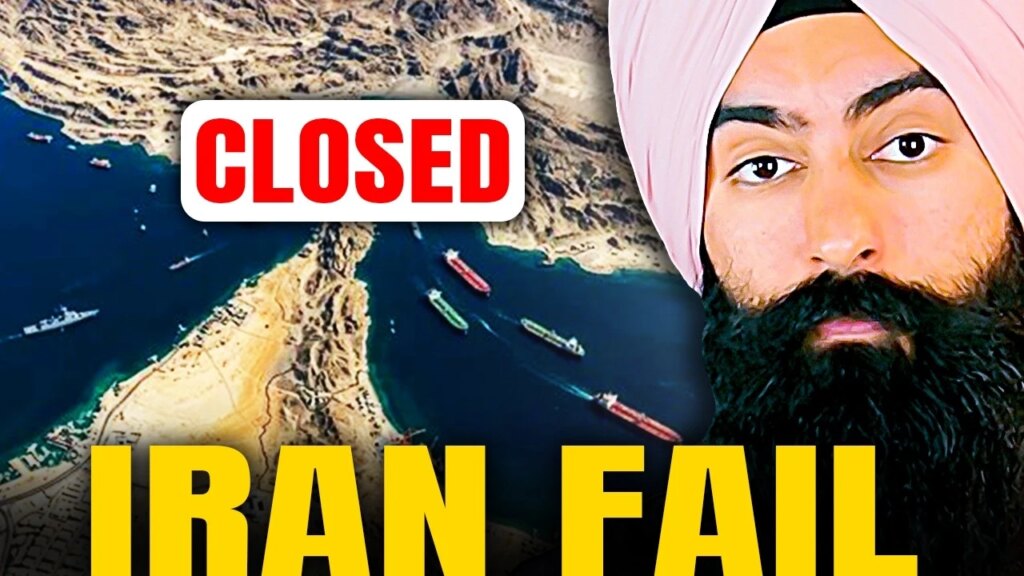
That is why the recent escalation matters so much. Failed diplomacy, fears of a wider conflict, and threats involving the Strait of Hormuz immediately raised concerns across financial markets. Stock futures fell, oil futures rose, and investors began doing what they always do when geopolitical risk collides with energy supply: repricing the economic outlook. The fear is not simply that conflict is bad. It is that conflict in this part of the world can disrupt one of the most important arteries in the global energy system.
The Strait of Hormuz is not just another waterway. It is one of the key passages for global oil shipments, which means anything that threatens traffic there can quickly reduce supply expectations and push prices higher. When oil prices spike, it is not only drivers at the gas pump who feel it. Transportation costs rise. Shipping costs rise. Airline costs rise. Businesses that depend on fuel, plastics, chemicals, or imported goods begin paying more. Those higher costs then ripple out across the entire economy, showing up in everything from food to travel to everyday household necessities.
That is why oil shocks are so powerful. They do not act like a narrow industry problem. They behave more like a tax on the whole economy. A rise in energy prices makes it more expensive to move goods, run businesses, heat and cool buildings, and commute to work. And because those costs spread so widely, they can reignite inflation even when other parts of the economy are already slowing down. For households that are still trying to recover from the inflation surge of the last few years, that is especially painful.
What makes the current situation especially uncomfortable is how much it echoes older periods of economic strain. The 1970s remain the classic example of how geopolitical shocks, loose money, high oil prices, and inflation can collide in damaging ways. After the U.S. left the gold standard in 1971, inflation accelerated, oil shocks hit, interest rates surged, and the broader economy went through a painful stretch of recession and market weakness. The point is not that history repeats in exactly the same way. It does not. But it often rhymes, and the combination of heavy money creation, geopolitical instability, and rising energy prices is exactly the kind of setup that makes investors nervous.
The comparison matters because the United States is already entering this period from a fragile starting point. The economy has been dealing with the aftereffects of pandemic-era money creation, inflation that has already strained household budgets, and a national debt burden that makes higher interest rates even more painful. Add in a new oil shock, and the pressure increases. Inflation does not need to return to 1970s levels to create real hardship. It only needs to stay stubborn enough to keep monetary policy tighter than markets want.
That brings the Federal Reserve into the story. If oil prices stay high and inflation remains sticky, the Fed may have less room to cut rates and, in a more extreme case, could even be forced to keep policy tighter for longer than investors hope. That matters because high interest rates do not hit the economy evenly. Housing becomes harder to afford. Businesses face higher borrowing costs. Private credit gets squeezed. Commercial real estate struggles. Banks face more stress. Consumers slow down. What starts as an energy shock can end up feeding weakness across sectors that seem unrelated at first glance.
That interconnectedness is one of the most important parts of the story. A slowdown in housing does not just affect homebuyers. It affects builders, lenders, real estate professionals, suppliers, and the many service businesses tied to moving and furnishing homes. If consumers are spending more on gas and groceries, they may spend less dining out, less on travel, less on big-ticket purchases, and less on discretionary goods. Some sectors, like oil producers, may benefit. But for the average household, the effect is usually the opposite: higher costs, less flexibility, and more financial pressure.
That pressure is especially hard on middle- and lower-income households because inflation does not hit everyone equally. People with significant assets may benefit when stocks, real estate, or commodity-linked investments rise over time. But households living mostly on wages feel the cost increases first and most directly. If prices rise faster than incomes, purchasing power falls. That is the hidden tax of inflation. It does not need Congress to vote on it. It just quietly reduces what a paycheck can buy.
This is one reason the inflation debate often feels so disconnected from lived experience. Official numbers may show one thing, while families feel something much harsher at the grocery store, at the gas station, or when renewing insurance and housing costs. Even when wages have risen, they do not always keep pace with what daily life now costs. That gap is what creates the sense that the economy is not working for ordinary people, even if some aggregate numbers look better on paper.
For investors, the lesson is not to panic but to understand the chain reaction. Politics does not directly manage your personal finances, but political and geopolitical events absolutely influence the environment your money has to live in. Oil shocks can hit stocks. Inflation can hurt bonds. Higher rates can pressure real estate and private credit. Consumer weakness can hit corporate earnings. All of that affects retirement accounts, business decisions, and household planning. Ignoring those links does not make them go away.
At the same time, history offers a useful counterpoint to fear. Crises, recessions, and market downturns have happened repeatedly over the last century. Markets have suffered wars, inflation waves, financial collapses, political shocks, and long periods of uncertainty, yet over long enough periods they have still recovered and moved higher. That does not mean every dip is harmless or that timing never matters. It means long-term investors should avoid confusing short-term fear with permanent destruction. In many cases, downturns have created the best buying opportunities for people with patience, liquidity, and discipline.
That is why the most useful response is usually strategic rather than emotional. Make sure your spending is realistic. Build emergency reserves. Do not rely on perfect market conditions. Understand that volatility is part of the investing landscape, especially when politics and commodities collide. And if you are investing for five, ten, or fifteen years down the road, remember that the market has a long history of recovering from events that felt overwhelming in the moment.
The bigger point is that Middle East conflict is not just a headline from far away. It can become a direct financial issue for American households through energy prices, inflation, interest rates, and broader economic stress. That does not mean the right response is fear. It means the right response is awareness. When you understand how these shocks move through the economy, you are much less likely to be blindsided by them and much better prepared to make smart financial decisions while others are reacting emotionally.
So yes, the conflict matters. Not because it guarantees disaster, but because it raises the odds of exactly the pressures households have already been struggling with: higher costs, tighter credit, and more uncertainty. And when those forces all start working together, the impact reaches much farther than the oil market. It reaches the budget decisions families make every single day.
Jaspreet Singh is not a licensed financial advisor. He is a licensed attorney, but he is not providing you with legal advice in this article. This article, the topics discussed, and ideas presented are Jaspreet’s opinions and presented for entertainment purposes only. The information presented should not be construed as financial or legal advice. Always do your own due diligence.