Acura MDX Type S: Can Smart Safety Keep You Engaged?
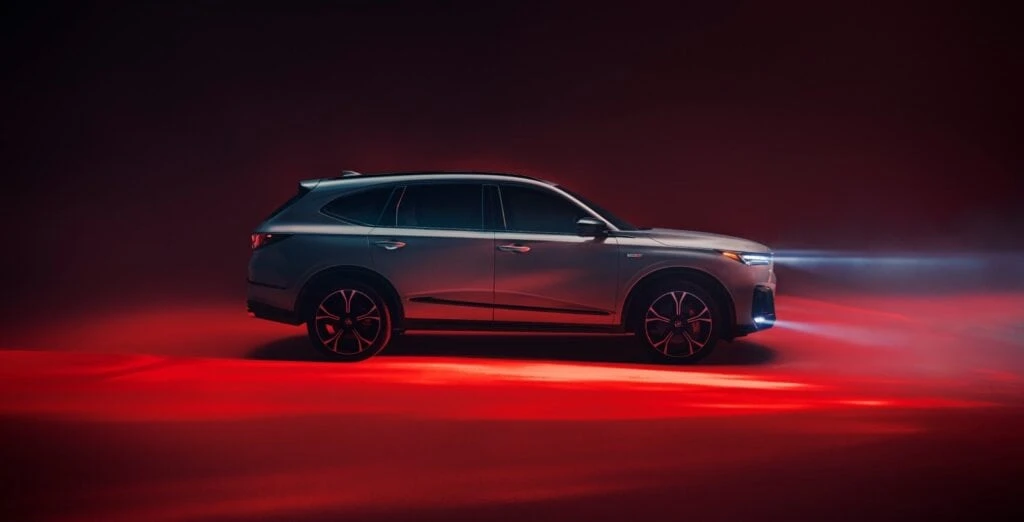
The Acura MDX Type S pairs sophisticated driver assistance with a simple challenge: its owner must stay involved when the SUV makes driving feel easy.
By Nik J. Miles
There is a peculiar temptation in a capable luxury SUV. The cabin is quiet, the front seats can massage your back, and the 31-speaker Bang & Olufsen system has enough hardware to furnish a small concert hall. Then the driver-assistance controls start taking some of the effort out of traffic. It is a pleasant place to be, which makes the less pleasant question worth asking: how closely are you still watching?
I have driven the 2026 Acura MDX Type S and previously wrote about its quiet cabin, comfortable ride and useful three-row layout. That experience supports a judgment about the vehicle as a luxury SUV. It does not constitute a controlled test of driver attention or proof that its assistance features prevent a particular crash. This is where the distinction between a road impression and safety evidence matters.
You may also like this Video:
What the Acura MDX Type S Actually Does
AcuraWatch 360, fitted to the Type S Advance, builds on the MDX’s assistance equipment with an updated forward camera, a long-range forward radar, four corner radars and a steering-wheel touch sensor. Acura lists Active Lane Change Assist, Lane Change Collision Mitigation and Front Cross Traffic Warning among its functions. The names sound comprehensive. Each function still has a defined job and operating conditions.
For example, Active Lane Change Assist can carry out a requested lane change when the driver moves the turn-signal stalk and adaptive cruise control and lane-keeping assistance are active. Acura says the feature works on qualifying mapped, divided highways. It is a convenient way to assist a maneuver the driver has chosen. It does not relieve that driver of checking traffic and judging whether the maneuver is appropriate.
Front Cross Traffic Warning addresses a different problem. At low speed, or when pulling away from a stop, it can warn about a vehicle approaching from the side. That could be welcome when another vehicle is difficult to see from a driveway or obstructed junction. It is a warning system, however, and the driver still has to interpret the scene. Acura’s feature descriptions are a useful starting point; the owner’s manual supplies the conditions and limitations that determine how to use the equipment.
You may also enjoy: Is the 2026 Acura MDX Type S Worth It?
Acura MDX Type S
Why an Easier Drive Can Demand More Discipline
The question in the video script, “Are smart cars making us worse drivers?”, deserves a precise answer. Researchers have observed drivers paying less attention while using some forms of assistance. They have not established that every owner becomes a worse driver, or that the MDX Type S produces the same behavior measured in another vehicle.
In research reported by the Insurance Institute for Highway Safety, participants using Volvo Pilot Assist were more likely to perform visually demanding activities than when they drove without it. One group spent more than 30 percent of its system-use time distracted. That number applies to the observed group in that study. It should never be presented as an MDX result or as the proportion of time all American drivers look away.
The AAA Foundation for Traffic Safety found another relevant pattern. Drivers with greater experience using assistance were nearly twice as likely to be distracted when it was active as when they drove without it. Drivers who were still learning the equipment showed a different pattern. The plausible problem is habit: as successful trips make a feature feel familiar, the owner may give it more responsibility than it was designed to carry.
This is why I would learn the MDX’s system with the same seriousness I would give its brakes or tires. Read what the symbols mean. Know how the steering assistance announces that it is unavailable. Find out what happens if lane markings disappear. Most of all, decide in advance that the vehicle managing a routine stretch of road is a reason to supervise it, not an invitation to answer a message.
Acura MDX Type S
The Touch Sensor Is Useful, but It Cannot Read Your Mind
The script describes the MDX’s steering wheel as knowing whether a driver is awake. That is a good line for television, but an article needs the more exact account: Acura identifies a steering-wheel touch sensor as part of AcuraWatch 360’s hardware. Contact with the wheel is valuable information. Contact alone cannot confirm where the driver is looking or whether a hazard has registered.
The distinction affects how I would assess any assisted-driving system. The IIHS safeguard ratings examine monitoring, escalating reminders and what a vehicle does when its driver fails to respond. The organization’s criteria for a good rating include monitoring gaze as well as hand position. The presence of a touch sensor is therefore a feature to understand, rather than a complete verdict on the system’s safeguards.
Another IIHS study of system design found that the way assistance responds to a driver’s small steering corrections can influence an owner’s stated willingness to intervene. That study concerned other vehicles and surveyed their owners. It offers a useful shopping question for the Acura and its competitors: can you steer naturally while assistance is active, and does the system make taking control clear and easy? It does not provide an answer about the MDX’s measured behavior.
You may also enjoy: 2027 Infiniti QX65 Review: Luxury With Real Utility
Acura MDX Type S
Separate Proven Crash Prevention From Driving Convenience
“Driver assistance” can describe a short emergency intervention or miles of shared control. Treating every feature as if it has the same evidence behind it leads to bad buying decisions. The IIHS research overview reports meaningful reductions in rear-end crashes for vehicles equipped with front crash prevention. By contrast, IIHS says there is no evidence that partial driving automation, considered as a convenience feature, makes driving safer. Those statements can both be true.
The National Highway Traffic Safety Administration’s guide also distinguishes assistance functions from higher levels of automation. With simultaneous steering and speed assistance, the driver remains responsible for monitoring the road and operating the vehicle. A lane change that starts with your turn-signal request is still your decision, even when electronics help carry it out.
That distinction changes how I would weigh the Type S Advance on a test drive. I would welcome a useful cross-traffic warning and examine how the SUV communicates an approaching hazard. I would try the cruise and lane assistance only where conditions permit, watch how promptly the status changes on the display, and pay attention to whether the system’s behavior is predictable. I would not assign a safety premium to a feature merely because it can perform an impressive maneuver.
You may also enjoy: 2027 Volkswagen Atlas Cross Sport Goes Upscale
Acura MDX Type S
My Shopping Test for a Clever SUV
Anyone considering this Acura should start with the vehicle’s ordinary strengths. The Type S Advance offers a 355-horsepower turbocharged V6, three rows, an air suspension and an exceptionally well-equipped cabin. In my earlier drive, I found the cabin impressively quiet and the vehicle comfortable in busy New Orleans traffic. Those observations explain why a family might want to spend hours in it. They cannot tell a buyer how they personally will behave after six months of using driver assistance.
I would ask a salesperson to demonstrate the warnings and controls before leaving the lot. Then I would take a supervised test drive long enough to understand the display, the steering feel and the conditions under which assistance switches on or off. Ask what the car senses at the wheel. Ask which functions merely alert you and which can intervene. Check whether the features you care about are fitted to the exact trim you are buying.
The more comfortable the MDX makes its driver, the more important those questions become. Seat massage and an elaborate stereo are welcome luxuries; neither changes who must watch an unexpected vehicle enter the lane. A buyer who dislikes frequent reminders should understand why a responsible system may issue them. A buyer who hopes to use the trip to catch up on a phone should reconsider what this technology is for.
You may also enjoy: Acura NEXERA Vision Makes Simplicity Feel Radical
You may also enjoy: 2027 Lexus LX: Why This Luxury SUV Still Loves the Dirt
I like the ambition behind the MDX Type S Advance: give a driver more information, help with specific maneuvers and make a long journey less tiring. Its assistance is most valuable when the owner understands exactly where that help ends. A smart SUV should make a capable driver better informed. Keeping that driver engaged remains a human job.