AI Could Make Your Most Valuable Asset Worth Less
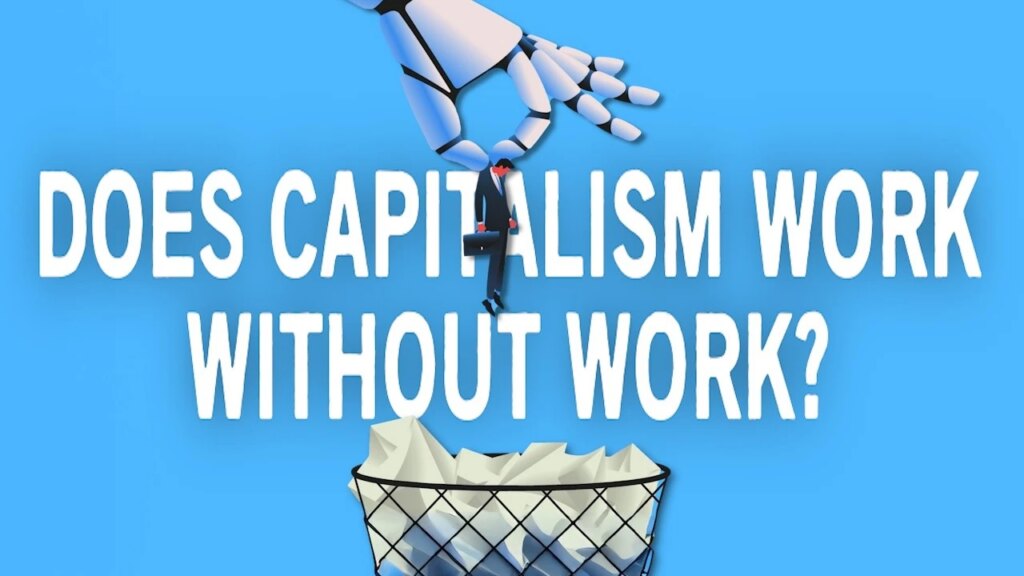
For most households, the most valuable asset is not a home or investment account. It is the ability to work and earn income over several decades. If someone works roughly 2,000 hours a year for 30 or 40 years, the economic value of those future labor hours can easily exceed $1 million.
That is why artificial intelligence and automation matter so much. The biggest risk is not simply that a robot takes one specific job. It is that technology reduces the market value of human labor across a wide range of occupations, potentially weakening the asset most people rely on to build wealth.
Automation Is Moving Beyond Factories
Automation has been replacing certain types of work for decades, but AI is expanding the range of jobs that could be affected. Office work, customer service, administration, analysis, and other white-collar roles may now face the same kind of pressure that manufacturing workers experienced from industrial automation.
Estimates of how many jobs could eventually be affected vary widely, and exposure does not necessarily mean elimination. Some jobs may disappear, while others may simply require fewer workers or shift toward tasks that machines still cannot perform well. Even partial automation, however, can matter if businesses can produce the same output with smaller teams.
That can put pressure on wages. If displaced workers begin competing for a shrinking number of remaining roles, employers may gain bargaining power while workers have fewer alternatives.
Humanoid Robots Could Expand Automation Even Further
Humanoid robots have attracted significant investment because they may be able to operate in workplaces already designed for people. Instead of rebuilding a warehouse, factory, or commercial kitchen around specialized machinery, companies could potentially use robots that climb stairs, open doors, carry boxes, and operate existing tools.
That flexibility is part of the business case. A general-purpose machine that can perform multiple tasks could be easier to deploy than a collection of highly specialized systems.
Specialized machines may still be cheaper and more efficient for many jobs, so humanoid robots are unlikely to replace every form of automation. But if their costs fall enough, they could make automation economical in places where custom machinery was previously too expensive.
Automation Could Widen the Gap Between Workers and Owners
The economic benefits of automation do not automatically flow evenly through society. The people who own the software, robots, factories, platforms, and investment capital may capture much of the productivity gain, while workers whose jobs are displaced could see their incomes decline.
That matters because higher-income households already account for a large portion of consumer spending. If automation shifts even more income toward people who own assets, inequality could increase while lower- and middle-income households face weaker wage growth.
There is also a broader economic problem. Businesses ultimately need customers. If technology allows companies to produce more goods and services while reducing the number of people earning wages, the economy has to find some way to preserve enough consumer purchasing power to buy what those businesses produce.
Simply Banning Automation Is Unlikely to Work
Governments could attempt to protect jobs by restricting automation, but that strategy comes with significant risks. Companies competing globally may move production to countries where automation is permitted, while domestic businesses that cannot use new technology could become less productive and less competitive.
The challenge is therefore not necessarily preventing automation. It is deciding how the economic gains are distributed.
Worker retraining is one possible response, particularly when technology creates new jobs as old ones disappear. But retraining becomes less effective if automation eventually affects a broad enough range of skilled occupations. Moving every displaced worker into a new career only works when the economy continues creating enough valuable human jobs.
Workers May Need a Larger Share of Capital
Longer-term solutions could involve giving households greater access to the wealth created by automation. That might include broader investment ownership, profit-sharing, employee equity, tax-funded income support, or other systems that allow people to benefit financially from productivity gains even when fewer human labor hours are required.
None of those approaches are simple. They require funding, political agreement, and decisions about who should receive the benefits and who should pay for them. But the underlying economic problem becomes harder to ignore as machines become capable of performing more valuable work.
Automation can make economies more productive, lower costs, and create entirely new industries. The danger is not the technology itself. The danger is an economy where productivity rises dramatically while the value of the average person’s labor falls.
For most people, their future earning power is the foundation of their financial life. If AI and robotics begin reducing the value of that asset, the biggest economic question may not be whether automation creates wealth, but who ultimately owns it.