America Can Make Housing Cheaper. The Hard Part Is Doing It Without Crashing the Market
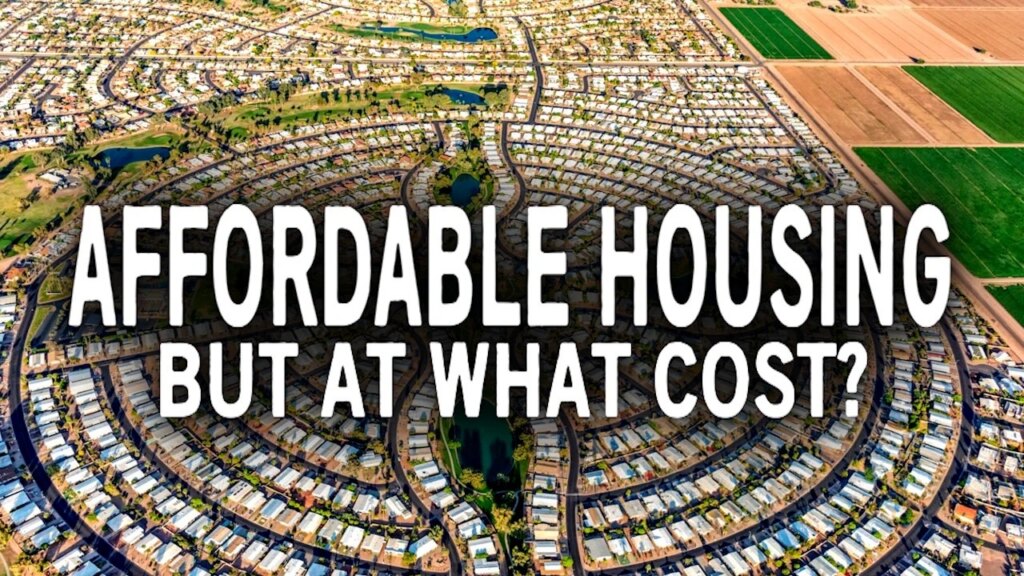
America has a housing problem with an unusually uncomfortable solution. Millions of younger households need homes to become substantially more affordable, yet tens of millions of existing homeowners have built much of their wealth around the expectation that those same homes will retain or increase their value. A policy that quickly cut home prices by 30% might delight prospective buyers while simultaneously wiping out enormous amounts of household wealth, damaging mortgage markets and potentially pushing recent buyers underwater.
That tension helps explain why housing affordability has proven so politically difficult to fix. Home prices have outpaced incomes across much of the country, while mortgage rates have dramatically increased the monthly cost of buying even when prices stop rising. Brookings economist Joe Gyourko wrote in March 2026 that house prices have reached historically high levels in many markets and that price growth has outpaced income growth almost everywhere over time. The country therefore needs housing to become more affordable without depending on a nationwide collapse in the asset that represents the largest source of wealth for many households.
The most promising path is slower and less dramatic than simply forcing prices lower. America needs more homes in places where people actually want to live, more types of housing between detached houses and large apartment towers, and fewer policies that subsidize demand without expanding supply. It may also require reconsidering how land itself is taxed, because many current rules reward owners for holding scarce land while making development comparatively expensive.
Housing Has Become a Generational Affordability Problem
The basic arithmetic facing first-time buyers has deteriorated because the cost of purchasing a home has increased faster than many household incomes. Even when wages rise, buyers have to save for a down payment based on a much larger asset price while simultaneously paying rent and other living expenses. Higher mortgage rates compound the problem because a home with an unchanged purchase price can suddenly require hundreds of dollars more each month when financing costs increase.
This creates a particularly difficult transition for younger households. Existing homeowners may have benefited from years of appreciation and, in many cases, refinanced into historically low mortgage rates before borrowing costs increased. A prospective buyer entering the market today does not inherit either advantage and may instead face a much larger price financed at a significantly higher rate.
That difference can produce the impression that one generation bought housing under one economic system while the next is being asked to buy under another. The problem is not that every previous generation had easy access to homeownership, because mortgage rates, unemployment and recessions created severe affordability challenges in earlier periods as well. What is different today is the combination of high prices, limited inventory in many desirable markets and financing costs that have remained well above the extraordinary lows of the pandemic era.
Government Help for Buyers Can Accidentally Help Sellers More
When homes become unaffordable, one of the most politically attractive responses is helping buyers afford the price. Governments can offer down-payment assistance, tax credits, subsidized mortgages or grants intended to reduce the initial cost of purchasing a house. These programs can help individual households, particularly buyers who have adequate income to support a mortgage but struggle to accumulate enough cash for a down payment.
The problem appears when policymakers increase purchasing power without increasing the number of homes available. If ten buyers were already competing for five homes and subsidies allow more people to bid aggressively, part of the benefit can be reflected in higher sale prices rather than lasting affordability. Research on credit expansion also shows how additional purchasing power can feed into housing prices, particularly in markets where new supply cannot respond easily.
Evidence from the federal first-time homebuyer tax credit used after the financial crisis demonstrates that demand subsidies can meaningfully change buyer behavior. NBER researchers estimated that the credit accelerated hundreds of thousands of home purchases and helped stabilize house prices during a period of distressed housing markets. That was useful when policymakers were trying to stop collapsing demand, but the same mechanism is less obviously helpful when the policy objective is lowering prices in a supply-constrained market.
This does not mean all buyer assistance is ineffective. Targeted help can improve access for specific households, especially when paired with construction or zoning reforms. The danger is pretending that subsidizing the purchase price makes the underlying housing stock cheaper when the supply of homes has not changed.
America Needs to Build More Where Demand Is Highest
The most direct long-term affordability strategy is increasing housing supply. When more people want to live in a region than the region allows builders to house, the limited supply of homes is rationed partly through higher prices. Building more cannot solve every affordability problem, but chronically restricting construction makes affordable housing extraordinarily difficult.
The latest Census data show the volatility of current construction. Privately owned housing starts were running at a seasonally adjusted annual rate of about 1.24 million units in July 2026, down from roughly 1.42 million in June. Historical Census series also show that the United States has previously produced substantially more housing during periods when the national population was far smaller.
The simplistic statement that America “doesn’t build anymore” would still be wrong because construction varies significantly across regions and housing types. Sun Belt metros have added substantial inventory, while some expensive coastal cities and suburbs remain highly constrained. The national shortage is therefore partly a geographic mismatch: homes may be built where land and approvals are easier rather than where employment, schools and consumer demand make additional housing most valuable.
That is why national construction totals alone cannot solve the problem. The critical question is whether communities with strong job markets and expensive housing permit enough new homes to accommodate demand.
Zoning Can Make Scarce Land Even Scarcer
Much of American residential land is governed by rules limiting what can be built on it. Minimum lot sizes, parking requirements, height restrictions, bans on multifamily buildings and single-family-only zoning can sharply reduce the number of households that can share expensive urban land.
Brookings has argued that in many U.S. cities, large portions of residential land prohibit anything other than detached single-family homes. Allowing townhouses, duplexes, accessory dwelling units and small apartment buildings can spread land costs across more households, reducing the amount of expensive land embedded in the price of each home.
This is where the so-called missing middle becomes important. Housing debates often sound as though the only choices are suburban detached houses or large apartment towers, but many cities historically contained substantial numbers of duplexes, triplexes, courtyard apartments and rowhouses. Those formats can increase density without transforming every neighborhood into a skyline of high-rise buildings.
Political resistance remains powerful because existing homeowners often have legitimate concerns about traffic, schools, parking and neighborhood change. They also have a financial interest in scarcity because restricting additional supply can support existing property values. A policy that benefits future residents can therefore feel threatening to current voters, which helps explain why local governments frequently maintain restrictions even during severe affordability crises.
A Land Value Tax Attacks a Different Part of the Problem
One more radical proposal is shifting property taxation away from buildings and toward the underlying land. Under a conventional property tax, constructing a larger building generally increases the taxable value of the property, meaning an owner can face a higher tax bill after developing an underused site.
A land value tax reverses some of that incentive. The tax is based primarily or entirely on the value of the land rather than the improvements sitting on it, so an expensive downtown parcel can generate a substantial tax bill whether it contains an apartment building or a surface parking lot. Brookings has argued that this can encourage owners of valuable urban land to develop it more intensively rather than holding it in low-density uses while surrounding land values increase.
The concept has deep roots in economics, most famously associated with nineteenth-century economist Henry George. Land cannot be moved offshore or manufactured in response to a tax, and much of its value comes from surrounding economic activity, public infrastructure, schools and transportation rather than solely from actions taken by the individual owner. That gives land taxation some attractive economic properties compared with taxes that discourage earning income or constructing buildings.
The idea becomes less convincing when described as a simple replacement for federal income taxes. Property taxation is largely a state and local responsibility, land valuations are difficult to separate cleanly from structures, and shifting the entire federal revenue system toward land would create enormous practical and distributional challenges. A more realistic version would use land-value or split-rate taxation locally as one piece of housing policy rather than presenting it as a complete replacement for income taxation.
Land Taxes Work Better When Owners Are Actually Allowed to Build
A land value tax cannot create housing if zoning simultaneously prohibits more development. Imagine taxing a homeowner’s valuable urban lot more heavily because the land could support four townhouses while local rules permit only one detached house. The owner would face a larger tax bill without receiving the legal ability to use the land more productively.
That is why economists who support land-value taxation often pair it with zoning reform. Brookings specifically argues that allowing greater density while taxing valuable land more heavily could encourage development and capture part of the increase in land value created by public investment and regulatory changes.
The combination also illustrates why housing reform is politically difficult. Upzoning can increase the development value of existing land, producing windfalls for some owners, while a land tax can recapture part of that value and create pressure to build. Existing residents may oppose both the neighborhood change and the larger tax obligation.
Implementation would therefore require gradual transitions, exemptions or deferrals for some cash-poor homeowners and reliable systems for valuing land independently from structures. The economic idea can be elegant while the political execution remains extremely complicated.
Investors Are Part of the Market, but They Are Not the Whole Housing Crisis
Corporate ownership has become an important part of the housing debate because investment firms have purchased homes that might otherwise have been available to owner-occupants. The national data, however, require more nuance than claims that Wall Street owns a huge share of American houses.
Realtor.com estimates that investors of all sizes accounted for about 11.3% of home purchases in 2025 under its methodology, while most investor purchases were made by smaller investors rather than large institutions. Its separate research found that institutional investors meeting its definition represented only about 1% of total single-family purchases nationally over the period it studied. Other datasets use broader definitions of investor activity and report much higher shares, which is why headlines about investor purchases can differ dramatically depending on methodology.
Large investors can still matter greatly in specific neighborhoods. A national share of 1% can coexist with meaningful concentration in selected Sun Belt markets or entry-level neighborhoods where institutional buyers focus their activity. Investors also compete particularly strongly for lower-priced homes that appeal to first-time buyers.
Yet blaming institutional investors for the national affordability crisis risks treating a symptom as the primary cause. Investors are attracted to markets where housing is scarce, rents are strong and building is constrained. Increasing supply can reduce the opportunity to profit from scarcity far more effectively than simply changing which type of buyer owns the existing limited stock.
Real Estate Has Become Both Shelter and an Investment
The deeper policy conflict comes from asking houses to perform two contradictory roles. Americans want homes to become more affordable for new buyers while existing owners want their properties to appreciate as investments.
Government policy has reinforced the investment role through mortgage subsidies, favorable tax treatment in certain circumstances and a political culture that often treats rising home values as evidence of prosperity. Home equity is a major component of household wealth, and housing appreciation has helped generations finance retirement, education and other goals.
That creates resistance to policies capable of producing meaningful price reductions. A mayor who successfully cuts local housing prices by 25% may have improved affordability for future buyers while angering almost every homeowner who just watched a large portion of household wealth disappear.
The healthier objective may therefore be reducing the growth rate of housing costs rather than deliberately engineering a national crash. If wages rise faster than home prices for an extended period while construction increases, affordability can improve gradually without destroying existing homeowner equity.
China Shows Why Building Alone Is Not Enough
China’s property crisis provides a warning against taking the supply argument to an absurd extreme. For years, housing construction became a major engine of Chinese economic growth, while property increasingly functioned as an investment vehicle and store of household wealth rather than simply shelter.
The result included enormous development, speculative purchasing and communities where construction ran ahead of sustainable household demand. When the model weakened, heavily indebted developers and falling property values became major economic problems.
The American housing market differs fundamentally in financing, demographics, regulation and supply conditions, so China’s experience should not be treated as a direct forecast for the United States. It does demonstrate that “build more” requires the qualifier “where genuine demand exists.”
The problem in expensive American metropolitan areas is generally not that millions of unwanted apartments should be constructed in arbitrary locations. It is that places with jobs, transportation and strong demand often make it unusually difficult to build enough housing to match the number of people who want to live there.
A Housing Crash Would Not Be a Clean Affordability Solution
Prospective buyers can understandably look at today’s prices and conclude that a major decline would solve the problem. A 30% price drop would immediately improve many price-to-income ratios, particularly if mortgage rates also declined.
The broader economic consequences could be severe. Recent buyers could owe more on mortgages than their homes are worth, construction could collapse, lenders could tighten credit and homeowners feeling less wealthy could reduce consumption. Housing downturns can also damage local tax bases and employment because real estate supports construction, brokerage, finance, home improvement and many other industries.
The 2008 financial crisis demonstrated an especially extreme version of the danger, although today’s mortgage market and household leverage differ in important ways from that period. The lesson is not that home prices can never decline, but that intentionally creating a sudden nationwide collapse is a dangerous affordability policy.
A gradual normalization is far safer. More construction, slower appreciation and continued wage growth can improve affordability mathematically even if nominal home prices never fall dramatically.
Labor Shortages and Construction Costs Limit What Supply Reform Can Do
Zoning is not the only obstacle to new housing. Construction requires land, financing, skilled workers, materials, infrastructure and lengthy permitting processes, all of which can make projects expensive even after local governments approve them.
High interest rates also affect builders directly. Developers borrow to acquire land and finance construction, so higher financing costs can make borderline projects uneconomic. Insurance expenses, tariffs, material prices and shortages of skilled trades can further increase the cost of producing new housing.
This means deregulation does not instantly produce inexpensive houses. A city can legalize apartment buildings tomorrow while still waiting years for projects to obtain financing, secure contractors and reach completion.
Supply reforms are therefore long-term affordability policies rather than immediate price-relief programs. That limitation can frustrate voters who need help now, but it does not make supply irrelevant. Failing to build because construction takes time merely guarantees that the shortage persists longer.
Medium-Density Housing May Offer the Most Politically Realistic Compromise
America does not necessarily need Manhattan-style density everywhere to improve housing affordability. In many expensive suburbs and urban neighborhoods, modest increases in density could substantially increase the number of homes without fundamentally transforming the physical character of the community.
Duplexes, townhouses, accessory dwelling units and small apartment buildings can distribute expensive land across more households. They can also allow older residents to downsize within their communities and create entry-level ownership opportunities that detached single-family construction increasingly struggles to provide.
This type of development can also reduce outward urban expansion. When every new household requires a large detached lot, metropolitan growth consumes more land and pushes development farther from employment centers, increasing transportation and infrastructure demands.
The best housing policy may therefore involve legalizing many small changes rather than betting exclusively on a handful of enormous developments. Thousands of additional units distributed throughout a metropolitan area can gradually change affordability while reducing the political shock associated with dramatic neighborhood redevelopment.
Housing Policy Has to Stop Rewarding Scarcity
America’s housing affordability problem cannot be solved with one tax credit, one investor ban or one zoning reform. The core problem is that many policies increase demand for homes while simultaneously restricting the places where more homes can be built.
Buyer subsidies can make individual households stronger bidders but can also increase prices when supply is fixed. Traditional property taxes can penalize development by taxing structures more heavily as owners improve land. Restrictive zoning protects existing neighborhoods but can concentrate demand into an artificially limited number of homes.
A more coherent system would reverse those incentives. Allow more housing where demand is high, tax valuable underused land more efficiently, protect low-income households who cannot afford market-rate housing and use buyer assistance carefully so subsidies do not simply become higher sale prices.
None of that produces an overnight affordability miracle. Brookings’ recent analysis similarly concludes that supply-oriented reforms are essential but are unlikely to rapidly reverse poor affordability conditions, which means policymakers need to begin changes well before the shortage becomes even worse.
The politically satisfying promise is that government can make homes dramatically cheaper while preserving every homeowner’s property value. Those goals conflict more than politicians usually admit. The realistic solution is not destroying housing wealth but creating enough new housing that homes stop appreciating much faster than the incomes used to purchase them.
If America can reach that point, affordability can improve without requiring another housing crisis. Prices do not need to collapse if wages have time to catch up, new construction gives buyers alternatives and land is used more efficiently. The goal should not be making housing a bad investment; it should be making shelter less dependent on permanent scarcity.