Disney Is Not Just an Entertainment Company. It Is an Intellectual Property Empire
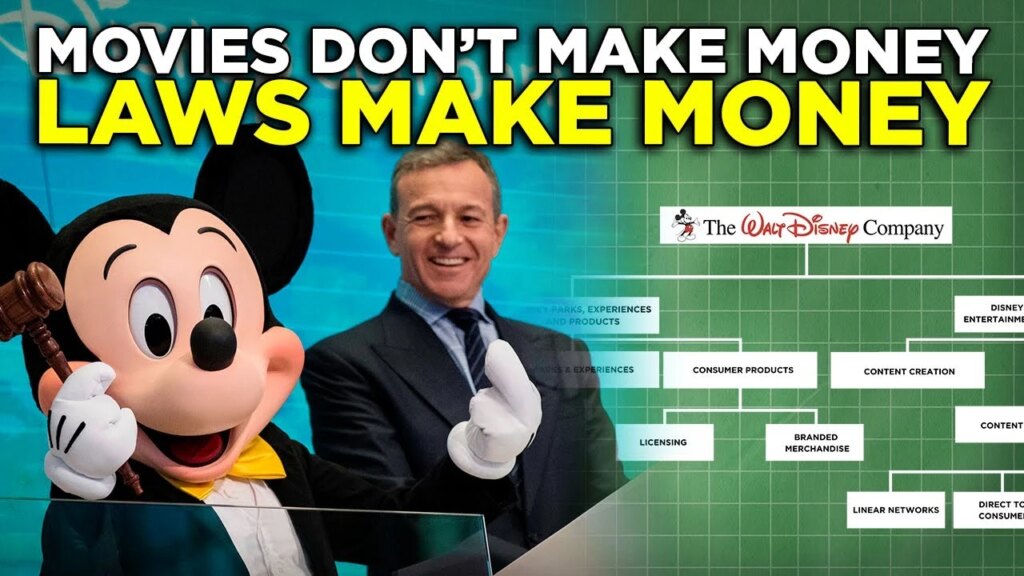
The Walt Disney Company is often described as an entertainment company, but that description barely captures what Disney really is. Disney is a global intellectual property machine. It creates, buys, protects, licenses, distributes, and monetizes characters, stories, brands, franchises, experiences, and nostalgia across nearly every entertainment channel imaginable. The movie may be where a character becomes famous, but the real money often comes long after the credits roll: theme parks, cruises, streaming subscriptions, merchandise, licensing deals, television rights, games, toys, hotels, food, music, and branded experiences. That is what makes Disney different from a traditional movie studio. Disney does not simply produce entertainment. It builds legal and commercial control around entertainment assets and then monetizes them for decades.
The company’s structure shows how broad the business has become. Disney currently reports through three major segments: Entertainment, Sports, and Experiences. In fiscal 2025, Disney reported total revenue of $94.4 billion, up 3% from the prior year, with Entertainment producing $42.5 billion in revenue, Sports producing $17.7 billion, and Experiences producing $36.2 billion before eliminations. That means Disney is not dependent on any single box office weekend. Its money comes from a diversified engine that includes content, ESPN, streaming, theme parks, cruises, resorts, merchandise, and licensing.
That is the first key to understanding Disney’s power. A hit movie is valuable, but a hit franchise is much more valuable. A movie ticket is a one-time transaction. A franchise can become a ride, a hotel experience, a Halloween costume, a lunchbox, a streaming series, a cruise theme, a Broadway show, a video game, and a licensing agreement. Disney has spent generations perfecting the art of turning creative works into recurring revenue.
The Parks and Experiences business is one of the clearest examples. Disney’s Experiences segment includes theme parks, resorts, Disney Cruise Line, consumer products, and related licensing. In fiscal 2025, Experiences generated record full-year segment operating income of $10.0 billion, according to Disney’s earnings release. This matters because parks are not just entertainment destinations. They are physical monetization platforms for Disney’s intellectual property. A family does not simply visit a park. They buy tickets, food, hotel rooms, souvenirs, character experiences, photos, transportation, and memories tied to Disney-owned worlds.
That is why Disney’s intellectual property matters so much. Mickey Mouse, Frozen, Star Wars, Marvel, Pixar, Avatar, The Simpsons, ESPN, Disney Princesses, National Geographic, and dozens of other brands all feed different parts of the company. The same character or story can generate revenue across multiple business lines. Disney’s legal ownership of those assets is the moat. Without ownership, Disney would just be renting attention. With ownership, Disney can keep monetizing the same asset across generations.
Disney has built that moat in several ways. One is creation. The company still produces original content through Disney, Pixar, Marvel Studios, Lucasfilm, 20th Century Studios, Searchlight Pictures, Disney Television, FX, ABC, and other units. Another is acquisition. Disney has repeatedly bought assets that strengthened its intellectual property library and distribution power. Pixar gave Disney a new animation engine. Marvel gave it one of the most valuable superhero universes in history. Lucasfilm brought Star Wars and Indiana Jones. The 21st Century Fox deal added 20th Century Fox film and television assets, FX, National Geographic, and a larger stake in Hulu.
The Fox acquisition is one of the clearest examples of Disney’s strategic thinking. Disney announced an amended agreement to acquire 21st Century Fox for $71.3 billion in cash and stock in 2018, and the deal was designed to strengthen Disney’s content portfolio and direct-to-consumer strategy. The deal was not just about buying another studio. It was about buying libraries, franchises, distribution relationships, international reach, and streaming leverage at the exact moment the entertainment industry was shifting toward direct-to-consumer platforms.
Acquisitions are expensive, but they can be powerful when the buyer knows how to monetize the assets better than the seller. Disney’s advantage is that it can plug intellectual property into multiple revenue channels. A character acquired in a studio deal can move into streaming, parks, merchandise, publishing, licensing, theatrical distribution, games, and live experiences. That is why Disney can justify paying large sums for content libraries and franchise rights. It is not only buying what the asset is worth today. It is buying what the asset can become inside the Disney ecosystem.
The less glamorous side of Disney’s business is its legal and lobbying power. Disney’s business model depends on owning and protecting intellectual property for as long as possible. Copyright law, licensing agreements, trademark enforcement, contracts, distribution rights, and litigation are not side issues for Disney. They are central to the business. If Disney cannot control how its characters and stories are used, the value of the empire weakens.
That is why Disney’s lobbying history matters. A shareholder proposal filed with the SEC noted that Disney reported spending $46.365 million on federal lobbying from 2010 through 2021 and $7.69 million in 2020 and 2021 combined. The filing also referenced the company’s lobbying being described as highly effective in connection with changes to U.S. copyright law in 1976 and 1998. Copyright extensions have historically been important to companies like Disney because they delay the moment when valuable works enter the public domain and can be freely used by others.
This does not mean Disney’s only strategy is lobbying. It means Disney understands that intellectual property value is partly created by law. A character is not just valuable because people love it. It is valuable because Disney owns the rights to control it, license it, restrict it, and monetize it. That legal control creates scarcity. Scarcity creates pricing power. Pricing power creates shareholder value.
The 1976 Copyright Act and the 1998 Sonny Bono Copyright Term Extension Act both expanded the length of copyright protection in ways that benefited companies with large creative libraries. For Disney, that meant many works could remain protected for longer periods before entering the public domain. The company’s critics often argue that Disney has benefited from a copyright system that protects old works for too long. Supporters would argue that strong copyright protection gives creators and companies the incentive to invest in expensive creative projects. Either way, Disney’s business model clearly benefits when its IP remains protected.
The Reedy Creek story in Florida shows another side of Disney’s legal and political strategy. For decades, the Reedy Creek Improvement District gave Disney unusual local control over the area surrounding Walt Disney World, including infrastructure and public services. Local reporting noted that the district had built and maintained 134 miles of roads and 67 miles of waterways, along with fire and emergency services. When Florida moved to dissolve or restructure that arrangement, the dispute became a national example of how deeply Disney’s business interests can become intertwined with law, politics, taxation, land use, and government authority.
That special-district structure was valuable because Disney World is not just a theme park. It is an enormous operating environment with roads, utilities, hotels, transportation systems, water management, public safety needs, and millions of visitors. Operational control matters. When a business depends on consistent guest experience, infrastructure is part of the product. A poorly managed road, a delayed permit, or inconsistent public service can affect the Disney experience. That is why legal control over land and infrastructure has historically been strategically important to the company.
Disney’s critics sometimes describe the company as a legal machine that happens to make movies. That may be too cynical, but it points to something real. Disney’s creative output matters, but its business power comes from the system around that output. The company knows how to protect its assets, lobby for favorable rules, acquire valuable properties, integrate those properties into its ecosystem, and defend its rights aggressively when challenged.
The financial picture also shows why this matters. Disney can generate enormous revenue, but its profit margins are not always as wide as people assume. In fiscal 2022, Disney reported revenue of $82.7 billion and net income attributable to the company of about $3.1 billion. That kind of revenue scale is impressive, but it also shows how expensive the business is. Producing content, operating parks, maintaining resorts, paying sports rights fees, running streaming platforms, marketing releases, and servicing debt are all costly. Disney needs its intellectual property to work across multiple revenue streams because the company’s operating machine is massive.
Streaming has made that even more important. Disney+ was not simply a new app. It was a strategic response to the collapse of the old media bundle and the rise of Netflix, Amazon, Apple, and other digital competitors. Disney needed direct access to consumers because relying only on theatrical releases, cable networks, and third-party distribution would have weakened its long-term position. Streaming allows Disney to control customer relationships, gather data, bundle content, and keep its library inside its own ecosystem.
But streaming also pressured profits. Building a global platform is expensive. Content costs are high. Subscriber growth can be uneven. Consumers cancel quickly. Competitors are aggressive. That is one reason Disney’s broader ecosystem matters so much. A streaming series can drive park attendance. A park experience can deepen loyalty to a franchise. A theatrical release can support merchandise. A cruise can extend a brand into travel. Disney’s strength is the flywheel, not just one platform.
This is also why Disney’s acquisitions have been so important. The company needs a constant pipeline of valuable stories and characters. Original creation can produce hits, but acquisitions reduce the risk of relying only on new ideas. Buying Marvel, Lucasfilm, Pixar, and Fox gave Disney proven assets with existing audiences. It also gave Disney more control over the entertainment supply chain at a time when attention became more fragmented.
There is a risk, however. A company built on intellectual property can become too dependent on franchises. If audiences tire of sequels, remakes, superhero films, or familiar characters, the model can weaken. Disney has faced criticism in recent years for creative fatigue, uneven box office performance, streaming losses, and political backlash. A strong IP library is an asset, but it can become less powerful if the company fails to create fresh emotional connections with audiences.
There is also a regulatory risk. The bigger Disney becomes, the more scrutiny it attracts. Acquisitions that consolidate content libraries can raise antitrust concerns. Political disputes can threaten special arrangements. Copyright debates can intensify as major characters enter the public domain. Streaming competition can pressure pricing. Sports rights can become more expensive. Parks can face demand swings when consumers pull back.
Still, Disney remains one of the clearest examples of how modern entertainment really works. The company is not built around one movie, one park, one channel, or one product. It is built around control. Control of characters. Control of stories. Control of distribution. Control of licensing. Control of experiences. Control of legal rights. Control of consumer relationships.
That is why Disney’s real business is not simply making content. Its real business is turning imagination into protected assets and protected assets into repeatable revenue. The movie creates attention. The law protects ownership. The parks create immersion. The merchandise extends identity. The streaming platform keeps the relationship alive. The acquisitions add new worlds to monetize. The lobbying helps preserve the rules that make the system work.
Disney may look like a company built on magic, but its financial engine is built on strategy. The magic gets people in the door. The intellectual property keeps them coming back.
All writings are for educational and entertainment purposes only and does not provide investment or financial advice of any kind.