The Economy Looks Better on Paper Than It Feels at Home
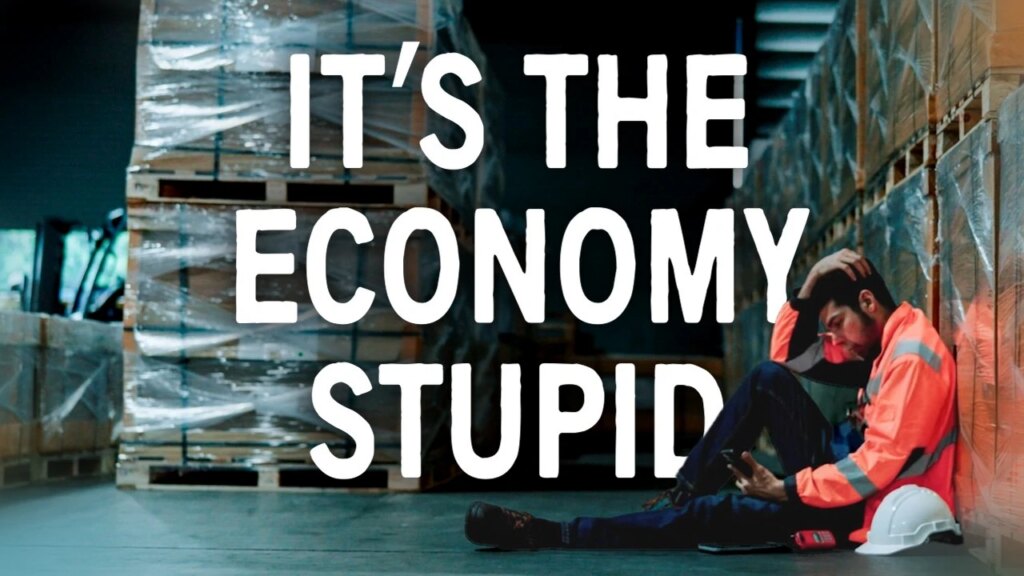
The economy can look healthy in a government report and still feel deeply uncomfortable at the kitchen table. Income can rise, unemployment can remain relatively low and household wealth can increase while millions of families struggle with rent, groceries, credit-card balances and the cost of buying a home. That disconnect helps explain why positive economic statistics often fail to produce positive economic sentiment.
The problem is not that the headline numbers are fake. It is that national averages combine households experiencing very different realities, and asset owners can benefit from rising markets and home prices while renters and younger workers face much steeper costs. A growing economy can therefore create genuine gains without making everyone feel as though they are moving forward.
Household Wealth Has Risen, but That Does Not Mean Everyone Feels Richer
The Federal Reserve’s latest Survey of Consumer Finances found that real median family income rose 7% between 2022 The Economy Looks Better on Paper Than It Feels at Home
and 2025 to $82,200. Real median net worth also increased, rising 2% to $215,900, while average net worth climbed 7% to about $1.24 million. Those figures contradict the claim that median household wealth has fallen below its pre-pandemic level.
The averages also reveal why perceptions can differ so much from the headline data. Mean net worth is far higher than median net worth because wealth is concentrated among households with substantial stocks, businesses and real estate. A rising stock market can therefore produce enormous national wealth gains while having relatively little effect on someone without a brokerage account or retirement plan.
Even among families whose net worth increased, much of the gain may be tied up in a home or retirement account. Those assets improve long-term financial security, but they do not necessarily make groceries, rent or child care easier to pay this month. Wealth and cash flow are connected, but they are not interchangeable.
Financial Stress Is Still Widespread
The Federal Reserve’s 2025 household survey found that 28% of adults said they were financially worse off than a year earlier. Sixteen percent reported that they had not paid all of their bills in the previous month, while 26% said they had skipped medical care because of cost during the previous year. Those numbers show why a household can live inside a growing economy without experiencing much financial comfort.
Emergency savings also remain thin for a substantial portion of the population. Only 63% of adults said they could cover a $400 unexpected expense with cash or the equivalent, while 12% said they could not pay the expense by any means. Just 55% reported having enough rainy-day savings to cover three months of expenses.
The numbers have not collapsed, but they have not recovered to their strongest recent levels either. The share able to cover a $400 emergency reached 68% in 2021 before falling back to 63%, where it has remained for several years. That helps explain why economic stability at the national level can coexist with household vulnerability.
Credit-Card Debt Is Another Sign of the Pressure
Credit-card balances reached about $1.26 trillion in the second quarter of 2026, according to the Federal Reserve Bank of New York. That was an increase of $21 billion from the previous quarter and $54 billion from a year earlier. Total household debt stood at roughly $18.8 trillion.
High balances do not automatically mean every borrower is in distress because consumer spending and population growth can also push aggregate debt higher. Delinquency flows have been relatively stable recently, although credit-card serious delinquency remains elevated compared with the early post-pandemic period. The New York Fed found that the share of balances at least 90 days delinquent rose significantly between 2022 and early 2026, even as the flow of newly delinquent accounts stabilized.
The pressure is especially visible among households already struggling financially. Federal Reserve research found that average credit-card balances since 2023 increased by more than 35% among respondents who said they were finding it difficult to get by. That suggests debt is functioning as a financial bridge for some families rather than simply a convenience.
Housing Is Where the Disconnect Becomes Hardest to Ignore
Housing affordability remains one of the strongest reasons economic statistics and household sentiment can move in opposite directions. NAHB estimated that a median-income family needed 36% of income just to make the mortgage payment on a median-priced existing home in the second quarter of 2026. For a lower-income household earning half the national median, the required share rose to 71%.
Those figures do not include every cost associated with ownership. Property taxes, homeowners insurance, maintenance and utilities can push the true housing burden substantially higher. A household that technically qualifies for a mortgage may therefore still feel financially stretched after the purchase.
Renters are under pressure as well. The Federal Reserve found that 23% of renters reported being behind on rent at some point during the prior year, up six percentage points from 2021. Housing can therefore remain unaffordable even while national income and wealth measures improve.
Why Good Economic News Often Fails Politically
Political leaders naturally emphasize statistics that support their economic record. Job creation, income growth, stock-market gains and declining inflation can all be legitimate accomplishments worth discussing. The problem begins when those indicators are presented as though they describe the experience of every household.
Voters tend to judge the economy through prices, paychecks and financial security rather than GDP releases. Someone whose salary rose 4% may still feel worse off if housing, insurance and groceries increased faster over several years. That person is not necessarily misunderstanding the economy; they are measuring a different part of it.
This creates a communications problem for politicians of both parties. Macroeconomic data can improve before household perceptions follow, especially after a period of high inflation because prices generally remain elevated even after the inflation rate slows. Telling voters the economy is strong can therefore sound disconnected when their personal budgets remain under pressure.
Corporate Power Has Become Part of the Economic Debate
Another part of the affordability debate concerns competition. Under former FTC Chair Lina Khan, who led the agency from 2021 through January 2025, the Federal Trade Commission pursued a more aggressive approach to antitrust enforcement, mergers, junk fees, subscription practices and other forms of corporate conduct. The FTC said its efforts included consumer refunds, merger challenges and rules intended to make it easier for consumers to cancel subscriptions and avoid hidden fees.
Supporters argued that tougher enforcement could improve competition, reduce prices and strengthen workers’ bargaining power. Critics argued that the FTC sometimes stretched its legal authority and created unnecessary uncertainty around transactions that could benefit consumers. Several major initiatives also faced legal setbacks, showing that aggressive enforcement did not always translate into durable policy.
The proposed nationwide ban on most noncompete agreements is a good example. A federal court blocked the rule in 2024, and the FTC under current Chairman Andrew Ferguson later dropped its appeals, leaving the rule unenforceable. The episode demonstrates how regulatory changes can be consequential while also remaining vulnerable to courts and changes in administration.
Antitrust Policy Can Change With Political Leadership
The Federal Trade Commission is currently chaired by Andrew Ferguson, and the agency’s approach has shifted in several areas from the Khan era. That does not mean all antitrust enforcement has disappeared, and concern about concentrated corporate power exists across parts of both major parties. It does mean regulators have substantial discretion over how aggressively merger laws and competition rules are interpreted and enforced.
That matters because competition policy can influence ordinary economic life in ways that are not always visible in campaign speeches. Merger enforcement can affect hospital systems, technology platforms, grocery markets, employers and suppliers. The effects can take years to emerge, making antitrust less politically immediate than a tax cut or stimulus check even when the stakes are large.
It is therefore too simple to say politicians refuse to discuss worker-friendly rules because wealthy interests oppose them. Different administrations genuinely disagree over whether aggressive regulatory intervention improves competition or creates excessive government interference. The more useful question is which policies actually lower barriers, increase competition and improve outcomes over time.
Political Spending Has Reached Extraordinary Levels
Money also plays an enormous role in the political environment surrounding these debates. OpenSecrets projected that the 2024 federal election cycle would cost roughly $15.9 billion, including presidential and congressional races. Final inflation-adjusted estimates differ somewhat depending on methodology, but the cycle still ranked among the most expensive in U.S. history.
Outside spending reached a record $4.46 billion in 2024, according to OpenSecrets, with substantial amounts flowing through super PACs and groups whose funding sources were not fully transparent. The Brennan Center later estimated that dark-money spending reached about $1.9 billion, also a record.
Large amounts of money can buy enormous exposure, but more spending does not necessarily translate proportionally into more persuasion. Voters can become saturated with advertisements, texts and fundraising appeals, particularly in competitive states. Campaign spending therefore demonstrates influence and access more clearly than it demonstrates a guaranteed ability to change voter behavior.
Working-Age Men Are Part of a Broader Labor-Market Concern
Economic frustration among working-age men also deserves a more careful explanation than simply saying they have been abandoned. The unemployment rate for adult men was 3.9% in September 2026, which is not historically high. The broader concern is long-term participation and the fact that some men have become detached from steady employment even during periods when the overall labor market appears healthy.
The participation story is complicated by demographics and measurement changes. The St. Louis Fed found that much of the sharp decline in overall labor-force participation during 2026 came from a statistical population revision and continued population aging rather than a sudden wave of workers giving up. Prime-age participation did weaken during the year, but the decline returned it closer to levels seen in recent years rather than to an unprecedented low.
Longer-term challenges remain for men without college degrees and for communities that lost manufacturing or other middle-income employment. Those issues interact with education, health, disability, geography, automation and family structure. Treating them solely as a political messaging failure misses the deeper labor-market changes underneath the frustration.
Economic Gains and Economic Pain Can Exist at the Same Time
One of the most important lessons from the current economy is that apparently contradictory statements can both be true. Median income and wealth can rise while millions of households remain financially vulnerable. Credit-card debt can hit record levels while most borrowers continue making payments.
The same is true in housing. Existing homeowners may have accumulated significant equity while younger families find ownership increasingly out of reach. Rising property values can therefore strengthen one household’s retirement security while worsening another household’s path toward building wealth.
This is why broad claims that the economy is either excellent or disastrous tend to miss what people are actually experiencing. Economic conditions differ dramatically depending on age, income, homeownership, debt, geography and whether someone owns financial assets. The national economy is one system, but households occupy very different positions inside it.
The Political Risk Is Ignoring That Difference
Governments lose credibility when they rely exclusively on aggregate statistics while voters are focused on affordability. At the same time, political movements can mislead people by describing an economy as collapsing when employment, income and wealth are still expanding. Both approaches simplify a reality that is more complicated.
A more useful economic debate would focus on why growth is not translating into security for more households. Housing supply, health costs, competition, wage growth, debt burdens and access to productive employment all matter more to everyday life than whether one quarterly GDP report exceeds expectations. Those issues also require longer-term solutions than campaign slogans typically provide.
The economy does not have to be failing for people to be struggling. It can generate impressive national wealth while leaving a meaningful share of households one car repair, medical bill or rent increase away from financial trouble. Understanding that distinction is the first step toward explaining why the economic data and public mood can look so different.