What Is the Trump IRA and Could It Change Retirement Savings?
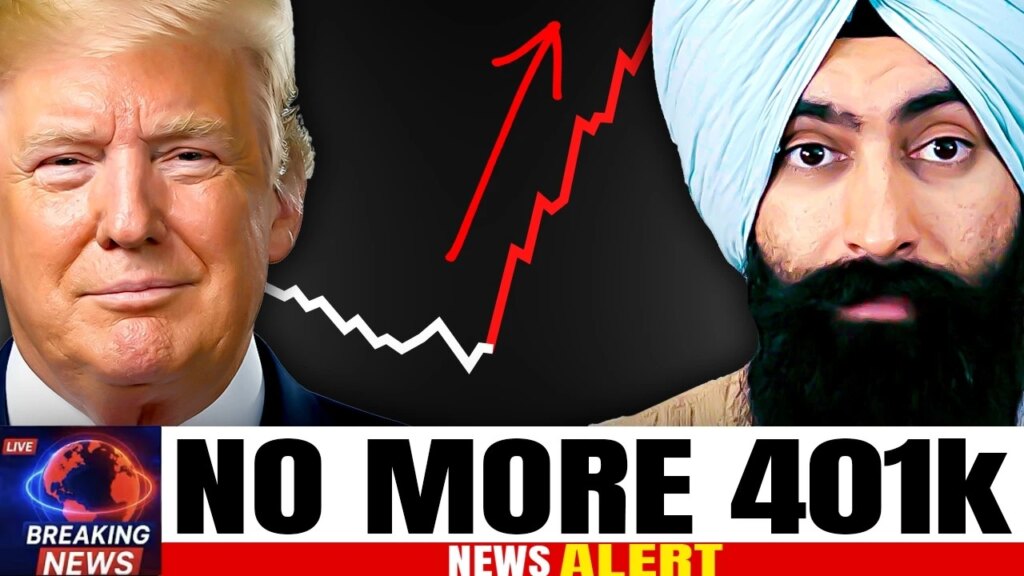
A new retirement savings option is coming into focus, and it could matter for millions of workers who do not have access to a 401(k). President Donald Trump signed an executive order on April 30, 2026, directing the Treasury Department to establish TrumpIRA.gov, a federal marketplace designed to connect workers with simple, portable, low-cost IRA options. The White House described the goal as ensuring that every American worker has access to a retirement-savings option, particularly workers who lack employer-sponsored plans. The outline for this article frames the Trump IRA as an attempt to address three major problems with the current retirement system: limited access, high fees, and poor portability.
The first problem is access. A 401(k) is one of the most powerful retirement tools in America, but it is tied to the workplace. If your employer offers a plan, you may have access to payroll deductions, investment options, employer matching contributions, and automatic enrollment. If your employer does not offer one, you are on your own. That creates a major gap for gig workers, part-time employees, independent contractors, small-business workers, self-employed people, and lower-income workers. Investopedia reported that the executive order is aimed at workers without employer-sponsored plans and that the new TrumpIRA.gov marketplace is expected to begin on January 1, 2027.
That matters because retirement savings in America is uneven. Workers with stable jobs at larger employers are often more likely to have access to 401(k) plans, while workers in smaller businesses, contract roles, or lower-wage jobs are less likely to have that same access. The Trump IRA does not replace a 401(k), but it could create a more universal on-ramp for people who are currently outside the employer retirement system. AARP noted that the proposed Trump retirement accounts would feature reasonable costs and no minimum balance or contribution requirements, and that the program builds on broader efforts to expand access to retirement savings.
The second problem is fees. Fees sound small when they are expressed as percentages, but over decades, they can quietly drain a retirement account. The outline gives a simple example: if someone contributes $500 per month for 30 years and earns an 8% return, higher fees can reduce the final balance by tens of thousands of dollars. That is because investment fees do not just reduce your money once. They reduce the amount that stays invested, which means they also reduce future compounding.
This is where the Trump IRA could be most interesting. J.P. Morgan Asset Management said the executive order’s listing standards are expected to include a 0.15% net expense ratio ceiling for investment options listed on TrumpIRA.gov. That is low compared with many older workplace plans and expensive retail funds. If the government marketplace pushes workers toward low-cost index funds or target-date funds, it could help more people keep more of their returns over time.
The third problem is portability. A 401(k) is tied to an employer, and many workers change jobs multiple times during their careers. That can leave them with old accounts scattered across former employers, different investment menus, different fees, and complicated rollover decisions. A portable IRA marketplace could make saving simpler because the account is not dependent on one employer. For workers who drive for rideshare companies, freelance, work part time, or move between jobs, portability may be one of the most valuable features.
The fourth feature is the government match. The Trump IRA is connected to the Saver’s Match, a federal matching contribution that is scheduled to begin in 2027 under SECURE 2.0. Investopedia reported that the program may provide a federal match of up to $1,000 for eligible lower-income workers. The New York Post reported that individuals with modified adjusted gross income of $20,500 or less could receive a 50% government match on the first $2,000 contributed annually, with reduced matches available above that level.
That match is important because a tax deduction is not very useful to someone with little taxable income. A direct government match can be more powerful because it puts money into the retirement account. For lower-income workers, the difference between “you may receive a tax benefit” and “the government may contribute to your account” is significant. It creates a more visible incentive to save.
Still, this is not free money without trade-offs. The outline raises a bigger economic concern: if the government is already running large deficits, new matching contributions add to federal spending unless they are offset elsewhere. That matters because government programs do not exist in a vacuum. If Washington spends more than it collects in taxes, it has to borrow, raise revenue, cut other spending, or rely on monetary conditions that can contribute to inflation over time.
The U.S. fiscal picture is already strained. Higher debt and higher interest costs have become a major concern because the government must issue Treasury debt to finance deficits. If a new retirement program increases participation and sends more money into financial markets, that could support asset prices over time. But if the program is funded through larger deficits, the long-term cost may show up through more debt, more inflation pressure, or higher borrowing costs.
That is the tension behind the Trump IRA. On the household level, the program could be beneficial. It gives workers without a 401(k) an easier way to save, potentially with low fees and a government match. On the national level, it raises questions about how much the government can spend, how deficits are financed, and whether more money flowing into markets benefits asset owners more than wage earners.
From an investor’s perspective, the Trump IRA could increase stock market participation. If millions of workers begin contributing to low-cost retirement accounts, that money has to go somewhere. Broad-market funds like VTI, which tracks the total U.S. stock market, or SPY, which tracks the S&P 500, are examples of the kind of diversified funds investors often use to gain exposure to the American economy. The outline specifically highlights VTI and SPY as examples of broad-market exposure, rather than individual stock picks.
That distinction matters. For new investors, the goal should not be to gamble on a single company. The goal should be to own diversified assets, contribute consistently, keep fees low, and let compounding work over time. A broad total-market or S&P 500 fund gives investors exposure to hundreds or thousands of companies instead of relying on one winner. That does not eliminate risk, but it does reduce the risk of betting everything on the wrong stock. The Trump IRA may also influence market behavior if it brings more consistent inflows into stocks. Retirement systems like 401(k)s already create steady buying because workers contribute every paycheck. If a new IRA marketplace encourages more people to invest regularly, it could add another stream of long-term demand. The outline estimates that tens of billions of dollars could eventually flow into markets through the program and related contributions. But investors should not confuse steady inflows with guaranteed gains. Markets still crash. Recessions still happen. Stocks still become overvalued. A government-backed savings marketplace does not remove risk from investing. It simply makes access easier. If more people invest, more people also need to understand volatility. A market decline is not a system failure. It is part of investing. The real danger is when new investors panic, sell at the bottom, and then miss the recovery.
That is why financial education has to be part of this conversation. A low-cost IRA is useful only if people understand how to use it. Workers need to know the difference between saving and investing, the importance of diversification, the impact of fees, the risks of withdrawing money early, and the role taxes play in retirement planning. A government match may get someone started, but behavior determines whether the account becomes meaningful. The Trump IRA also does not make employer retirement plans irrelevant. A strong 401(k) with a good employer match can still be more powerful than an IRA. Employer plans often have higher contribution limits, payroll automation, and matching contributions that can accelerate savings. In 2026, the employee contribution limit for a 401(k) is $24,500 for workers under age 50, while the IRA limit is $7,500, according to PlanAdviser. For higher earners or aggressive savers, that difference is significant.
So the Trump IRA is best understood as a retirement access tool, not a complete replacement for workplace plans. If you have a good 401(k) with a match, you likely still want to take advantage of it. If you do not have access to a 401(k), the Trump IRA marketplace may become a useful option. If you are eligible for the Saver’s Match, it may be even more valuable because the government contribution could help your account grow faster.
There are also tax considerations. Traditional IRAs, Roth IRAs, 401(k)s, and taxable brokerage accounts all work differently. A traditional IRA may provide tax-deferred growth, while a Roth IRA may provide tax-free qualified withdrawals. A taxable brokerage account gives more flexibility but does not offer the same retirement tax benefits. The right account depends on income, tax bracket, employer benefits, cash flow, and retirement goals.
The bigger lesson is that fees, access, and behavior matter more than most people realize. A worker who starts with $5, contributes consistently, receives a match when eligible, invests in low-cost diversified funds, and stays invested through volatility may build meaningful wealth over time. A worker with a higher income but high fees, inconsistent contributions, and emotional investing may end up with less than expected. That is why the Trump IRA could be important if it works as intended. It lowers the barrier to entry. It pushes attention toward low-cost funds. It gives workers outside the employer system a retirement option. It may provide a government match for eligible savers. And it could help more Americans participate in the long-term growth of the market.
But no retirement account can fix every financial problem. If wages are not keeping up with inflation, if housing costs are too high, if debt payments consume cash flow, or if workers cannot afford to save, access alone is not enough. The Trump IRA may open the door, but people still need enough income and discipline to walk through it.
For investors, the smartest response is not to treat this as a political headline. Treat it as a financial planning development. If you do not have a workplace retirement plan, watch how TrumpIRA.gov develops before its planned 2027 launch. Compare fees. Understand the match. Know the contribution limits. Choose diversified investments. And do not let market volatility scare you out of a long-term strategy.
If the program succeeds, it could bring more workers into the investing system and increase retirement savings access. If it falls short, it may become another well-intentioned program that does not reach the people who need it most. Either way, the core lesson remains the same: the earlier you start investing, the lower your fees, and the more consistent you are, the better chance you have of building real retirement wealth.
Jaspreet Singh is not a licensed financial advisor. He is a licensed attorney, but he is not providing you with legal advice in this article. This article, the topics discussed, and ideas presented are Jaspreet’s opinions and presented for entertainment purposes only. The information presented should not be construed as financial or legal advice. Always do your own due diligence.