What Succession Gets Right About Family Trusts, Corporate Control and Inherited Power
This article contains spoilers for all four seasons of Succession.
The Roy children are among the richest people in the fictional world of Succession, yet they spend most of the series discovering that extraordinary wealth does not necessarily bring control.
Kendall, Roman, Shiv and Connor expect to inherit enormous fortunes from Waystar Royco, the media and entertainment conglomerate built by their father, Logan Roy. They own valuable economic interests, occupy positions inside the company and enjoy access unavailable to ordinary shareholders. Still, none of them can unilaterally decide who becomes chief executive, whether the company acquires a rival or whether Waystar itself is sold.
That distinction between wealth and control drives nearly every major conflict in the series. The Roys do not hold Waystar as though it were a family-owned restaurant in which Logan can simply hand the keys to a child. Waystar is a publicly traded corporation with outside shareholders, directors, lenders, executives and legal obligations. The family’s influence comes through a collection of shares, trusts, governance rights and personal alliances that can become weaker whenever one piece of the structure changes.
The result is a corporate drama that often appears deliberately confusing. Terms such as bear hug, proxy fight, supermajority and fiduciary duty arrive amid insults, betrayals and family crises. Beneath the language, however, the central question is consistent: Who possesses the legal power to make the next decision?
The Roys Are Wealthy Because They Own Shares
Waystar Royco is presented as a public media conglomerate with businesses spanning television news, entertainment, cruises and theme parks. The Roy family is its most influential shareholder group, but other investors also own pieces of the company and elect a board to oversee management. The family’s position gives it enormous influence without making the corporation Logan’s personal property.
This matters because corporate ownership is divided into shares. Those shares provide economic rights, such as participation in a sale or future distributions, and may also carry voting rights. A family can control a public company without owning every share when its voting position is sufficiently large or when the remaining ownership is dispersed among investors unlikely to act together.
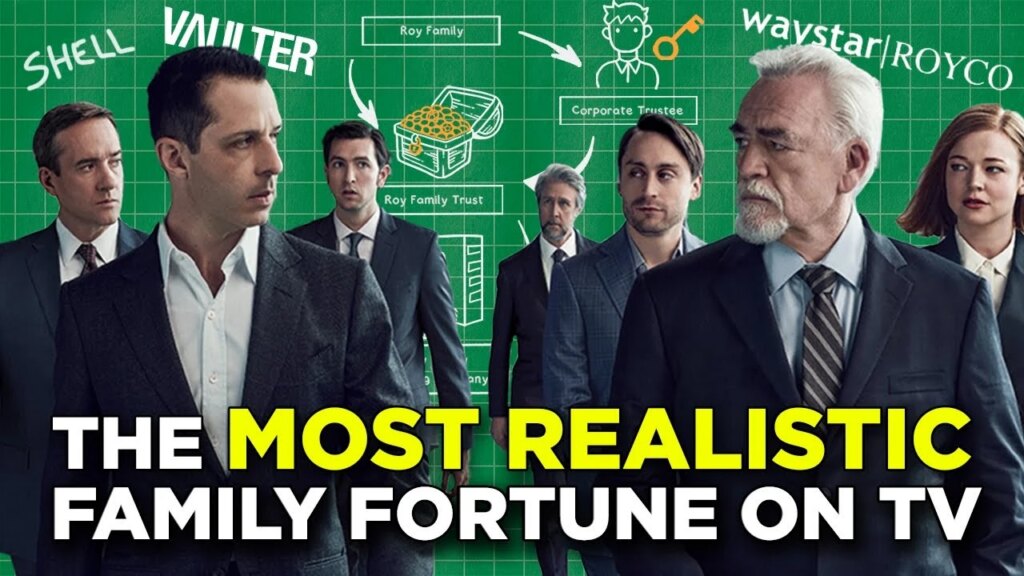
Succession never provides viewers with a complete, legally precise organizational chart. The series instead reveals pieces of the structure as they become important to the plot. The Roy family’s stake is associated with a family holding company and trust arrangement, while individual family members also appear to possess significant economic interests. Analyses of the series generally describe the family structure as a vehicle through which the Roys collectively hold and exercise influence over Waystar.
The trust does not make every child an equal corporate ruler. A beneficiary can be entitled to economic value without possessing unrestricted authority to sell assets or direct how the structure votes. The governing documents, trustees and voting arrangements determine who can act. This is one of the show’s most important lessons: Benefiting from an asset is not the same as controlling it.
A Trust Does Not Automatically Shield Everything
Family trusts and holding companies are commonly used to organize valuable assets, coordinate inheritance and separate ownership from day-to-day management. They may also support tax, estate-planning and asset-protection goals when they are properly structured.
The protection is not absolute. Simply placing shares into a trust does not make the family immune from lawsuits, creditor claims, taxes or corporate liability. The result depends on the type of trust, applicable law, the timing of the transfer and whether the family respects the legal separation among the trust, holding company and operating business.
The Waystar structure appears designed at least partly to prevent the company’s ownership from being fragmented every time a family member dies, divorces or wants cash. Instead of allowing every beneficiary to treat the underlying shares as personal property, the family can hold its strategic stake through a centralized vehicle.
That arrangement can preserve influence across generations, but it also creates a source of conflict. The children are wealthy because of the trust and holding structure, yet the same structure limits their ability to act independently. They cannot necessarily sell the family’s controlling block, change the trust or dictate its vote simply because they believe they will eventually inherit from Logan. The structure protects the dynasty from fragmentation while trapping the heirs inside a system they do not fully control.
Logan’s Real Power Comes From Governance
Logan’s authority does not depend solely on being the company’s founder or largest personality. It comes from his ability to influence several layers of governance simultaneously.
He holds a powerful position within the family structure, dominates Waystar’s executive leadership and exerts pressure over directors whose votes are supposed to reflect their judgment about the corporation. He also controls information, employment and access. Directors and executives know that opposing him may end their careers even when formal governance rules say they are independent.
The failed vote of no confidence in the first season demonstrates the difference between corporate procedure and practical power. Kendall attempts to use the board’s legal authority to remove Logan, but Logan remains present, intimidates wavering directors and punishes those who oppose him. Morningstar has used Succession to illustrate how shareholder and proxy-voting power can be distorted when a dominant founder overwhelms formal governance mechanisms.
The episode is not evidence that boards lack legal authority. It shows that authority is only as strong as the individuals willing to exercise it. A director may possess one vote on paper while confronting enormous personal incentives not to use it against a controlling founder. The threat does not need to be explicitly illegal to influence the result. Continued employment, business relationships and social status can all shape supposedly independent decisions.
The Divorce Agreement Becomes a Corporate Weapon
The relationship between Logan and his former wife, Caroline, initially appears to be a family matter. By the end of the third season, it becomes clear that the divorce settlement also helped determine the children’s power over Waystar.
Kendall, Roman and Shiv believe that provisions connected to their mother give them enough collective voting power to block Logan from selling the company. Logan neutralizes that protection by renegotiating with Caroline, leaving the children unable to stop the GoJo transaction.
The scene captures why family-business succession cannot be separated from divorce, estate planning and marital agreements. Shares with voting power may be transferred, restricted or placed into trusts as part of a settlement. A change that appears to concern only family wealth can alter control of an operating company worth billions of dollars.
The Roy children make the mistake of treating their rights as permanent. Logan understands that governance is a collection of contracts that may be amended when the required parties agree.
His maneuver does not necessarily mean that he acquires every vote personally. It means he removes the contractual obstacle that allowed the children to form a blocking coalition. Their economic interests remain valuable, but their ability to veto the transaction disappears. This is the moment when the children learn that being future heirs does not make them present decision-makers.
A Holding Company Can Concentrate Family Influence
A holding company exists primarily to own other assets, including shares of operating businesses. For a wealthy family, it can provide a centralized structure through which relatives hold and vote a major corporate stake.
Without such a vehicle, each family member might own Waystar shares personally. Over time, those shares could be divided among spouses, children, trusts and estates. Some heirs might sell, while others might borrow against their holdings or vote differently. The family’s influence could gradually dissolve.
A holding company can reduce that fragmentation by pooling the interests. Family members own stakes or voting rights in the holding structure, which then owns shares of the public company. The family decides how the holding company will act, and the holding company casts its Waystar votes as one coordinated block.
The arrangement still requires internal rules. Family members need to know who votes, whether some votes carry greater weight and what threshold is required for major decisions. The series suggests that Logan holds enhanced voting power within the family structure, while the children and other family members possess lesser rights. The exact mechanics are never fully established onscreen, and some widely circulated explanations rely partly on inference rather than a complete set of fictional legal documents.
That ambiguity serves the drama. The family members themselves often seem uncertain about which rights are legally binding and which depend on Logan’s cooperation.
Control Can Be Lost Without Losing Every Share
The Roys do not need to become poor to lose Waystar. Corporate control can weaken through share sales, new share issuance, borrowing, agreements with outside investors or a takeover approved by enough shareholders and directors. A family that once held effective control can become one influential shareholder among many.
The first season exposes this vulnerability when Kendall discovers that Waystar carries a large debt obligation connected to the family holding company. A decline in the stock price threatens to trigger consequences with the lender, forcing Kendall to obtain outside capital from Stewy. The financing solves the immediate problem while placing a sophisticated investor inside the ownership structure.
The lesson is that leverage can quietly transfer power. A family may believe it controls a company because it owns a large block of shares, but those shares can become vulnerable when they secure a loan or when the business needs capital the family cannot provide independently.
Stewy and Sandy do not need to seize the entire company in one transaction. They can accumulate influence by purchasing shares, financing the Roys and organizing other shareholders against management. The company remains publicly traded, which means the family must continually consider investors whose interests may not align with preserving the Roy dynasty.
A Bear Hug Is Pressure, Not Affection
One of the series’ recurring takeover strategies is the bear hug. In corporate finance, a bear hug is an unsolicited acquisition proposal made at a sufficiently attractive price that the target company’s directors may have difficulty refusing to consider it.
The proposal places the board under pressure because directors must evaluate the interests of shareholders rather than protect the founder’s personal desire to remain in control. If a buyer offers a substantial premium, rejecting the deal solely to preserve the family dynasty can become difficult to defend.
The tactic does not automatically complete an acquisition. The target can resist, seek another buyer, challenge the financing or persuade shareholders that remaining independent will create greater value. Regulators may also review a transaction when it could reduce competition or create excessive market concentration.
In Succession, takeover proposals are also psychological weapons. Publicly revealing an attractive offer can weaken management by signaling that the company is vulnerable. Shareholders may demand the premium, employees may question the company’s future and potential allies may reconsider their loyalty. The Roys experience these offers as attacks on the family. Outside investors see them as financial proposals. That difference explains why the family repeatedly struggles to respond rationally.
Mergers Are About Strategy and Control
Waystar’s acquisition ambitions reflect several familiar forms of corporate strategy. The company considers purchasing media businesses to increase scale, adding assets in related markets and acquiring technology capabilities it does not possess internally.
A horizontal merger combines competitors or companies operating at a similar level of an industry. A vertical merger brings together businesses at different stages of production or distribution. A traditional media company acquiring a streaming platform might seek technology, subscribers and digital distribution, while the platform may value content, advertising relationships and established brands. These strategic arguments can disguise other motives. Executives may pursue acquisitions to increase personal power, prevent their company from becoming a target or create the appearance of growth when the core business is weakening.
Waystar initially explores acquiring GoJo, only for GoJo’s rising valuation to reverse the relationship. Logan recognizes that the technology company may be stronger than the legacy-media empire and decides to sell much of Waystar rather than continue pretending it can dominate the next era of distribution. The decision is emotionally devastating to the children because they view Waystar as their inheritance. Logan views the sale as a transaction that can maximize value and allow him to retain influence over the assets he cares about most.
Logan Is Willing to Sell the Dynasty
The proposed GoJo sale reveals the difference between creating a family company and preserving it for the family. The children assume Logan wants Waystar to remain under Roy control after his death. They interpret every competition for the chief-executive role as preparation for succession. Logan ultimately demonstrates that he values his own control more than the continuation of their control.
Selling the business allows him to convert an uncertain corporate empire into extraordinary personal and family wealth. It also prevents any child from fully replacing him. They may inherit money and shares in a combined company, but they will not inherit the throne in the form they expected.
HBO’s description of the final season centers on the approaching sale of Waystar to GoJo and the resulting conflict within the family. The eventual transaction is approved by Waystar’s board, and Tom Wambsgans is selected to run the American operations after GoJo takes control.
The sale does not strip the Roy children of all wealth. A cash-and-stock acquisition can provide target shareholders with money, shares in the acquiring company or a combination of both. What disappears is their concentrated position in the family-controlled enterprise and the possibility that one of them will rule it. They leave richer in liquid financial terms and poorer in the only currency they truly valued: proximity to power.
A Board Vote Decides What the Family Cannot
The final board vote is the culmination of the show’s corporate structure.
Kendall believes that a family agreement should determine Waystar’s future. Roman is pulled between loyalty, fear and recognition that he may not be suited to lead. Shiv ultimately understands that choosing Kendall would not restore a healthy family enterprise. It would place the company under another Roy who believes inheritance entitles him to authority.
Her vote allows the GoJo sale to proceed.
The decision is intensely personal, but its corporate effect comes through her role in assembling the required board support. The company does not transfer because the siblings reach emotional closure. It transfers because enough directors approve the transaction. That is what makes the ending so effective. Four seasons of family conflict are resolved through a governance mechanism designed to protect a corporation from being treated purely as family property.
The board process is hardly presented as noble. Directors possess mixed incentives, Matsson manipulates participants and Shiv’s decision is inseparable from resentment and self-preservation. Yet the final transaction still requires formal approval beyond Logan’s children. The family’s money gave it influence. It never gave each child an unconditional right to the company.
Directors Are Supposed to Serve the Corporation
One of Succession’s recurring ethical tensions is the conflict between the interests of Waystar and the interests of the Roy family.
Directors and executives owe legal duties that do not simply disappear because the company’s founder wants a particular result. They are expected to act in the interests of the corporation and its shareholders under the law governing the company. A chief executive cannot legitimately use public-company resources as though they were a personal inheritance fund.
In practice, Waystar routinely blurs those boundaries. Executives help manage Logan’s family conflicts, corporate communications protect the Roy name and succession discussions are shaped by birth rather than competence. The company’s leadership pipeline resembles a monarchy even though its legal structure is corporate.
The cruises scandal shows the cost of that culture. Misconduct is concealed because acknowledging it could damage the company and the family. Employees become expendable, while senior leaders focus on finding a person who can absorb the blame.
The family’s control weakens accountability because executives understand that pleasing Logan may matter more to their careers than protecting shareholders, employees or customers.
The Murdoch Comparison Is Useful but Incomplete
Viewers have frequently compared the Roys with the Murdoch family, whose holdings have included Fox and News Corp. The resemblance is understandable: an aging media patriarch, powerful conservative news operations, adult children competing for influence and a family trust connected to voting control.
Recent real-world disputes over the Murdoch trust intensified those comparisons. The trust historically held a substantial portion of the voting power in Fox and News Corp and was structured to divide control among Rupert Murdoch’s older children after his death. A later family settlement reorganized that control and involved several children selling their interests, demonstrating how trust terms and family agreements can influence the future of public companies.
Succession is not a dramatized account of one family. It draws from a broader history of dynastic businesses, media empires and founders who struggle to separate corporate continuity from personal control.
The Murdoch comparison is most useful not because every character has a direct equivalent, but because both stories expose the fragility of inherited voting arrangements. A trust can preserve a family’s influence, yet it can also become the arena in which competing heirs attempt to redefine the founder’s legacy.
Wealth Cannot Repair a Broken Succession Plan
The Roy family has nearly every resource that can make succession planning easier. It can hire elite lawyers, bankers, tax advisers and governance specialists. The family can create trusts, negotiate voting agreements and transfer billions of dollars without threatening anyone’s basic financial security.
What it lacks is a credible process.
Logan refuses to establish a stable successor because uncertainty preserves his power. He alternately encourages and humiliates the children, giving each enough hope to remain dependent on him. Corporate titles are used as rewards and punishments rather than as part of an orderly leadership plan.
The children respond by treating the company as emotional proof of their father’s approval. Kendall does not merely want to become chief executive; he needs the role to validate his identity. Shiv wants recognition that she is more capable than the brothers Logan has favored. Roman seeks authority while remaining terrified of the responsibility it carries. No legal structure can solve that problem. Trusts can allocate shares, voting agreements can determine control and boards can select executives. They cannot make an unprepared heir competent or persuade a founder to relinquish authority.
A successful family-business transition requires the legal documents and the human relationships to support the same outcome. The Roys possess elaborate documents and no shared understanding of what those documents are supposed to accomplish.
The Company Is an Asset, but It Is Also the Family’s Identity
For ordinary shareholders, the GoJo offer is largely a financial question. Is the price attractive? Are the buyer’s shares valuable? Does the transaction provide a better expected return than remaining independent? For the Roy children, selling Waystar means losing the institution around which their lives have been organized. Their social status, employment, relationships and sense of personal significance all flow from the company.
That dependence explains why they repeatedly make decisions that appear irrational from a wealth-management perspective. They already possess enough money to live without limitation. Maximizing financial value is less important than retaining a position that distinguishes them from every other wealthy heir.
Logan understands this vulnerability because he created it. He gave the children wealth without independence and proximity to power without secure authority. They learned to view control of Waystar as the only inheritance that mattered. The final sale exposes the emptiness of that arrangement. The trust and shares successfully transfer economic value, but the family cannot transfer the founder’s authority, competence or identity.
Succession Is Ultimately About the Limits of Ownership
The business language in Succession can make the series appear to be a lesson in mergers, trusts and shareholder voting. Those mechanisms are important because they provide the rules within which the family fights.
The deeper lesson is that ownership has several dimensions. A person may have the right to receive money without the right to direct an asset. A founder may control a company without owning every share. A family may dominate a board until lenders, investors or independent directors stop cooperating. An heir may inherit billions while losing the institution that produced them.
The Roys repeatedly confuse economic ownership, legal control, management authority and emotional entitlement. Logan exploits that confusion for as long as he lives. After his death, the children discover that his absence does not automatically transfer his power to them. Waystar ultimately survives as a collection of businesses, employees, contracts and brands under new control. The family’s concentrated corporate stake is converted into financial wealth, while its ability to decide the company’s future comes to an end.
That outcome is not a failure of the legal structure. In many respects, the structure works exactly as public-company governance is supposed to work: The founder’s children cannot preserve their control merely because they believe the company belongs to them. They own valuable interests. They inherit extraordinary fortunes. They simply do not inherit the right to rule.