Who Really Writes Washington’s Ideas? Inside the Power of Think Tanks
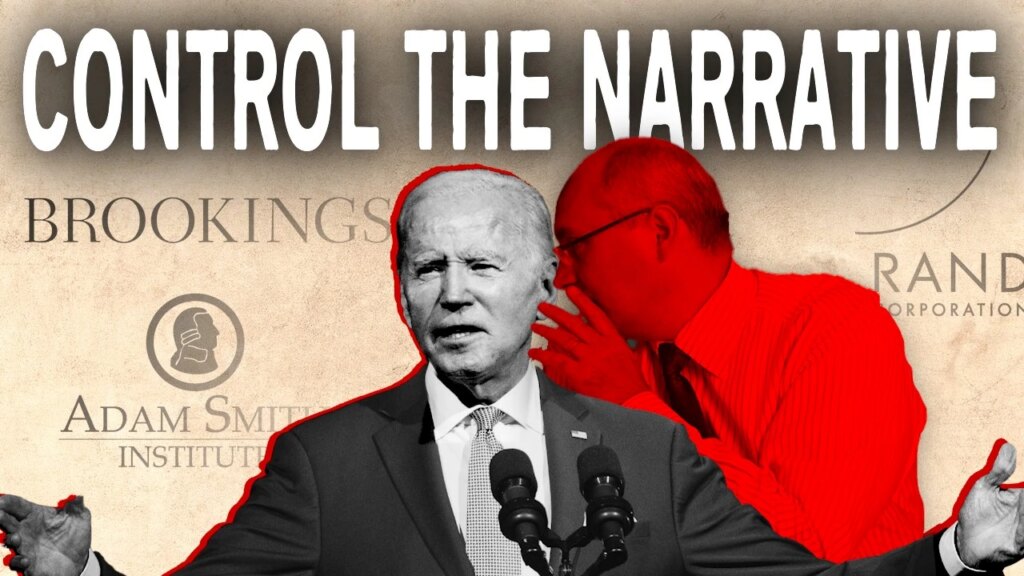
Most Americans never vote for the people who help write some of the most influential ideas in Washington. They do not appear on ballots, rarely hold press conferences and may never testify before voters about the consequences of their proposals. Instead, they work at think tanks, where economists, former government officials, lawyers, scientists and policy specialists turn complicated political problems into studies, legislative proposals and talking points that lawmakers can use.
At their best, think tanks perform an important democratic function. Members of Congress cannot personally become experts on nuclear deterrence, Medicaid reimbursement, artificial intelligence, agricultural subsidies and hundreds of other subjects simultaneously. Independent policy institutions can gather specialists, analyze evidence and translate technical research into recommendations policymakers can understand. The problem begins when the public assumes that every organization producing a professionally formatted policy paper is independent of the corporations, wealthy donors, foundations or foreign governments helping finance it.
Think tanks occupy an unusual position between academia, lobbying, journalism and government. They can conduct serious original research, advocate for particular ideological philosophies, provide experts to television networks and supply policymakers with ready-made solutions. Their influence is real, but claims that think tanks literally possess more legislative power than elected officials go too far. Congress still passes laws and elected administrations still make policy. What think tanks possess is something subtler: the ability to shape which ideas reach those decision makers and how those ideas are framed before the public ever hears the debate.
Think Tanks Became Part of Washington’s Policy Infrastructure
The United States has far more think tanks than the roughly 800 sometimes cited in political discussions. The University of Pennsylvania’s widely used Global Go To Think Tank Index counted 1,835 U.S. think tanks in 2017, with approximately 400 located in Washington. The precise number today depends heavily on how a think tank is defined, particularly because some organizations are university-affiliated while others resemble advocacy groups or contract research institutions.
Their growth reflects a structural need in modern government. Legislation has become increasingly technical, while congressional offices operate with finite staff and time. A think tank can spend months developing a proposal that a legislative staffer may have only days to evaluate, giving outside experts considerable influence over the language and assumptions that enter a policy debate.
That influence does not necessarily involve secretly writing an entire bill. More often, think tanks produce the intellectual building blocks surrounding legislation: economic models, regulatory alternatives, testimony, policy briefs and arguments that sympathetic lawmakers can adopt. Some organizations also maintain close networks of former officials who move between government and policy research, creating a revolving door through which ideas and personnel circulate together.
The result is a policy ecosystem in which elected officials formally make decisions while many of the ideas competing for their attention originate outside government.
Expertise Is Their Product
Think tanks gain influence because they can provide something politicians desperately need: expertise delivered quickly.
A congressional office considering a complicated defense procurement issue can contact researchers who have spent decades studying military logistics. A lawmaker evaluating tax policy can obtain distributional analysis from economists specializing in the code. News organizations facing a breaking international crisis can call a regional expert who has followed that country for years.
RAND is perhaps the clearest example of the legitimate research role. Born out of postwar military analysis, RAND has spent decades conducting research for the Department of Defense and other public agencies across national security, healthcare, education and domestic policy. Its own recent materials cite analyses intended to improve government operations and reduce public costs, illustrating how government agencies sometimes hire think tanks precisely because specialized research capacity exists outside ordinary bureaucratic structures.
This work can be extraordinarily valuable. It would be a mistake to treat every government-funded research contract as evidence that a think tank is manipulating policy on behalf of the agency paying the bill. Governments routinely commission outside research because they need analysis. The relevant questions are whether the funding is disclosed, whether research methods are credible and whether conclusions remain insulated from pressure to satisfy the sponsor.
The Funding Question Changes Everything
Think tanks often describe themselves as independent institutions, but independence does not mean they operate without financial patrons. Funding can come from private foundations, wealthy individuals, corporations, trade associations, universities, government contracts and foreign governments, depending on the organization.
Foreign funding has attracted particular scrutiny because it introduces an obvious question about influence. A 2020 analysis by the Center for International Policy found that the top 50 U.S. think tanks received more than $174 million from foreign governments and foreign entities between 2014 and 2018. Researchers described that total as a minimum because disclosure was incomplete and estimated that actual foreign support could have been considerably higher, potentially exceeding $500 million.
The earlier New York Times investigation that helped ignite the issue identified at least $92 million in foreign-government or foreign-linked contributions to 28 prominent U.S. think tanks over a four-year period. The later analysis expanded both the number of organizations and foreign donors being examined, finding contributions from dozens of countries and international organizations.
Foreign money does not automatically invalidate research. An organization studying South Korea may reasonably receive support from institutions interested in U.S.-Korean relations, just as universities accept foreign grants. The concern is transparency. If an analyst advocating a particular foreign-policy position works for an institution financed by a government with a direct interest in that position, lawmakers and journalists should know about that relationship when evaluating the recommendation.
Corporate Funding Creates Similar Questions
Corporations and industries have equally strong reasons to finance policy research. Regulations covering energy, pharmaceuticals, financial services, technology, healthcare and labor can influence billions of dollars of corporate value, giving businesses enormous incentives to participate in the intellectual debate surrounding them.
That participation can be constructive. Companies often possess technical knowledge regulators need, and industry-funded researchers can identify unintended consequences that government agencies or activists overlook. A policy process excluding everyone with an economic interest would lose valuable information.
The danger appears when funding quietly determines the conclusion. A donor may never explicitly instruct researchers to produce a favorable result because influence can operate more subtly. Institutions know which issues attract funding, executives know which donors keep programs alive and researchers may understand that repeatedly attacking a major patron’s interests is unlikely to strengthen the relationship.
This creates a spectrum rather than a simple distinction between independent and corrupt research. At one end are organizations with strict donor firewalls and transparent methodology. At the other are advocacy operations producing predetermined arguments disguised as neutral scholarship. Much of the policy world exists somewhere between those extremes.
History Shows How Research Can Be Used to Manufacture Doubt
The tobacco industry provides one of the clearest historical examples of corporate interests financing research and organizations designed to influence public understanding of science. Internal documents released through tobacco litigation showed how companies funded scientific initiatives and advocacy efforts intended to challenge evidence linking cigarettes and secondhand smoke to disease.
One organization, the Advancement of Sound Science Coalition, was created with support from Philip Morris and the public-relations firm APCO during disputes over EPA findings on secondhand smoke. Its strategy included questioning government science and cultivating credibility with journalists and policymakers.
Researchers studying science communication have since described this broader approach as the “tobacco strategy”: fund research favorable to the industry’s position, amplify uncertainty and selectively emphasize evidence that makes regulation appear premature. Modeling work has shown how such strategies can distort policy debates even when decision makers are attempting to rationally evaluate the information available to them.
Similar accusations have surrounded parts of the fossil-fuel industry’s response to climate science. Historical documents show that oil and automotive interests funded early research on atmospheric carbon dioxide while portions of the industry later supported efforts that challenged or minimized the policy implications of climate change. The lesson is not that every industry-funded study is false, but that funding sources can become relevant evidence when organized campaigns repeatedly promote uncertainty around regulation that threatens major economic interests.
Policy Papers Are Not the Same as Academic Peer Review
Another source of confusion comes from the appearance of think-tank research. A professionally designed report containing charts, footnotes and econometric analysis can look nearly indistinguishable from an academic paper, but the review processes may be very different.
Academic journals generally use external peer review in which experts evaluate methodology and evidence before publication. Think tanks establish their own editorial standards, which can range from highly rigorous internal and external review to almost none at all. Some employ researchers with academic credentials who publish peer-reviewed work alongside policy reports, while others are explicitly ideological institutions whose purpose is advocacy rather than neutral scholarship.
Neither model is automatically illegitimate. A policy organization founded to promote lower taxes or expanded social programs is entitled to advocate those positions. The problem occurs when journalists, policymakers or the public treat advocacy research as though it carries the same evidentiary weight as independent scholarship without examining methodology or funding.
Consumers of policy research should therefore ask three separate questions: Who paid for the work, how was the analysis conducted and whether independent researchers can reproduce or challenge the conclusions. The organization’s political orientation may matter, but methodology often reveals more than ideology alone.
The Media Multiplies Think-Tank Influence
Think tanks do not need direct access to legislators to shape public policy because media coverage can dramatically expand their reach.
Television networks and newspapers need experts who can explain complicated events quickly, particularly during wars, financial crises or major legislative debates. Think tanks maintain media-ready specialists capable of providing clear analysis on short notice, making them natural sources for journalists working under deadline.
The difficulty is that the affiliation can create an impression of neutrality. A television chyron may identify someone simply as a senior fellow at a respected policy institute without explaining that the organization receives funding from defense contractors, fossil-fuel interests or a foreign government connected to the issue being discussed.
A study of congressional testimony cited in debates over foreign funding found that fewer than 30% of think-tank-affiliated witnesses appearing before the House Foreign Affairs Committee during the period examined represented institutions that fully disclosed their major donors. The same transparency problem can follow experts into media appearances, where audiences have even less time to investigate potential financial relationships.
Journalists do not need to reject think-tank experts because of donor support. They do need to treat relevant funding as part of the source’s context, just as they would identify an executive speaking about the industry employing that person.
Foreign Governments Understand the Value of Washington Expertise
Foreign governments have a straightforward reason to support U.S. policy institutions: Washington decisions can affect their security, trade relationships and diplomatic standing.
The Center for International Policy analysis found that foreign entities from roughly 80 countries and international organizations contributed to major U.S. think tanks between 2014 and 2018. Among the largest recipients in that analysis were the World Resources Institute, Center for Global Development and Brookings Institution.
Contemporary disclosures show that foreign-government support has not disappeared. CSIS, for example, publicly identifies support from multiple foreign governments, while external funding trackers have documented contributions from foreign states and defense contractors. Disclosure makes those relationships easier to evaluate, but it does not resolve the larger policy question of how organizations attempting to influence U.S. foreign policy should be regulated when money originates overseas.
Traditional lobbying on behalf of foreign governments can trigger disclosure requirements under the Foreign Agents Registration Act. Think-tank research occupies a more complicated area because institutions may argue that donors support independent scholarship rather than directing political advocacy. That distinction is precisely why transparency has become the preferred reform for many critics rather than an outright prohibition on foreign money.
Government Funding Is Not the Same as Private Influence
Government-funded think tanks require another distinction. RAND’s longstanding relationships with the Pentagon and other agencies can look similar on a donor list to corporate or foreign-government funding, but the underlying arrangement is often a research contract for a defined public purpose.
The Pentagon and federal agencies purchase research in much the same way they purchase engineering, technology or consulting services. Those contracts can still create conflicts if researchers become excessively dependent on one customer or avoid conclusions likely to anger the agency, but the public-procurement context differs from a corporation quietly funding a policy campaign that advances its commercial interests.
RAND itself frequently presents its government work in terms of measurable public outcomes, including research intended to reduce defense costs and improve operational decisions. The appropriate scrutiny is therefore not whether any government funding exists, but whether the research is methodologically sound and whether findings remain credible when they challenge the agency paying for them.
Independence should be evaluated through institutional safeguards rather than assumed or rejected based solely on the identity of the funder.
The Revolving Door Makes Think Tanks Politically Powerful
Think tanks also derive influence from personnel. Former cabinet officials, diplomats, military officers, regulators and congressional staff frequently move into policy institutes after leaving government. When a new administration arrives, the movement can reverse as think-tank scholars return to public office.
This revolving door can improve government because experienced officials retain expertise that would otherwise disappear from the policy process. A former diplomat who spent decades negotiating with foreign governments may genuinely have insights unavailable to a newly elected legislator.
It also creates networks of extraordinary influence. A think tank whose scholars regularly become senior government officials has more than abstract intellectual credibility; it has relationships throughout the bureaucracy and political establishment. Policymakers know its experts personally, journalists recognize their names and donors may view funding the organization as a way to support a community likely to shape future administrations.
Large compensation packages can reinforce the attractiveness of this ecosystem, although the salaries of think-tank executives vary dramatically and should not automatically be equated with improper incentives. Nonprofit status does not require low salaries, particularly when organizations compete with universities, consulting firms, corporations and government contractors for highly specialized experts.
The more relevant question is whether financial incentives, future employment prospects or donor relationships create pressures that readers should understand when evaluating policy recommendations.
Think Tanks Do Not Have to “Control” Congress to Matter
Claims that think tanks possess more legislative power than elected officials exaggerate the formal relationship. They cannot vote on bills, appropriate federal money or sign legislation into law.
Their influence operates earlier in the process. They help define the problem, supply the statistics used to describe it and develop solutions that politicians can choose among. By the time Congress debates a major issue publicly, competing policy networks may have spent years preparing the intellectual infrastructure around it.
That is particularly valuable in areas where politicians have little time or staff expertise. A detailed policy proposal arriving with economic modeling, legal analysis and suggested legislative language can move much more quickly than an idea requiring a congressional office to build the analysis from scratch.
The power is therefore agenda-setting rather than legislative sovereignty. Think tanks influence which ideas appear serious, which tradeoffs policymakers discuss and which experts journalists call when the debate reaches the public.
That influence can be beneficial when institutions broaden the range of policy options. It becomes troubling when hidden donors can quietly determine which options receive the financial support necessary to enter that marketplace of ideas.
Transparency Is More Realistic Than Pretending Influence Can Be Eliminated
Think tanks are unlikely to disappear, nor should they. Modern government genuinely benefits from organizations capable of sustained research outside election cycles and agency bureaucracies.
The more realistic objective is transparency. Major donors can be disclosed, relevant conflicts can accompany congressional testimony and media appearances, and research institutions can publish clear standards explaining whether donors have any role in selecting topics, reviewing drafts or approving conclusions. Foreign-government contributions deserve especially prominent disclosure because national interests can be directly involved.
Methodological transparency matters just as much. Data should be accessible where possible, assumptions should be stated clearly and researchers should distinguish evidence from advocacy. A report financed by an interested party can still contain excellent research, while a poorly constructed analysis from an ideologically compatible organization can still be wrong.
Readers should also become more skeptical of the word “expert.” Expertise describes knowledge, not independence. A person can be exceptionally knowledgeable and still possess financial, ideological or institutional incentives that shape interpretation.
The Real Product Is Credibility
Think tanks operate in the business of ideas, but the asset that makes those ideas valuable is credibility. Lawmakers use their research because they believe the institution understands the subject. Journalists call their fellows because audiences are expected to trust the affiliation. Donors support them because credible analysis can influence political debate more effectively than obvious advertising.
That creates both the value and vulnerability of the model. When a think tank produces rigorous work that challenges even its own donors, the institution strengthens the case that independent policy research can improve government. When funding is hidden or research repeatedly bends toward the interests of sponsors, the same credibility can become a vehicle for influence that ordinary voters never see.
The history of tobacco demonstrates what can happen when sophisticated organizations manufacture uncertainty around inconvenient science. Foreign-government funding shows why donor transparency matters in national-security debates, while the revolving door between government and think tanks illustrates how deeply policy institutions are integrated into Washington’s decision-making network.
None of this means every think tank report should be viewed as propaganda. It means think tanks should be evaluated with the same skepticism applied to corporations, politicians and advocacy organizations. When a study suddenly becomes the centerpiece of a congressional debate, the first question should be what it found. The second should be how it reached that conclusion. The third should be who paid for it.