Why Stocks Are Booming While Jobs Lag Behind
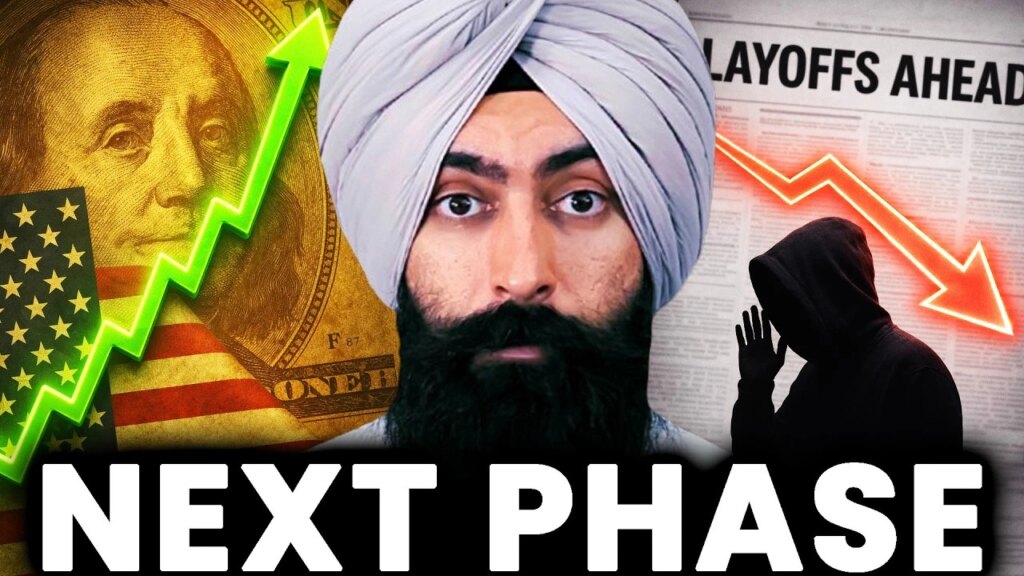
I’m seeing a strange disconnect in today’s economy, and it’s one more people are starting to notice. On paper, things look strong: economic growth is solid, corporate profits are healthy, and the stock market has posted impressive gains. But talk to workers or look closely at hiring data, and a different story appears. Job growth is slowing, and in some sectors it feels downright weak.
This isn’t a typical late-cycle slowdown or a classic recession signal. Instead, it points to a structural shift in how growth and employment interact. And at the center of that shift is automation and artificial intelligence.
The Unusual Mix: Growth Without Hiring
We’re used to thinking that when the economy grows, jobs follow. For decades, that relationship mostly held. Strong GDP growth usually meant businesses were expanding and hiring.
Now, that link is loosening. We can have above-average economic growth and a rising stock market while job creation lags. That’s unsettling if you’re a worker, but it’s revealing if you’re an investor.
What’s happening is that companies are learning to grow without adding as many people. Productivity is rising, but headcount isn’t rising at the same pace. Businesses are getting more output from the same or even smaller teams.
How AI and Automation Change the Equation
I look at AI as a productivity multiplier. One capable employee with the right AI tools can sometimes do what several people used to handle. That’s great for margins and efficiency, but it changes hiring math.
Historically, it took less economic growth to generate jobs. Now, it takes more growth to produce the same level of hiring. Companies don’t need to scale their workforce as quickly when software, algorithms, and automation handle parts of the workload.
We see this in:
• Customer service automation
• AI-assisted coding and design
• Automated logistics and supply chains
• Smarter data analysis replacing manual review
From a business perspective, this is rational. From a labor perspective, it’s disruptive.
The New Labor Market Reality
I tell people this plainly: the job market is shifting toward those who can work with AI, not against it. The advantage increasingly goes to workers who know how to use AI tools to boost their output.
Employers are quietly asking a new question: “Can this person do the work of two or three average employees with the help of technology?” That doesn’t mean everyone needs to be a programmer, but digital fluency is becoming a baseline skill.
Those who adapt can become more valuable. Those who don’t risk being replaced or sidelined.
Why the Stock Market Still Looks Strong
The stock market cares about profits, productivity, and future earnings not just payrolls. If a company can grow revenue while controlling labor costs, investors often reward that.
That’s one reason markets can rally even when hiring slows. Efficiency boosts margins. AI investments, when they produce real results, can support higher valuations.
But the market is also getting more selective. Investors are starting to differentiate between companies that talk about AI and those that actually monetize it. The hype phase is slowly giving way to a “show me the profits” phase.
Smarter Investing in the AI Era
When I think about investing in this environment, I look beyond flashy AI headlines. The real opportunities often sit in the infrastructure that makes AI possible.
That includes:
• Semiconductor manufacturers
• Data center operators
• Energy providers powering AI infrastructure
• Enterprise software firms with real AI integration
In other words, not just the apps but the picks and shovels behind the gold rush.
Big Questions About the Future of Work
Some technologists, including Elon Musk, have floated the idea that work could become optional for many people over the next couple of decades. Whether or not that’s realistic, it shows how seriously leaders take AI’s long-term impact.
There’s also more discussion about universal basic income and other safety nets if displacement grows. I don’t see those as immediate realities, but they’re no longer fringe conversations.
One thing is clear: if fewer people have stable incomes, consumer spending could weaken, and that eventually matters for corporate earnings and stock prices. The economy still runs on people buying things.
My Practical Take
I don’t think this is a reason to panic, but it is a reason to prepare. For workers, that means learning how AI fits into your field. For investors, it means focusing on durable businesses, real cash flows, and realistic valuations.
Every technological wave creates winners and losers. The people and portfolios that do best are usually the ones that adapt early rather than resist change.
The AI economy isn’t just a tech story it’s a labor story, a productivity story, and an investment story all at once. Understanding that bigger picture can help you make smarter decisions in the years ahead.
Jaspreet Singh is not a licensed financial advisor. He is a licensed attorney, but he is not providing you with legal advice in this article. This article, the topics discussed, and ideas presented are Jaspreet’s opinions and presented for entertainment purposes only. The information presented should not be construed as financial or legal advice. Always do your own due diligence.