Why the 2026 Nissan Z Heritage Edition Hits Different
The 2026 Nissan Z Heritage Edition arrives at a time when the traditional sports car has become almost defiant. New vehicles keep getting taller, heavier, quieter, and more software-driven. Even performance cars now have to explain themselves against electric torque, luxury screens, driver-assistance systems, and the practical reality that many shoppers want one vehicle to do everything. The Nissan Z does not try to win that argument. It simply stands there with a long hood, two seats, rear-wheel drive, a twin-turbo V6, and the quiet confidence of a car that knows exactly why people still care.
That clarity is what makes this version work. The Heritage Edition is not a new Z in the mechanical sense. It is a factory package on the Z Performance grade, but it gives Nissan’s sports car something every good enthusiast machine needs: a story. This one points directly at the Z32 300ZX, the fourth-generation Z that helped define Nissan performance for a generation of drivers who came of age in the 1990s.
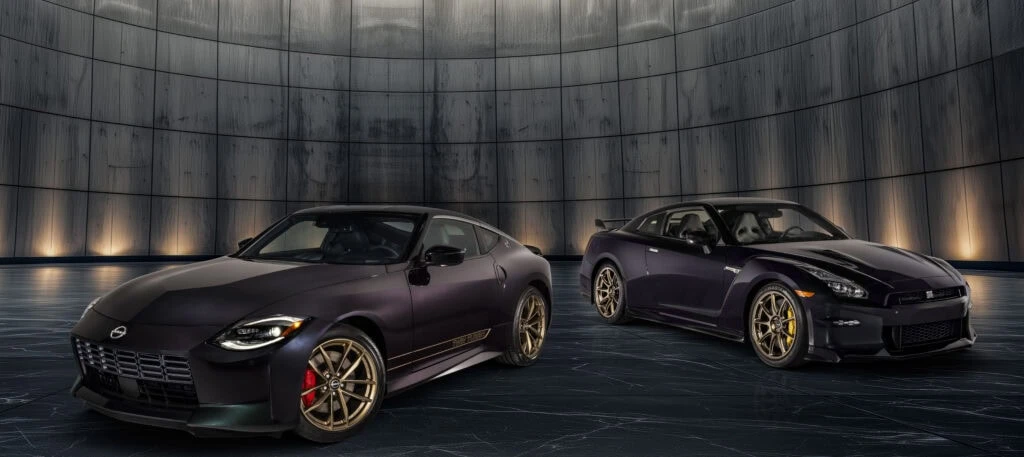
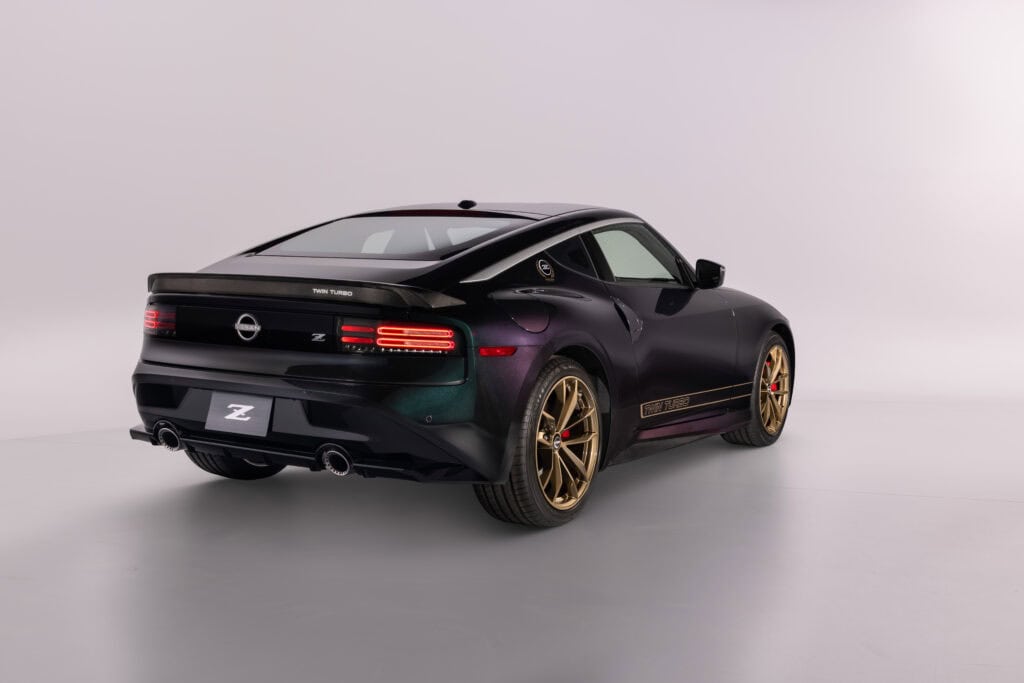
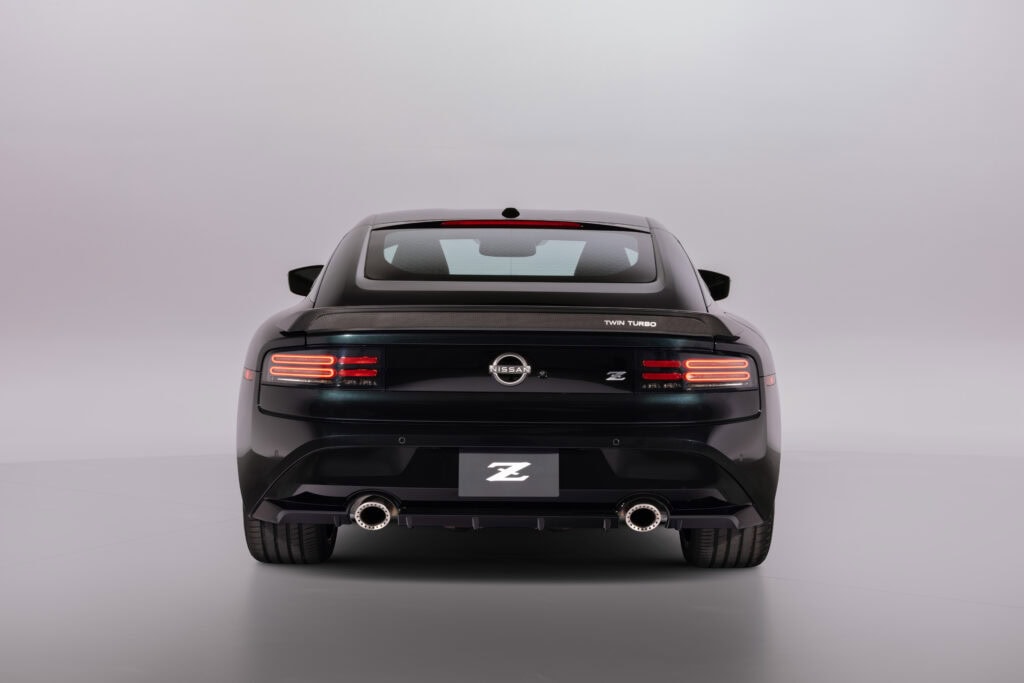
The result is not nostalgia for nostalgia’s sake. It is a modern sports car wearing the right memories. The 2026 Nissan Z Heritage Edition uses Midnight Purple paint, bronze 19-inch RAYS forged-alloy wheels, Twin Turbo graphics, a carbon-fiber rear spoiler, commemorative Heritage decals, illuminated kick plates, and special floor mats to connect the current Z with one of Nissan’s most beloved eras. It is emotional bait, certainly. It is also very well aimed.
The reason this matters is simple. Sports cars are rarely bought by spreadsheet alone. Buyers compare horsepower, torque, price, and features, but they also buy identity. The Z has always understood that. It does not need to be the most expensive, most powerful, or most complicated car in the segment. It needs to feel like a Z. The Heritage Edition leans into that idea with just enough restraint to avoid becoming a costume.
You may also enjoy: 2027 Toyota GR86 Keeps Affordable Sports Cars Alive
A Modern Nissan Z With a 300ZX Memory
The Z32 300ZX connection is the whole point. Nissan says the Heritage Edition is inspired by the 300ZX sold from 1990 through 1996, and the visual references are easy to understand. The Midnight Purple finish recalls the deep purple tones associated with Nissan’s 1990s performance world, while the Twin Turbo graphics and bronze wheel treatment give the car a strong period-correct flavor without making it look trapped in the past.
That balance is harder than it sounds. Retro design can turn silly quickly. If it is too subtle, nobody notices. If it is too loud, the vehicle starts to look like a special-edition sneaker. The 2026 Nissan Z Heritage Edition lands closer to a good remaster of an old album. The melody is familiar, but the production is cleaner.
The current Z shape does much of the heavy lifting. It already has the classic long hood, short rear proportions, and low-slung stance that define a proper front-engine sports car. Nissan’s design also references earlier Z models, including the rear treatment inspired by the Z32 and lighting that recalls the 240ZG. That gives the car a multi-generation personality rather than a single throwback theme.
In a market full of large SUVs and crossovers, the Z feels almost rebellious just by existing. It is not pretending to carry seven people. It is not trying to tow your boat. It is not shaped like a conference room with wheels. It is low, compact, and built around the relationship between the driver, the engine, and the road. For shoppers who want to understand the basic mechanical layout, the U.S. Department of Energy explains how a gasoline car uses an internal combustion engine to turn fuel into motion.
The Heritage Edition Package Gets the Details Right
The 2026 Nissan Z Heritage Edition is available as a package on the Z Performance grade, and that is important. The Performance grade is the version most enthusiasts should already be watching because it includes serious driver-focused equipment. It brings the mechanical limited-slip differential, SynchroRev Match on manual-transmission models, upgraded performance hardware, and the kind of equipment that makes the Z feel properly complete.
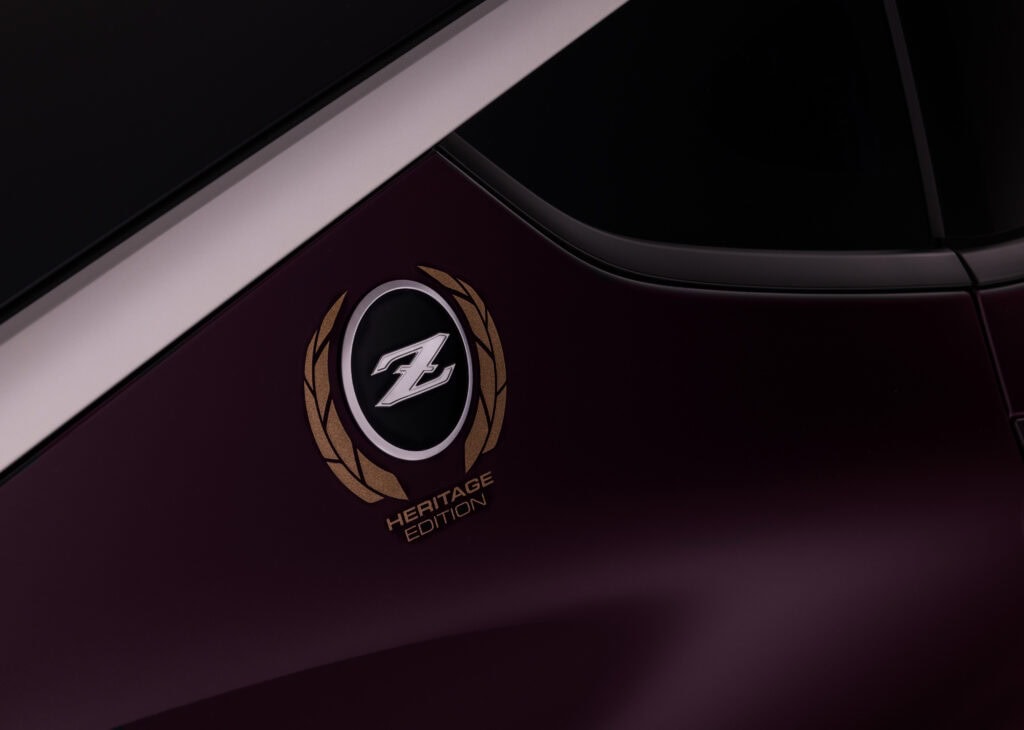
Then the Heritage Edition adds the emotion. The bronze 19-inch RAYS forged-alloy wheels give the car a purposeful stance. The carbon-fiber rear spoiler with Twin Turbo badging adds visual drama without overwhelming the rear view. The Twin Turbo side graphics are obvious enough to be noticed but not so loud that the car feels like a rolling decal catalog. The commemorative wreath C-pillar decals are a small touch, but that is exactly the kind of detail that Z fans will notice.
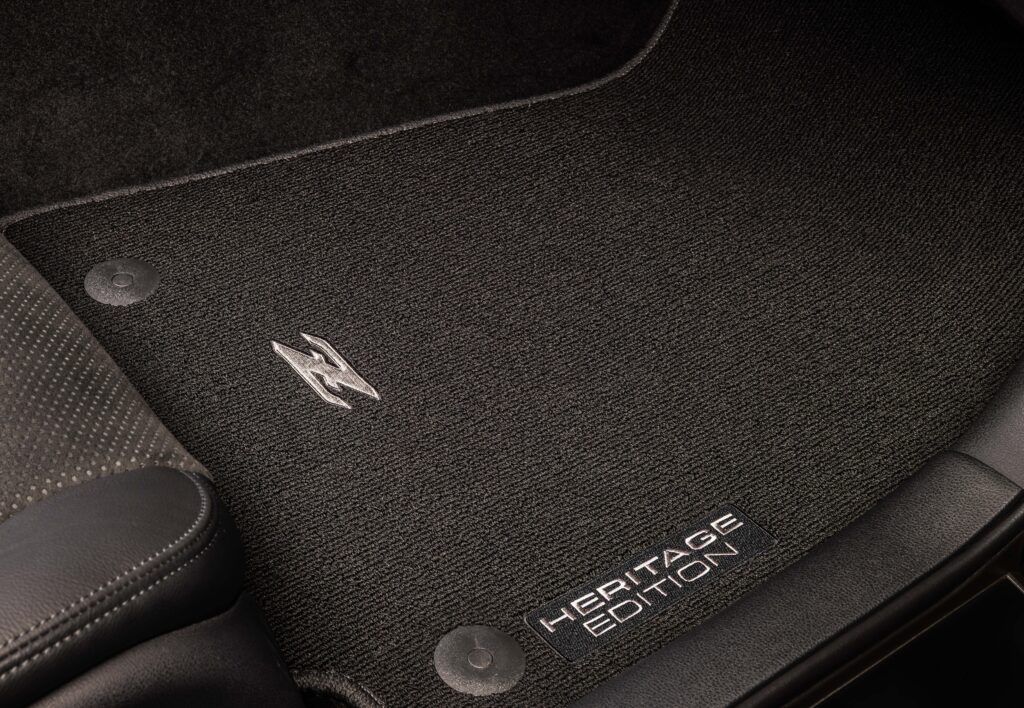
Inside, the special illuminated kick plates and carpeted floor mats are not going to transform the driving experience, but they reinforce the package. That matters because special editions live or die by coherence. A badge here and a random stripe there can feel lazy. The Heritage Edition feels more intentional because the exterior color, wheel finish, graphics, spoiler, and cabin details all point in the same direction.
The strongest compliment is that the package does not bury the car underneath the theme. You still see the modern Z first. The Heritage details simply sharpen the message. For a vehicle that already trades heavily on lineage, that is exactly the right move.
You may also enjoy: 2026 Chevrolet Corvette E-Ray Hybrid The Smartest Supercar Move Yet
Twin-Turbo Power Keeps the Z Honest
Under the hood, the standard 2026 Nissan Z uses a 3.0-liter twin-turbocharged V6 making 400 horsepower and 350 lb-ft of torque. Buyers can choose a six-speed manual transmission or a nine-speed automatic. That choice matters more than it used to because manual gearboxes are disappearing from the market, especially in cars that ordinary enthusiasts can still realistically consider.
The manual version gives the Z a more personal character. It is not about being technically faster than the automatic. It is about involvement. A good automatic can shift more quickly, but a manual gives the driver a role in the process. You own the downshift. You own the launch. You own the small mistakes. In a car like the Z, that is part of the appeal.
The Performance grade adds SynchroRev Match, which helps smooth downshifts by automatically matching engine speed when used with the manual transmission. Purists may turn it off. Most drivers will appreciate how cleanly it works. The mechanical limited-slip differential is the more important hardware upgrade because it helps the rear-drive chassis put power down more predictably when the road gets interesting.
Automatic models include launch control, which gives the Z a modern performance trick without changing the car’s old-school personality. It is the kind of feature that sounds like something you should demonstrate once, carefully, somewhere legal, and then describe with great restraint afterward. The bigger point is that the Z still gives drivers a clear choice. You can have the convenience of the automatic or the involvement of the manual. In 2026, that alone feels worth celebrating.
The NISMO Is Faster, But the Heritage Has Heart
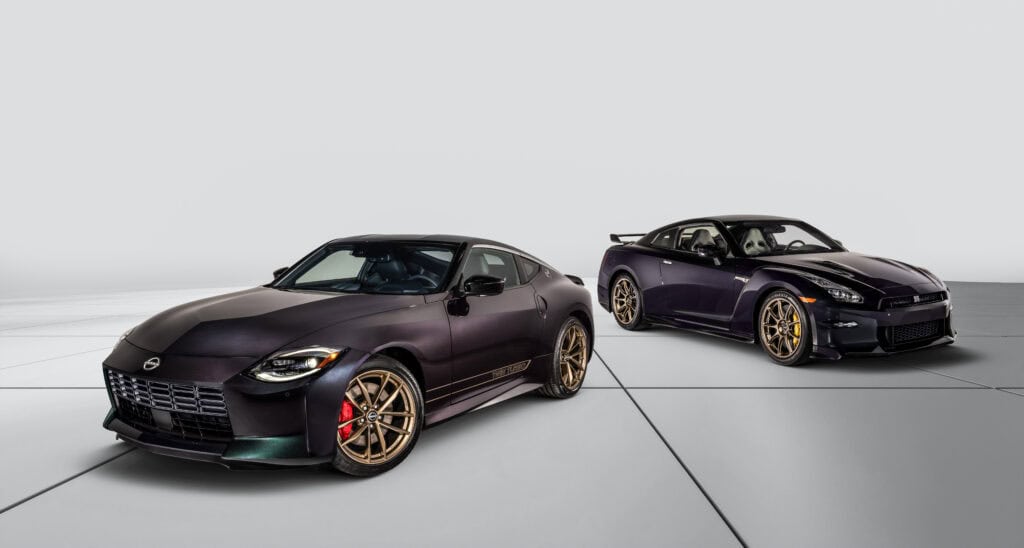
The 2026 Nissan Z NISMO is the sharper weapon. It makes 420 horsepower and 384 lb-ft of torque, and Nissan gives it a more serious chassis package with NISMO-tuned suspension, unique stabilizer bars, stiffer spring rates, retuned dampers, wider rear wheels, and Dunlop SP Sport Maxx GT600 tires. The NISMO also gets more aggressive exterior work, including a restyled grille, front canards, a taller and wider rear spoiler, red accents, and Stealth Gray paint.
That makes the NISMO the more track-focused Z. It is the version for buyers who want the sharpest factory setup, the most power, and the most aggressive personality. It also means the Heritage Edition may be the more emotionally satisfying version for a lot of real-world drivers. It has the Performance grade’s important hardware, the manual-transmission option, and the stronger nostalgia play.
That distinction matters because the fastest version is not always the one people love most. Enthusiast cars live on feel as much as numbers. The Heritage Edition is not trying to beat the NISMO at its own game. It is trying to make the regular Z feel more special, more personal, and more connected to the cars that built the name.
Tires also matter enormously in a car like this. Grip, tread depth, pressure, and maintenance shape the way a sports car stops, turns, and communicates with the driver. The National Highway Traffic Safety Administration provides useful guidance on tire safety, including tread checks and tire pressure habits that are especially important on performance vehicles.
You may also enjoy: 2025 Corvette E-Ray: The Hybrid Supercar America Needed
The Cabin Is Driver-Focused, Not Overdone
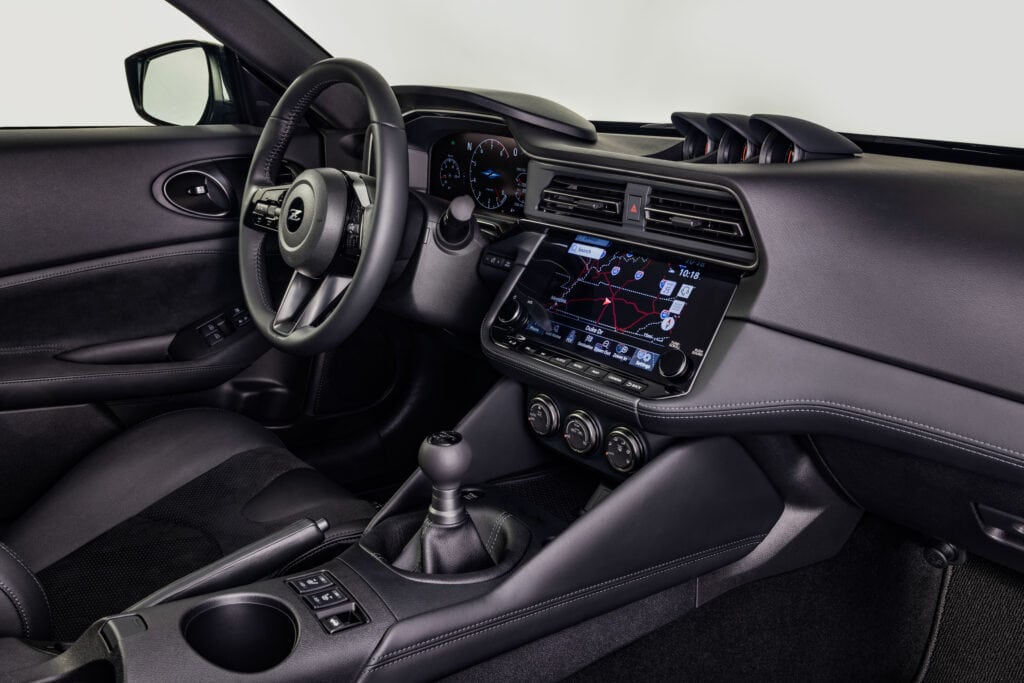
The Z interior is more focused than flashy, and that suits the car. Three dashboard-top gauges give the cabin a direct connection to earlier Z models, while the GT-R-inspired steering wheel adds a subtle performance-family link. Aluminum pedals and suede door trim help the cockpit feel more deliberate without pushing it into luxury-car territory.
The 12.3-inch digital instrument cluster offers Normal, Enhanced, and Sport display modes, which gives the car a modern information layout without turning the dashboard into a screen-first experience. Available features include a 9-inch touchscreen with navigation, Bose audio, Apple CarPlay, Android Auto, NissanConnect services, Wi-Fi hotspot capability, and two USB ports.
That is enough technology to make the Z easy to live with, but not so much that the car loses its center of gravity. This is still a cockpit built around driving. You sit low, close to the action, and wrapped into the car rather than perched above it. The view forward reminds you that there is an engine ahead of you and driven wheels behind you, which is not something every modern vehicle makes you feel anymore.
Practicality is exactly what you expect from a two-seat sports car. Two adults fit fine if they understand the assignment. Luggage space works best with soft bags and reasonable expectations. Dogs should stay home in something more sensible, preferably with a proper rear seat and room to stretch. The Z is not here to solve every transportation problem. It is here to make the right drive feel memorable.
Fuel Economy and Daily Use Still Matter
Sports cars do not get a free pass from daily life. Fuel cost, insurance, cabin comfort, visibility, and ride quality all matter, especially for buyers who want to use the Z as more than a weekend toy. The 2026 Nissan Z Heritage Edition should be viewed as a usable performance car, not a stripped-out track special. That is one reason the Performance-grade foundation makes sense.
The ride is firm enough to feel athletic but not so punishing that the car becomes tiresome on ordinary roads. Wind noise is present but manageable. The cabin is snug, but that is part of the point. A two-seat sports car should feel intimate. It should not feel like a rented office suite.
Fuel economy will not be the reason anyone buys the Z, but shoppers should still compare official ratings and real-world expectations before signing paperwork. The EPA’s fuel economy resources explain how labels and estimates help buyers compare vehicles. That matters because performance cars can vary widely depending on transmission, tire choice, driving style, and how often the driver treats every freeway on-ramp like a qualifying session.
The Z also benefits from being straightforward. It does not have a complicated plug-in system or an enormous battery pack. It does not require a learning curve to understand its basic character. You get in, start it, choose a gear, and drive. For some buyers, that simplicity will be the luxury.
You may also enjoy: 2027 Mercedes-AMG GT 4-Door Coupe Recreates Signature V8 Thrills
Safety Tech Without Losing the Plot
The 2026 Nissan Z includes a solid list of standard safety and driver-assistance features. Automatic Emergency Braking with Pedestrian Detection, Blind Spot Warning, Lane Departure Warning, Intelligent Forward Collision Warning, Rear Cross Traffic Alert, and Intelligent Cruise Control are all included. That gives the Z modern support systems without trying to turn it into something it is not.
This is the right approach for a performance car. Driver-assistance systems should reduce stress in traffic, help with awareness, and add protection in ordinary driving. They should not replace the driver’s role in the experience. The Z remains a car you drive, not a car that tries to perform the whole act for you.
For shoppers comparing modern safety features, NHTSA’s guide to driver-assistance technologies explains features such as automatic emergency braking, blind spot warning, lane departure warning, and forward collision warning. That context is useful because automakers often use different branded names for systems that perform similar jobs.
The important thing is that Nissan gives the Z the safety equipment expected in a modern new car while preserving the car’s fundamental personality. The technology is there in the background. The driver is still the main event.
How the Nissan Z Compares With Rivals
The Toyota GR Supra remains the most obvious rival. It is polished, quick, refined, and deeply capable. It also carries the complication of its BMW connection, which some buyers care about and others happily ignore. The Z feels more directly tied to its own badge. It is more clearly a continuation of Nissan’s sports car story, and the Heritage Edition makes that advantage even more obvious.
The Ford Mustang GT is another natural comparison, though it plays a different role. The Mustang offers V8 personality, bigger cultural presence, and a broader range of trims. It is more muscle car than compact sports car. The Z is smaller, more focused, and more intimate. It feels less like a spectacle and more like a private conversation between driver and machine.
That is what gives the Nissan its lane. It does not have to out-Supra the Supra or out-Mustang the Mustang. It simply has to be a better Z. The 2026 Nissan Z Heritage Edition does that by combining the Performance grade’s useful hardware with a package that speaks directly to the people who understand why the Z32 mattered.
Shoppers who want to compare official efficiency data across rivals can use the federal side-by-side vehicle comparison tool to review fuel economy estimates and ownership-related information. That will not tell you which car has the stronger emotional pull, but it can help clarify the practical side of the decision.
You may also enjoy: Why Americans Stopped Buying Convertibles
Could the 2026 Nissan Z Heritage Edition Become Collectible?
The Heritage Edition has the right ingredients to become desirable later, but that should not be the main reason to buy it. It has nostalgia, a specific visual identity, a connection to the Z32 300ZX, a loyal enthusiast base, and a manual option through the Performance-grade Z. Those things matter in the collector world because enthusiast cars often become valuable when they carry a clear story.
Still, cars are not guaranteed investments. The smarter approach is to buy the Heritage Edition because you love the way it looks, because the 300ZX reference means something to you, or because you want a modern Z that feels more special than the standard car. If it holds value well, that is a bonus. If it does not, you still bought the car for the right reason.
There is also a larger market reality at work. Affordable-ish, rear-wheel-drive, manual sports cars are not multiplying. Many have disappeared, become more expensive, or moved away from the analog qualities that made them appealing in the first place. The Z remains one of the few cars still willing to deliver that formula in a relatively direct way.
That may be the Heritage Edition’s strongest long-term argument. It is not just a cosmetic package. It is a reminder of an era when Japanese sports cars were aspirational, attainable, and culturally important. Nissan is not trying to recreate the 1990s. It is giving modern buyers a reason to remember why that era still matters.
Final Verdict: Nostalgia With Real Muscle
The 2026 Nissan Z Heritage Edition works because it does not confuse nostalgia with substance. The styling package is the hook, but the car underneath still delivers the essentials: rear-wheel drive, a 400-horsepower twin-turbo V6, available manual transmission, Performance-grade hardware, and a cabin built around the person behind the wheel.
It is not the most refined sports car in the segment. It is not the most practical. It is not trying to win every comparison test by spreadsheet logic. That may be exactly why it feels refreshing. The Heritage Edition knows what it is and who it is for. It is for the driver who remembers the 300ZX, respects the Z badge, still wants a real gearbox, and would rather have a car with character than one that simply checks every modern box.
In a market full of swollen SUVs, software-defined cabins, and performance cars that sometimes feel too polished for their own good, the 2026 Nissan Z Heritage Edition hits different. It is a nostalgia machine with modern muscle, a throwback with usable technology, and a reminder that sports cars do not need to be complicated to be memorable.
That is the Z’s real achievement. It does not ask the past to do all the work. It uses history to sharpen the present. For Nissan, that makes the Heritage Edition more than a visual package. For the right driver, it makes it the Z that finally feels personal.