Why the End of the Iran Conflict May Not Mean the Economic Pain Is Over
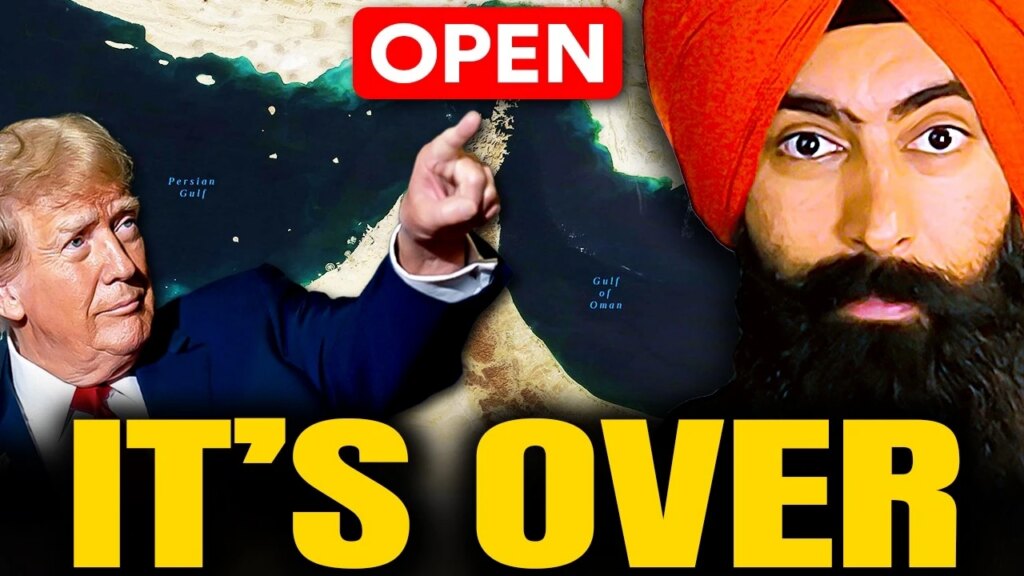
The market’s first instinct after the Iran ceasefire was relief.
Oil fell sharply, stocks rallied, and mortgage rates moved lower as investors began to hope that one of the biggest inflation risks of early summer had finally started to fade. Reuters reported that Brent and WTI both dropped after President Trump announced a deal to end the Iran war and reopen the Strait of Hormuz, while the Associated Press reported that the average 30-year mortgage rate slipped to 6.47% as bond yields eased when the conflict cooled.
That is the good news.
The harder question is whether the economic damage from the oil shock is really over, or whether it is only moving into its slower phase. Oil shocks rarely do their full damage immediately. The first move is usually visible in gasoline, headlines and market volatility. The broader effect often arrives later, as higher energy costs work their way through freight, food, input prices, household budgets and inflation expectations. That is what made past oil shocks so economically dangerous. The pain often came after the initial spike, not during it.
This matters because the conflict did not occur in a neutral economy.
It arrived in a world already dealing with fragile housing activity, high public debt, and a Federal Reserve trying to judge whether inflation is truly cooling or simply taking a breather. Reuters reported that under new Chair Kevin Warsh, the Fed kept rates steady this month but raised its inflation outlook for year-end 2026 to 3.6% from 2.7%, while officials’ projections implied a slightly higher policy rate by the end of this year.
That is why falling oil prices alone may not be enough to quickly deliver easier money.
If energy continues to retreat, it could reduce one obvious inflation pressure. But the Fed is not setting rates based only on this week’s crude chart. It is also looking at whether inflation remains above target, whether the dollar still needs defending, and whether rate cuts would look premature in a world where price pressures have already proved stubborn. Reuters’ coverage of Warsh’s first Fed meeting made clear that the new leadership is willing to sound hawkish even as markets hope for relief.
Housing sits directly in the middle of that tension.
The AP reported that mortgage rates have started to edge down with falling Treasury yields, and that is a real positive for housing. But it is equally true that rates remain high enough to keep affordability strained and activity below normal levels. The housing market does not need only peace in the Middle East. It needs a sustained decline in long-end yields and confidence that inflation will not flare back up. One week of better oil prices helps sentiment. It does not automatically heal a rate-damaged housing market.
The geopolitical side of the story is larger than Iran alone.
The outline is right that this conflict should be understood partly through the lens of the economic rivalry between the U.S. and China. China remains heavily exposed to imported energy and has been working to reduce strategic dependence on the U.S.-led financial order. At the same time, the U.S. has been using tariffs, sanctions and technological restrictions to slow China’s rise. IMF data show that China already exceeds the United States in GDP measured at purchasing-power parity, while IMF reserve data show the dollar’s share of disclosed global reserves has fallen to 56.77%. That does not mean China is replacing the U.S. tomorrow. It does mean the competition is increasingly economic, monetary and resource-based rather than purely military.
That is one reason oil matters so much in this rivalry.
Control over supply routes, sanctions regimes and energy pricing affects not just inflation, but leverage. When oil is disrupted, importing economies suffer, inflation rises, and central banks lose room to maneuver. When oil falls again, markets celebrate because they see a chance for lower inflation, lower yields and stronger growth. But those gains depend on stability holding. Reuters noted that although the deal has pushed prices lower, logistical concerns, insurance issues and unresolved regional tensions remain. In other words, the market may be pricing peace faster than the region can fully deliver it.
This is where the long-term economic picture becomes less comfortable.
The U.S. enters this period with federal debt above $39 trillion and a fiscal structure increasingly sensitive to higher rates. If inflation stays elevated, rates stay higher. If rates stay higher, debt service gets worse. If debt service gets worse, the government has less room to cushion downturns or support growth. So even if the Iran conflict is ending, the economic system absorbing that shock remains fragile. Oil was the trigger. It is not the entire vulnerability.
That helps explain why history keeps hanging over the moment.
Major oil spikes have often preceded recessions not because oil alone destroys the economy, but because it tightens everything at once. It raises costs, hurts confidence, complicates monetary policy and exposes whatever else was already weak underneath. The U.S. may avoid that outcome this time, especially if crude continues to retreat and inflation cools quickly. But the historical pattern is strong enough that a market rally should not be confused with proof that the danger has passed.
For investors, the lesson is not to panic. It is to look past the first reaction.
Falling oil is good news. Lower mortgage rates are good news. A ceasefire is better than escalation. But the deeper questions remain unresolved: whether inflation truly rolls over, whether the Fed can ease without losing credibility, whether housing can recover meaningfully, and whether the U.S.-China economic contest becomes more destabilizing over time. Those are slower questions, and they will matter long after the first relief rally fades.
The end of the Iran conflict may remove one immediate threat. It does not remove the broader fragility of the system that threat was acting on.
Jaspreet Singh is not a licensed financial advisor. He is a licensed attorney, but he is not providing you with legal advice in this article. This article, the topics discussed, and ideas presented are Jaspreet’s opinions and presented for entertainment purposes only. The information presented should not be construed as financial or legal advice. Always do your own due diligence.