Why Billionaires Are Spending Millions Preparing for the End of the World
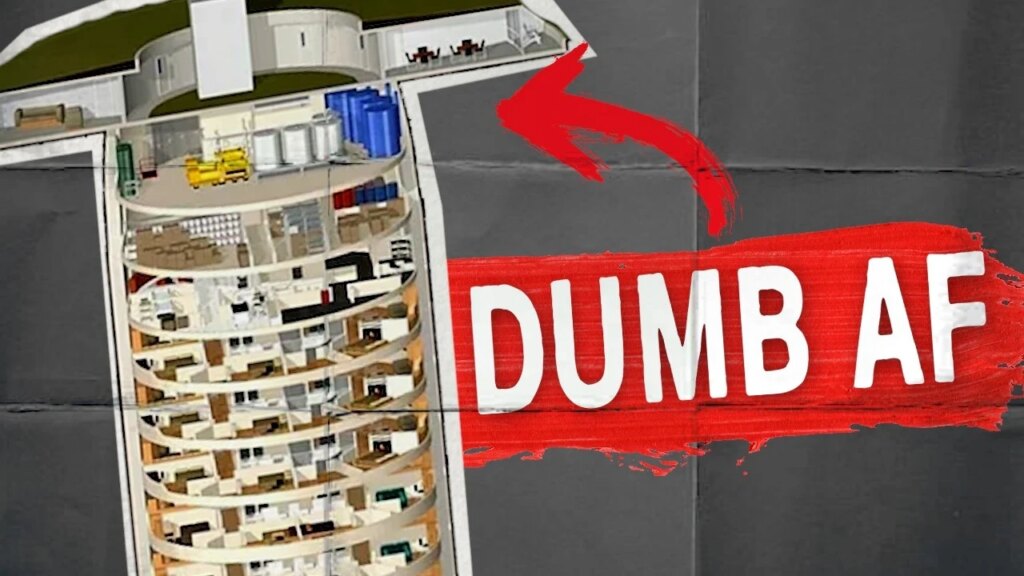
For most people, preparing for disaster means keeping extra water, batteries and perhaps a generator in the garage. For some of the world’s wealthiest people, the contingency plan can involve private compounds, underground shelters, security systems and property thousands of miles from home. Meta CEO Mark Zuckerberg’s sprawling property on Kauai, for example, includes plans for a roughly 5,000-square-foot underground shelter with an escape hatch, extensive security and independent food and water infrastructure. The entire Hawaiian property, including land purchases and construction, has been estimated at more than $270 million.
Zuckerberg is hardly the only technology billionaire associated with elaborate contingency planning. Peter Thiel has long owned property in New Zealand, a country that gained a reputation among parts of Silicon Valley as a potential refuge from political instability, war, pandemics or broader societal breakdown. Years ago, reports described wealthy technology executives discussing New Zealand almost as shorthand for an emergency escape route. That combination of money, mobility and isolation has helped transform survivalism from a fringe subculture into another luxury market for the ultrawealthy.
When Extreme Wealth Meets Extreme Risk
The attraction is easier to understand when viewed through the lifestyle billionaires already inhabit. Many regularly rely on private aviation, gated properties, personal security and staffs that allow them to move through the world with far less exposure to everyday inconvenience or uncertainty. A hardened compound is, in one sense, simply the most extreme version of that insulation. If wealth has solved most ordinary problems, it can seem logical to try to purchase protection from extraordinary ones as well.
There is also a paradox at the center of billionaire survival planning. Vast fortunes may provide extraordinary independence, but the wealth itself depends on extremely complicated systems continuing to operate. Financial markets, communications networks, governments, energy grids, transportation systems and armies of employees make modern fortunes possible. In a genuine collapse severe enough to render those systems useless, a billionaire’s net worth could suddenly matter considerably less than access to food, water, skilled labor and trustworthy people.
That contradiction helps explain why doomsday preparation among the wealthy is about more than concrete walls. It is also about control. Media theorist Douglas Rushkoff has described meeting wealthy executives who were less interested in preventing catastrophe than in figuring out how they could maintain authority afterward. In one discussion he recounted, participants debated controlling access to food, replacing workers with robots and even requiring security personnel to wear disciplinary collars—not as confirmed policies, but as hypothetical methods of retaining power after conventional money and institutions stopped functioning.
The striking part of that conversation was not the technology. It was the assumption that the fundamental problem after a catastrophe would be keeping other people under control. Rushkoff’s response was essentially the opposite: if someone expects guards, employees and other workers to remain loyal during an emergency, building relationships with them beforehand may matter more than designing increasingly elaborate ways to dominate them. That distinction exposes one of the central weaknesses of extreme survivalism. No bunker can eliminate dependence on other human beings.
The Bunker as the Ultimate Status Symbol
There may also be a simpler explanation for some of the spending: wealthy people have always purchased things that demonstrate wealth. A yacht, private jet or enormous estate provides utility, but it also communicates exclusivity. A bunker can perform the same function while adding something even more powerful—the promise of survival when everyone else is vulnerable. At the highest end of the market, disaster preparedness can become another competition over who has the most sophisticated escape plan.
That helps explain why the modern bunker can bear little resemblance to the concrete shelters associated with the Cold War. High-end compounds may include comfortable living quarters, communications systems, independent power, water storage, agricultural capacity and extensive security. Zuckerberg’s Kauai development, for example, combines its underground shelter with mansions, guest accommodations, agricultural operations and enough planned residential space that WIRED estimated the property could eventually accommodate more than 100 people. It looks less like a temporary storm shelter than infrastructure designed to operate with substantial independence from the outside world.
Yet even the most expensive compound has a fundamental vulnerability: someone has to run it. Food has to be produced, machinery repaired, medical problems addressed and security maintained. A billionaire who retreats underground may still depend on farmers, electricians, mechanics, doctors and guards whose cooperation cannot simply be assumed. The more sophisticated the compound becomes, the more expertise it may require to keep functioning.
Preparing for Collapse Instead of Preventing It
The larger criticism of billionaire prepping is not that wealthy people prepare for emergencies. Disaster planning can be entirely rational, whether it involves storing supplies before a hurricane or creating redundancy for a business. The uncomfortable question is what happens when people with enormous resources conclude that protecting themselves from societal failure is a better investment than helping prevent that failure in the first place.
That concern becomes more significant when survival planning overlaps with political philosophies that see existing institutions as obstacles rather than safeguards. Some influential technology figures have expressed skepticism about government, regulation and traditional democratic systems, while promoting visions built around greater individual sovereignty or privately organized alternatives. Thiel’s past interest in movements such as seasteading—the creation of privately governed communities outside traditional national structures—illustrates how ideas about escape, independence and institutional disruption can intersect. It would be too broad to say wealthy bunker owners collectively want society to collapse, but there is a meaningful distinction between preparing for instability and believing that disruption offers an opportunity to build something new.
That is where the bunker becomes a useful metaphor for modern inequality. The ultrawealthy can purchase extraordinary protection from problems that everyone else must confront collectively, whether those problems involve climate risk, political turmoil, pandemics or infrastructure failures. But money cannot create a truly independent civilization behind a locked door. Eventually, nearly every survival strategy runs back into the same reality: functioning societies depend on cooperation.
The irony is that the richest people in the world may be uniquely capable of funding both strategies. They can build the compound while also investing in resilient energy systems, public health, stronger communities and technologies that reduce the likelihood of catastrophe. The harder question is which investment receives more attention. A bunker may provide an escape route for a handful of people, but preventing the disaster remains the only survival strategy capable of protecting everyone else.