America’s Debt Anxiety Is Rising Again. So Is the Apocalyptic Forecasting.
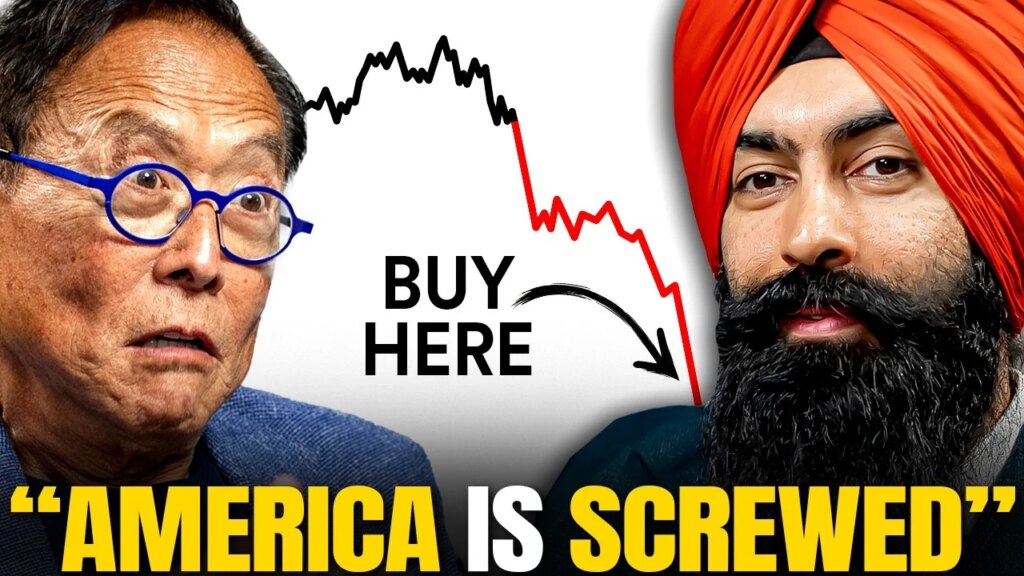
Every period of financial strain produces its prophets. When debt rises, inflation lingers, and confidence in institutions weakens, the language of ordinary economic concern often gives way to something darker: collapse, ruin, the end of the system as we know it.
That is the tone increasingly shaping parts of the American economic conversation. The national debt is enormous. Interest costs are rising. The dollar’s long-term purchasing power has been eroded by decades of inflation. Many retirees remain underprepared. Artificial intelligence is raising legitimate questions about the future of work. These are real pressures, and together they create fertile ground for a particularly potent style of commentary, one that blends historical warning, financial skepticism, and outright civilizational alarm.
There is a reason this message resonates. Americans do not need to be conspiracy-minded to feel that something is off. The cost of living has risen faster than many household budgets can comfortably absorb. Traditional pension systems have faded, leaving millions more dependent on 401(k)s and market performance. Younger workers are navigating a labor market being reshaped by technology, while older workers and retirees are trying to make sense of a system that feels less secure than the one they were promised.
That sense of vulnerability helps explain why debt-centered warnings have become so emotionally powerful. They take a wide set of diffuse anxieties and collapse them into one central thesis: the system is unstable because it is overleveraged, overly printed, and increasingly unable to support the promises built into it. That message is dramatic, but it is not built from nothing. The U.S. does carry a vast debt burden. Inflation has repeatedly exposed the fragility of cash savings. And the political appetite for hard fiscal choices remains limited.
Still, there is an important distinction between acknowledging structural weakness and embracing end-times certainty. Debt is a serious long-term challenge. It is not, by itself, proof that hyperinflation or economic collapse is inevitable on a specific timetable. The same is true of the dollar. Its purchasing power has unquestionably fallen over decades, but that is not the same as saying it is on the verge of disappearing as a functioning currency. Serious analysis begins with those distinctions. Fear-based finance often ignores them.
What makes the current moment particularly combustible is that multiple stress narratives are colliding at once. One is fiscal: the government has borrowed so much that higher interest rates themselves become a threat. Another is monetary: years of money creation have trained many investors to distrust cash and conventional fixed income. A third is demographic: too many households are approaching retirement without enough savings to withstand a real market downturn. And a fourth is technological: AI is no longer a distant theme but an active force reshaping jobs, business models, and the value of certain kinds of labor.
Taken together, those concerns create an easy storyline. If the government is overloaded with debt, the central bank cannot tighten enough to restore monetary discipline. If inflation remains a recurring pressure, savers keep losing ground. If retirees are too dependent on market-based accounts, a major downturn becomes socially destabilizing. And if AI wipes out large sections of white-collar and service employment, the system loses still more of its economic footing.
It is a compelling narrative because each piece contains some truth. But that does not mean the full chain of catastrophe follows automatically.
The more useful question is not whether America faces risk. It clearly does. The question is what kind of risk it faces, and how investors and households should respond without surrendering to either complacency or hysteria.
For retirees, the real issue is not whether the republic is about to collapse. It is whether their current portfolio, withdrawal strategy, and inflation assumptions are resilient enough if the next decade proves rougher than the last one. For workers, the key challenge is not whether all jobs disappear, but whether their skills, balance sheet, and savings habits are adaptable enough to survive periods of technological disruption. For investors, the task is not to guess the exact date of a monetary breaking point. It is to decide how much of a portfolio should sit in productive assets, real assets, cash, and hedges given the possibility of higher volatility, more inflation pressure, and less stable policy conditions.
That is where some of the darker economic commentary can still be useful. Not as prophecy, but as provocation. It forces people to confront questions they would often rather avoid. What happens if inflation stays structurally higher than expected? What if the retirement system proves weaker than advertised? What if the future rewards owners of assets much more than holders of cash? What if technological disruption comes faster than labor markets can absorb?
Those are good questions. The danger lies in jumping from those questions to exaggerated certainty. Once financial thinking becomes organized around the assumption of inevitable collapse, people often make poor decisions. They overconcentrate in a handful of fear trades. They abandon diversification. They start confusing distrust with strategy. And they often end up replacing ordinary market risk with a different kind of risk they understand even less.
Gold, silver, Bitcoin, oil, agriculture, real estate, and other tangible or inflation-sensitive assets all have a place in some portfolios. But they are not magic exits from economic complexity. They are tools, not salvation. The same is true of financial education itself. Understanding how money works, how inflation erodes value, how debt burdens shift incentives, and how assets differ from liabilities is genuinely important. But education should lead to better judgment, not permanent panic.
The most grounded takeaway from today’s debt-and-decline narrative is that Americans need more realism about the systems they depend on. Retirement security can no longer be built on blind trust. Cash cannot be assumed to hold value indefinitely. Wages alone rarely create durable wealth. And government policy, whatever its intentions, often protects debtors and asset owners more effectively than savers.
Those are not fringe ideas. They are increasingly central facts of financial life.
But the leap from financial realism to civilizational collapse is where skepticism becomes essential. The American economy may be strained, politically fragmented, and more unequal than many people are comfortable admitting. It may even be entering a period in which traditional assumptions about retirement, work, and money no longer hold. None of that automatically means imminent ruin. It means the margin for error is smaller, and the need for disciplined thinking is greater.
That is the real challenge of this moment. Not merely to see the risks, but to see them clearly enough that fear does not become its own kind of trap.
Jaspreet Singh is not a licensed financial advisor. He is a licensed attorney, but he is not providing you with legal advice in this article. This article, the topics discussed, and ideas presented are Jaspreet’s opinions and presented for entertainment purposes only. The information presented should not be construed as financial or legal advice. Always do your own due diligence.