The College Degree Is Losing Its Monopoly on a Good Career
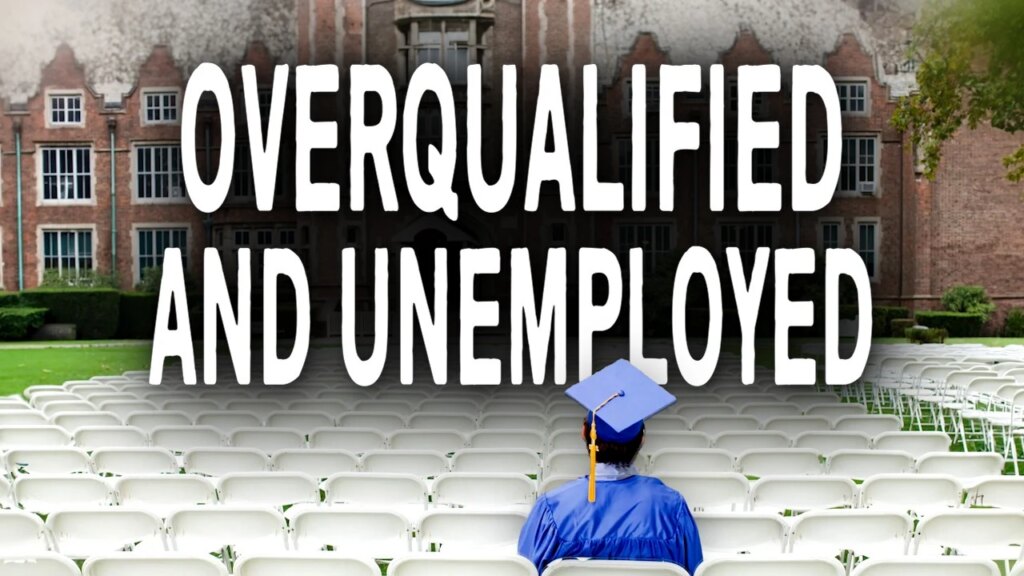
For generations, the path to economic security appeared straightforward: Finish high school, earn a four-year degree and use that credential to gain access to a better-paying career. College still provides a substantial economic advantage on average, but the value of the degree has become far more dependent on what someone studies, how much the education costs and whether the graduate can translate it into work that actually requires college-level skills. At the same time, employers are reconsidering degree requirements for some jobs, apprenticeships are offering paid routes into skilled careers and artificial intelligence is beginning to affect many of the white-collar occupations that once seemed safest from automation.
The conclusion should not be that college has become worthless. Bureau of Labor Statistics data still show a clear earnings and employment advantage: In 2024, workers with bachelor’s degrees had median weekly earnings of $1,543, compared with $930 for workers whose highest credential was a high-school diploma, while unemployment was also significantly lower among degree holders. Georgetown University’s Center on Education and the Workforce similarly found that prime-age bachelor’s-degree holders earn about 70% more at the median than workers with only high-school diplomas. The more important change is that a degree can no longer be treated as an automatically profitable investment regardless of price, major or career objective.
The Degree Still Pays, but the Average Hides Enormous Differences
The traditional argument for college relies heavily on average lifetime earnings, and those averages remain compelling. The problem is that a student does not purchase an average bachelor’s degree and receive an average career. A student chooses a particular school, borrows a particular amount of money, studies a particular subject and enters a particular labor market. Georgetown found median earnings among bachelor’s-degree holders varying widely by field, with prime-age workers in education and public-service majors earning around $58,000 at the median while STEM graduates earned around $98,000. Some individual majors produce even larger differences in both earnings and unemployment.
That dispersion changes how college should be evaluated. Borrowing $100,000 for a degree leading reliably to a six-figure profession is fundamentally different from borrowing the same amount for a field in which entry-level wages are modest and jobs requiring the credential are scarce. Students should be comparing tuition, expected debt, graduation rates and realistic starting salaries before enrolling rather than assuming the credential itself will eventually justify almost any price. College can still be one of the best investments someone makes, but investments have to be evaluated according to their expected return.
The cost side of that equation remains substantial even after adjusting for recent inflation trends. For the 2025-26 academic year, average published tuition and fees were $11,950 for in-state students at public four-year institutions and $45,000 at private nonprofit four-year institutions, before housing, food and other living costs were added. Public two-year colleges averaged only $4,150 in tuition and fees, illustrating how dramatically the economics can change depending on the route chosen. Graduate education can add another significant expense, with federal data showing average full-time graduate tuition and required fees above $21,000 annually across institutions in the most recent available national figures.
A Degree Does Not Guarantee a College-Level Job
One of the strongest challenges to the traditional college narrative is underemployment. The problem is not simply graduates taking temporary jobs while searching for something better, but graduates entering occupations in which a bachelor’s degree is not normally required and sometimes remaining there for years. Research from the Burning Glass Institute and Strada Education found that 52% of bachelor’s-degree graduates were underemployed one year after graduation. The likelihood improves as careers develop, but initial underemployment can have lasting consequences because graduates who begin outside college-level occupations often earn less and have difficulty moving onto stronger career tracks later.
That finding does not mean more than half of all Americans with degrees permanently work in unnecessary jobs, which would overstate the evidence. Some graduates move into degree-level positions after gaining experience, and certain occupations may use college-developed skills despite not formally requiring a bachelor’s credential. The important point is that graduating is no longer sufficient. Internships, work experience, professional networks and demonstrable skills increasingly determine whether the degree actually converts into the economic return students were promised.
This makes career preparation during college more valuable than simply accumulating credits. A student who graduates with internships, technical abilities, a portfolio of work and relationships with employers may have a dramatically different outcome from another student with the same major and no practical experience. Strada’s research on work-based learning has found that graduates who completed paid internships generally entered stronger first jobs, underscoring that the market increasingly rewards the combination of education and evidence that someone can perform.
Employers Say They Want Skills, but Degrees Have Not Disappeared
A growing number of major employers and state governments have announced skills-based hiring initiatives, removing bachelor’s-degree requirements from positions where college may not actually be necessary. The argument is compelling: If someone can code, manage projects, analyze data or operate specialized equipment, employers should evaluate those abilities rather than using four years of college as a convenient screening mechanism. Burning Glass Institute research has documented a broad retreat from degree requirements in job postings, particularly in middle-skill positions where degree inflation had previously excluded experienced workers.
The difficulty is that changing a job advertisement does not automatically change who gets hired. A later Burning Glass Institute and Harvard Business School analysis found that many companies publicly committed to skills-based hiring without producing a comparable increase in the hiring of workers without bachelor’s degrees. Employers may remove the credential from the posting while managers continue favoring degree holders when reviewing actual candidates. The degree therefore continues functioning as a signal even where it is no longer formally required.
That gap between policy and practice is important for students deciding whether college can simply be skipped. Skills-based hiring is real, but it has not yet created a labor market in which credentials are irrelevant. Someone entering technology, finance, engineering, healthcare or another profession with established educational requirements may still benefit enormously from a degree, while applicants without one often need stronger portfolios, certifications or experience to overcome the credential advantage. The future is more likely to involve multiple pathways into good careers than the complete disappearance of higher education.
Skilled Trades Have Become a More Serious Alternative
For decades, vocational education was often treated as a fallback for students who were supposedly not “college material.” That hierarchy made less economic sense as college costs increased and employers struggled to recruit enough electricians, plumbers, technicians and other skilled workers. Many trades require substantial technical knowledge and years of supervised training, but much of that education occurs through paid apprenticeships rather than four years of tuition.
Electricians provide a useful example. The Bureau of Labor Statistics reports a median annual wage of $62,350 and projects employment to grow 9% from 2024 through 2034, considerably faster than the average for all occupations. Most electricians learn through four- or five-year apprenticeships that typically include about 2,000 hours of paid on-the-job training each year alongside technical instruction. Plumbers, pipefitters and steamfitters similarly typically enter with a high-school diploma and develop their skills through apprenticeships, with about 44,000 openings projected annually over the decade.
The attraction is not simply avoiding college debt. Skilled workers can begin earning while learning and later gain opportunities to become contractors or business owners, creating equity rather than remaining permanent hourly employees. An experienced electrician who eventually owns a successful electrical contracting company has a wealth-building path that looks very different from someone who spends years accumulating graduate credentials before entering salaried employment. The trade route carries its own costs—including physically demanding work, licensing requirements and business risk—but it deserves to be evaluated alongside college rather than automatically beneath it.
AI Is Complicating the White-Collar Advantage
Technology historically threatened repetitive factory and clerical work first, reinforcing the argument that workers should obtain more education and move into knowledge-based occupations. Generative AI has complicated that relationship because many of the tasks it performs well are precisely the language, analysis and information-processing activities concentrated in professional jobs.
Recent OECD research finds that IT professionals, business professionals, managers and science and engineering professionals are among the occupations most exposed to AI, while many jobs involving physical work are considerably less exposed to current generative systems. Exposure should not be confused with elimination, however. The OECD explicitly warns that jobs with high AI exposure are not necessarily those facing the highest probability of complete automation because AI may make skilled employees more productive rather than replace them.
That distinction is crucial. It would be premature to tell a teenager to become a plumber because AI is about to eliminate accountants, programmers and lawyers. Current evidence does not support that certainty. What AI does suggest is that simply possessing a credential may become less valuable when software can perform more of the routine intellectual work previously assigned to junior professionals. Workers who combine formal knowledge with judgment, communication, creativity, technical expertise and the ability to use AI effectively may gain value, while jobs consisting primarily of repeatable information processing could face greater pressure.
Physical trades have a different type of protection because repairing an electrical panel, installing plumbing or diagnosing a problem inside an existing building requires manipulating an unpredictable physical environment. Robots may eventually become capable of more of that work, but current generative AI can automate portions of a spreadsheet far more easily than it can crawl underneath a house and replace a damaged pipe. That gives many skilled trades a degree of near-term insulation from the technology transforming office work.
Elite Colleges Offer Value, but Status and Selection Are Part of the Story
The strongest universities can provide exceptional instruction, research opportunities, networks and access to employers. Yet their impressive graduate outcomes do not prove that the school alone created every successful graduate. Highly selective colleges begin by admitting students who already have extraordinary academic records, family resources, ambition or other advantages, making it difficult to separate the institution’s effect from the characteristics of the students it selected.
Research from Opportunity Insights has also shown how wealth influences access to elite private colleges. Students from very high-income families receive admissions advantages driven partly by legacy preferences, recruited athletics and nonacademic ratings associated with affluent private-school backgrounds. That advantage was not found in the same way at flagship public universities. These findings complicate the popular idea that elite admissions represent a pure meritocracy identifying the most talented students and then transforming them into society’s future leaders.
This does not make elite education worthless. The networks and career opportunities at those institutions can be extraordinarily valuable, particularly for students who would not otherwise have access to them. It does mean families should be cautious about treating prestige as sufficient justification for any price. A student choosing between substantial debt at a famous private university and a low-cost public institution should compare the actual career advantage rather than purchasing a brand name on the assumption that prestige automatically produces wealth.
College Can Widen Inequality When the Risk Falls on the Student
Higher education is often described as a tool of economic mobility, and for many students it absolutely is. The risk is that students from less wealthy families have less room for the investment to go wrong. A student whose parents can pay tuition without borrowing can experiment with majors, complete unpaid internships or spend additional years in graduate school without creating the same financial strain as a first-generation student financing the entire experience with debt.
Those differences can magnify inequality even when both students receive identical diplomas. One graduate begins a career with no education debt and family assistance for housing or transportation, while another uses the first years of salary to repay loans. If the degree does not lead to a college-level job, the financial consequences are much more severe for the student who borrowed heavily to obtain it.
The correct response is not to discourage lower-income students from college, because the earnings premium remains substantial and higher education can be particularly powerful as a mobility tool. It is to stop pretending every institution, program and price produces the same opportunity. Cost, completion probability, field of study and career placement should be treated as essential consumer information before a student signs financing documents.
The Better Question Is Not “College or No College?”
The old debate asks whether everyone should go to college. The new labor market demands a more specific question: What is the least expensive, most reliable path to acquiring the skills and credentials required for the career you actually want?
For a physician, civil engineer or registered nurse pursuing a role that requires formal education and licensing, the answer is relatively clear. For someone interested in software, sales, marketing, construction, advanced manufacturing or entrepreneurship, multiple pathways may exist. Those could include a bachelor’s degree, community college, apprenticeship, certification, employer training or some combination of them.
The economics should be evaluated before the prestige. A $4,150 year at a public community college followed by transfer to a university creates a different risk profile from beginning at a private college charging $45,000 in annual published tuition and fees. An apprenticeship that pays wages while teaching an occupation produces another entirely different calculation. The goal should be acquiring valuable human capital without unnecessarily destroying financial capital in the process.
Employers ultimately pay for capabilities that help organizations solve problems, generate revenue, reduce costs or manage risk. A college degree can be one of the strongest ways to acquire and demonstrate those capabilities, but it is no longer the only credible way. As skills-based hiring grows and technology changes the work itself, students will benefit from thinking less about collecting credentials and more about building evidence of value.
The Degree Is Becoming One Option Among Several
College is not dying, and the earnings gap between degree holders and high-school graduates has not disappeared. Current federal data still show that bachelor’s-degree holders earn considerably more and experience lower unemployment on average. Any argument that college has broadly stopped paying would therefore ignore some of the strongest evidence in the labor market.
What has changed is the certainty surrounding the investment. A degree can lead to exceptional returns, mediocre returns or years of debt attached to a job that never required the credential. The outcome increasingly depends on the field, cost, work experience and skills acquired along the way. At the same time, apprenticeships and skilled trades provide legitimate routes to strong incomes without conventional four-year degrees, while employers are slowly becoming more willing to evaluate what applicants can do rather than where they studied.
For young people, that creates more responsibility but also more choice. They should not attend college simply because it is the next expected step after high school, nor should they reject it because someone on social media says trades are always more profitable. Both decisions can be expensive when made without understanding the career on the other side.
The most valuable credential in the future may ultimately be proof that someone can do useful work. Sometimes a university degree will provide that proof. Sometimes an apprenticeship, portfolio, certification or several years of experience will do it better. The important shift is that employers and workers are beginning to recognize that education and college are no longer synonymous and neither are a diploma and economic security.