The Petrodollar Is Cracking: What the UAE Leaving OPEC Could Mean for Your Money
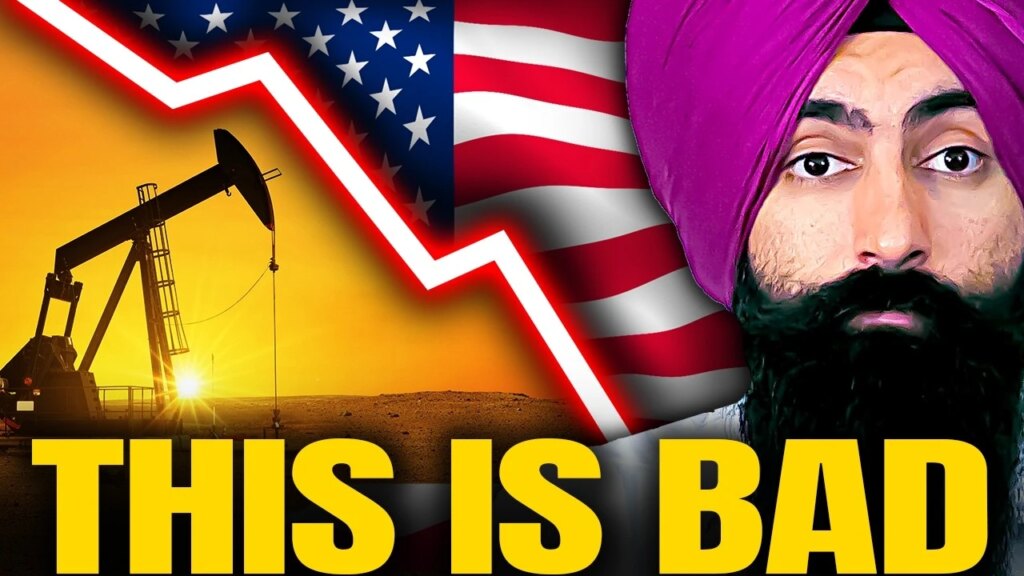
The United Arab Emirates’ decision to leave OPEC is not just an oil story. It is also a dollar story. When most people hear that the UAE is stepping away from OPEC, they immediately think about crude oil prices, Saudi Arabia, Middle East politics, and whether gasoline will get more expensive. Those are all important questions. But the bigger issue may be what this says about the global financial system that has supported the U.S. dollar for decades. Reuters reported that the UAE’s exit from OPEC and OPEC+ became effective May 1, 2026, with UAE officials saying the move was about producing without restrictions and meeting global oil demand on its own terms. The transcript behind this article frames the move as part of a broader shift away from the petrodollar and toward a more fragmented global currency system.
To understand why this matters, you have to go back to the dollar itself. Before 1971, the U.S. dollar was tied to gold. That system limited how aggressively the government could create money because dollars were supposed to be convertible into a fixed amount of gold. Then, on August 15, 1971, President Richard Nixon suspended the dollar’s convertibility into gold. From that point forward, the dollar became a fiat currency, meaning it was no longer backed by physical gold but by trust in the United States government, the U.S. economy, and the global financial system built around the dollar.
That trust was reinforced a few years later through what became known as the petrodollar system. In the 1970s, the United States and Saudi Arabia developed a relationship that helped keep oil trade tied to the U.S. dollar. The simplified version is this: oil was largely priced and traded in dollars, and oil-producing countries recycled a portion of those dollars into U.S. assets, including Treasuries. In return, the United States provided military and strategic support to key Gulf allies. The result was powerful. Every country needed oil, and if oil was priced in dollars, countries around the world needed dollars.
That helped create constant demand for the U.S. currency. The dollar was no longer backed by gold, but it was backed by global usage. If countries needed dollars to buy oil, settle trade, repay debt, and hold reserves, then the dollar remained central to the world economy. That is why the petrodollar mattered. It was not just about oil. It was about the dollar’s role as the operating system of global trade.
Now that system is being challenged. It is not collapsing overnight. The U.S. dollar is still the world’s dominant reserve currency, and no rival currency has fully replaced it. But the direction of travel matters. Countries have been looking for ways to reduce their dependence on the dollar, especially after the pandemic, the surge in U.S. government spending, and the freezing of Russian reserves after Russia’s invasion of Ukraine. Many governments watched that moment and asked a practical question: if dollar-based assets can be frozen when the U.S. disagrees with a country’s actions, should we keep so much of our wealth in dollars?
That does not mean the United States was wrong to sanction Russia. It means the decision changed how other countries think about risk. The dollar is powerful not only because people use it, but because the U.S. financial system can enforce rules through it. That power is useful to Washington, but it also gives other countries an incentive to build alternatives.
China has been one of the biggest forces behind that alternative system. China is a major buyer of global oil and has pushed for more trade in yuan. The so-called petroyuan is not replacing the petrodollar tomorrow, but it has become a real part of the conversation. S&P Global has noted that yuan-based oil trade between Saudi Arabia and China faces major challenges and could take decades to become meaningful at scale, but the long-term relationship between China and Gulf producers is deepening. That is the key point. The system does not need to flip in one dramatic moment. It can shift gradually, deal by deal, contract by contract, and reserve decision by reserve decision.
The UAE’s departure from OPEC adds another piece to that puzzle. Al Jazeera reported that the UAE’s withdrawal from OPEC and OPEC+ removes a core player from one of the world’s most influential oil groups. The UAE has been increasingly focused on independent economic policy, energy investment, and broader trade relationships. That does not automatically mean the UAE will stop using dollars. It does mean the country wants more flexibility. In a world where oil producers want flexibility, China wants more yuan-based trade, and emerging markets want alternatives to the dollar, the petrodollar’s dominance looks less automatic than it once did.
For Americans, this matters because the dollar’s global role has real economic benefits. When the world wants dollars, the United States can borrow more easily. Demand for Treasury bonds helps finance U.S. debt. The dollar’s reserve currency status supports American purchasing power. It allows the U.S. to import goods, run deficits, and project financial influence in ways most countries cannot. If global demand for dollars weakens over time, the consequences could show up in higher borrowing costs, more inflation pressure, weaker purchasing power, and more volatility in markets.
That does not mean the dollar is about to crash. It does not mean the U.S. economy is finished. In fact, the United States remains one of the most innovative and productive economies in the world. The danger is not an overnight collapse. The danger is complacency. Reserve currency power is not guaranteed forever. It has to be maintained through trust, fiscal discipline, economic strength, military credibility, and deep, liquid financial markets.
So what should investors do with this information? The answer is not panic. The answer is to think like an investor and understand where risk and opportunity may appear if the world continues to move toward de-dollarization.
The first area to watch is gold. Gold tends to become more attractive when investors worry about inflation, currency debasement, sovereign debt, or geopolitical instability. The transcript correctly points out that gold is not a productive business. It does not generate earnings, pay rent, or build new products. It simply sits there. But that is also why people value it during currency stress. Gold is often treated as a hedge against paper money, not as a traditional growth investment. If central banks and global investors become more concerned about the dollar, gold can benefit. But investors should also remember that gold can fall hard when those fears fade.
The second area is international diversification. If more countries try to strengthen their own currencies, deepen regional trade, and reduce reliance on the dollar, some non-U.S. markets could benefit over time. That does not mean international investing is safer. It often comes with higher political risk, currency risk, accounting risk, and volatility. But it can provide diversification beyond the U.S. market. Broad international ETFs can give investors exposure to developed and emerging markets without requiring them to pick individual foreign stocks.
The third area is energy. If oil trade becomes more fragmented and countries place greater emphasis on energy security, domestic energy companies may become more strategically important. U.S. oil and gas producers, pipeline companies, refiners, and integrated energy giants could benefit from a world where energy independence becomes a national priority again. The transcript mentions ETFs such as XLE as one way investors think about exposure to large U.S. energy companies. The risk, of course, is that energy is cyclical. Oil prices can rise quickly, but they can also fall quickly when supply increases or demand weakens.
The fourth area is defense. More geopolitical tension usually leads governments to spend more on military equipment, aerospace technology, cybersecurity, weapons systems, and defense infrastructure. That is not a moral endorsement. It is an investment observation. When governments feel less secure, defense budgets tend to get more attention. The transcript notes that defense ETFs can offer exposure to aerospace and military contractors that may benefit from increased government spending. Every investor has to decide whether that fits their own values.
The fifth area is still the United States stock market. This may sound contradictory, but it is not. The dollar can face long-term pressure while the U.S. stock market remains one of the best wealth-building machines in the world. The U.S. still has dominant companies in technology, finance, health care, energy, consumer brands, artificial intelligence, cloud computing, defense, and infrastructure. Broad-market funds tied to the S&P 500 or total U.S. stock market still give investors exposure to many of the strongest companies on earth. The transcript makes this point clearly: the U.S. economy is not collapsing tomorrow, and there are still major opportunities in America.
The real strategy is not to run from the dollar or bet everything on one alternative. The real strategy is to avoid being financially blind. If all of your money, income, investments, and assumptions depend on one currency, one country, and one economic outcome, you are more exposed than you may realize. That does not mean abandoning the U.S. It means understanding that global power shifts can affect your portfolio, your purchasing power, and your long-term financial plan.
Investors should also avoid the trap of turning every geopolitical headline into an immediate trade. The UAE leaving OPEC matters. De-dollarization matters. China’s push to trade more in yuan matters. Gold buying by central banks matters. But these themes can take years or decades to play out. Long-term investors do not need to guess the next 30 days correctly. They need to understand the direction of change and position themselves with discipline.
That means owning productive assets, staying diversified, keeping some liquidity, understanding currency risk, and not panic selling when markets get volatile. It also means paying attention to government debt, inflation, interest rates, oil prices, and the dollar’s share of global reserves. These may sound like distant macroeconomic issues, but they eventually show up in grocery bills, mortgage rates, gas prices, retirement accounts, and business costs.
The UAE’s exit from OPEC is a reminder that the world is changing. Oil producers want more flexibility. China wants more influence. Emerging markets want more independence. The United States still has enormous power, but it is operating in a world where that power is being challenged more openly.
The petrodollar is not dead. The dollar is not disappearing. But the assumption that the world will always need dollars in the same way it has for the last 50 years is no longer something investors should take for granted. And when the financial system starts to shift, the people who pay attention early are usually better prepared than the people who wait until the consequences hit their wallet.
Jaspreet Singh is not a licensed financial advisor. He is a licensed attorney, but he is not providing you with legal advice in this article. This article, the topics discussed, and ideas presented are Jaspreet’s opinions and presented for entertainment purposes only. The information presented should not be construed as financial or legal advice. Always do your own due diligence.