Toyota’s 2026 Electric Vehicle Lineup
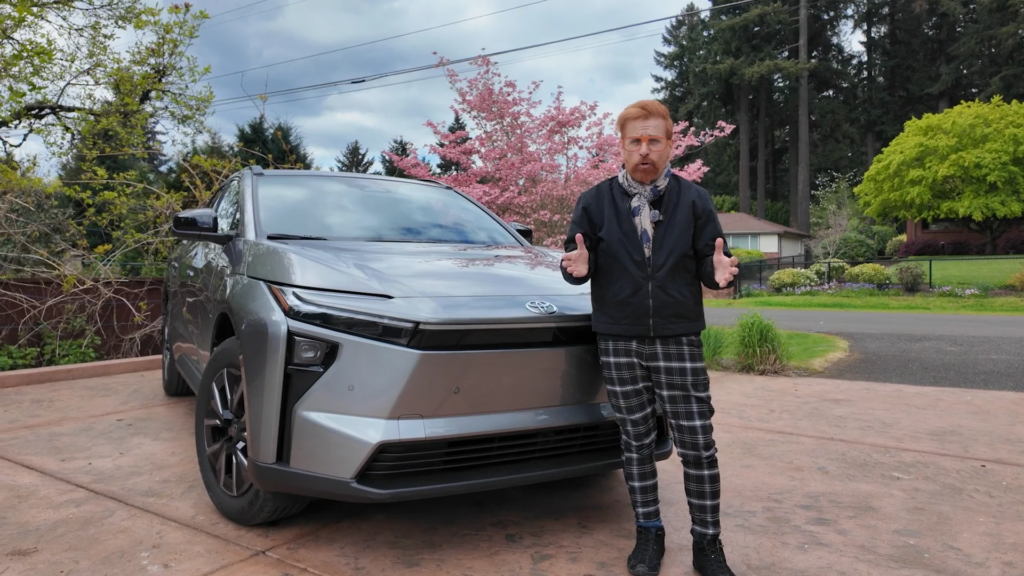
Toyota has spent years being accused of dragging its feet on electric vehicles. That narrative is now starting to look outdated. Sitting down with Owen Peacock, Toyota’s North American head of electrification strategy, one thing became clear very quickly. The company is no longer talking about electric cars as a future concept. It now has four distinct EVs on sale in the United States.
Toyota’s electric lineup has grown to four models, giving buyers more practical choices instead of forcing a single solution. That shift reflects how the market is changing, where drivers want options that actually fit their daily lives rather than a one-size approach to electrification.
That matters because the conversation around EVs has shifted. Buyers are no longer asking if electric cars are coming. They are asking which one actually fits their lives. Toyota’s answer is not to push a single solution. It is to offer multiple paths and let customers decide what works.
Peacock put it simply during our conversation. “Electrification isn’t one-size-fits-all. For some customers, it’s perfect. For others, hybrids or other solutions make more sense right now.” That philosophy explains why Toyota’s EV strategy looks different from many rivals.
What Changed for Toyota
For years, Toyota’s EV presence in the U.S. felt limited. One model carried most of the weight, and critics used that as evidence the company was behind. That argument is harder to make today.
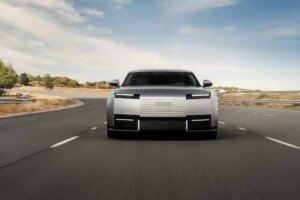
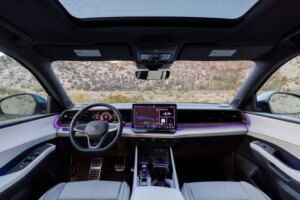
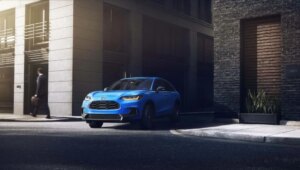
Toyota now fields four battery electric vehicles aimed at very different buyers. The bZ is the mainstream choice. The bZ Woodland leans toward adventure. The C-HR EV focuses on performance and style. The Highlander EV brings three-row practicality into the electric space.
Peacock explained the thinking behind this approach. “Depending on what actually fits the buyer. That matters.” It is a subtle point, but an important one. Toyota is not abandoning its broader powertrain strategy. It is adding EVs to it.
This is also where the broader industry shift becomes visible. As Peacock told me, “We’re no longer talking about the future in abstract terms. Now it’s execution. Products are on the road, customers are using them, and expectations have changed dramatically.”
Four EVs, Four Use Cases
Each of Toyota’s EVs now serves a distinct role, which is something the lineup lacked before.
The C-HR EV is the standout for drivers who want something engaging. With 338 horsepower and all-wheel drive, it reaches 60 miles per hour in 4.9 seconds. That puts it firmly outside the stereotype of slow, compliance-focused electric crossovers. It also offers up to 287 miles of range in its SE trim, which is enough for most daily driving needs.
The bZ plays a very different role. It is the practical option, offering up to 314 miles of range and a lower starting price. It is designed for commuting, errands, and family use without adding complexity. Toyota has also updated it with features like battery preconditioning and a North American charging port, which makes daily ownership easier.
Then there is the bZ Woodland. This is Toyota leaning into its off-road reputation. With 375 horsepower, standard all-wheel drive, and 3,500 pounds of towing capacity, it is built for buyers who expect more than just pavement performance. It also offers 8.4 inches of ground clearance and an estimated 281 miles of range.
Finally, the Highlander EV brings something new to Toyota’s electric lineup. It is a three-row SUV with seating for up to seven and an estimated range of up to 320 miles. More importantly, it carries a familiar name. Toyota is using that recognition to make electric vehicles feel less like a leap and more like a natural next step.
Peacock described the importance of that shift in simple terms. “Customers just want something that works for their lives.”
Real World Ownership Still Matters
Despite the expanded lineup, Toyota is not pretending EVs work for everyone. That honesty stands out in a market often driven by bold claims.
Peacock raised a point many buyers still wrestle with. “Buyers still have to think about real life. Do you live in a house or an apartment? Can you charge easily? Does an EV actually fit your lifestyle?” These are practical questions that matter more than horsepower figures or acceleration times.
He also addressed one of the most common concerns. “Range anxiety is both a technology problem and a communication problem.” Real-world data shows most drivers travel far less than they assume, but infrastructure still needs to improve to handle edge cases.
This is where Toyota’s broader strategy comes into focus. It is not forcing customers into EVs. It is giving them the option if it makes sense, while continuing to offer hybrids and other solutions.
Lessons From the Prius Era
Toyota has been through a similar transition before. When the Prius first arrived, it was seen as unusual and even risky. Over time, hybrids became mainstream, and that early skepticism faded.
Peacock drew a direct comparison. “The normalization of all this is what excites me. When electrification stops being a headline and just becomes expected, that’s when the industry has succeeded.”
That perspective explains why Toyota is not chasing short-term headlines. It is building toward long-term adoption.
The company also understands that progress does not always look dramatic. As Peacock noted, “Real progress is quieter. It’s updates that improve reliability, systems that feel intuitive, and technology that fades into the background.”
Who This Strategy Works For
Toyota’s expanded EV lineup does not mean every buyer should switch to electric immediately. What it does mean is that more buyers can now find an EV that fits their needs without compromising their lifestyle.
The C-HR EV suits drivers who want performance and modern design. The bZ is aimed at practical daily use. The Woodland targets outdoor-focused buyers. The Highlander EV finally gives families a three-row electric option that feels familiar.
At the same time, Toyota continues to offer hybrids and other powertrains, which gives buyers flexibility. That multi-pathway approach may not be the loudest strategy in the market, but it is one of the most pragmatic.
In a market filled with strong opinions about electrification, Toyota’s message is relatively simple. It is not about ideology. It is about engineering solutions that work in real life.
As Peacock summed it up, “Listen more than you talk. Customers will tell you what they need.”